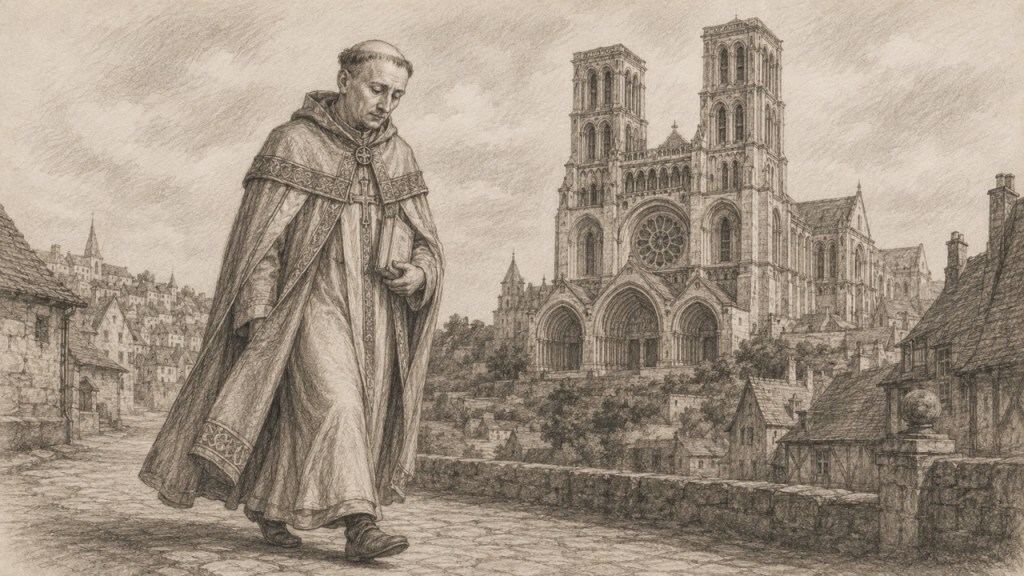
The Glossa Ordinaria on Colossians is printed in Migne’s Patrologia Latina under the name of Walafrid Strabo (PL 114, 469–670), but the attribution is not entirely accurate. The work has its roots in the work of Walafrid Strabo but belongs to Anselm of Laon (d. 1117), the master whose school at Laon gave the medieval church its standard gloss on Scripture. The text below follows Migne’s edition of 1879.
Text
[610]
THE EPISTLE TO THE COLOSSIANS.
ARGUMENT.
The Colossians, like the Laodiceans, are Asians. They had been preempted by false apostles, and the Apostle himself did not go to them, but he corrects them by letter. For they had heard the word from Archippus, who also accepted a ministry among them. Therefore, the Apostle, already in chains, writes to them from Ephesus by Tychicus the deacon and Onesimus the acolyte.
CHAPTER ONE.
VERS. 1. — Paulus. In his usual manner, he places the greeting first. Having given this greeting, he gives thanks for their good qualities, so that, commending their faith and love, he prays that they may be made perfect in Christ, whose benefits and primacy he commends according to both natures. Next, recalling the dignity of his own ministry, he warns them not to be seduced by philosophy or the ceremonies of the law and so fall away from Christ. Finally, he offers moral instruction to all of them together according to their sexes, ages, and conditions, and at the end he warns Archippus to be attentive to the ministry he has undertaken. Apostolus, etc. Note that he rightly calls himself positioned above all others in dignity, because he was an apostle here as well, and had preached this through his disciples.
VERS. 3. — Gratias agimus. He demonstrates the good things they have, since he gives thanks for these things.
VERS. 6. — Sicut, etc. That is, so purely and truly, through me and others it came into the whole world, and it remains in it, as if to say: It is no less present in you than in other churches. Since the Gospel is in […], it bears fruit there through good works, through the increase of knowledge, and in the number of the faithful. Do not think those people have more than you; rather, it accomplishes this just as it does among you, and therefore you should not […].
VERS. 7. — Pro vobis, etc. Desiring their salvation, he began to help Archippus.
VERS. 8. — In Spiritu. Because you love for the sake of spiritual things, not carnal things.
VERS. 9. — Impleamini in omni. It is a great thing to know what God wills in all matters of the active and contemplative life.
VERS. 10. — In scientia. So that they would not be ignorant of the end of their faith, that is, the thing hoped for, from which they will be made firm.
VERS. 11. — In omni virtute. I mean you who are strengthened in every virtue, namely in chastity and the rest. But he who is the brightness of the Father can well do this, that is—or according to the fact that [he gives] you clear knowledge.
VERS. 12. — Gratias agentes. Now he begins to say that the law is of no benefit, but rather is harmful, and that Christ is sufficient for all things. This can be known from the fact that the apostles themselves (who had lived under the legal ceremonies) abandoned them and fled to him. It is as if he were saying: We give thanks to God for you, because he makes us worthy, which the law could never do.
He made us worthy. Not in the law, but in lumine [in the light], that is, through God who is light from light, by whose grace we are illuminated. Or in lumine, that is, in clear knowledge; whoever deviates from this falls into darkness. Sortis. The will of God in the human race is a lot [or portion] in which there is no injustice; rather, he does all things through justice, even if it is hidden.
VERS. 13. — Eripuit nos de potestate. That is, from hell, in which we were held by the devil, both because of our own sin and because of Adam’s offense. Et transtulit, etc. When, lifting us from the depths of Tartarus, he brought us into heaven with his only Son. For believers who are devout with a steadfast mind, upon departing from this world, are already led into heaven, guided by the angel of the Father’s right hand. Regnum Filii. Concerning which he himself says, “My kingdom is not of this world” (John 18:36). He does not say, “It is not here,” but rather, “It is not from here,” because indeed it lives as a foreigner in the world, but it is not of the world. For he says to his kingdom, “You are not of the world, but I chose you out of the world” (John 15:19). They were of the world when they belonged to the prince of the world.
VERS. 14. — Redemptionem. With the power of the devil destroyed, the capacity for freedom was given to us by the shedding of the blood of him who had no sin. So that, because the devil justly held those whom he bound by the condition of death as guilty of sin, he would justly release them through him whom, though guilty of no sin, he unjustly subjected to the penalty of death.
VERS. 15. — Qui est imago. The image of a king is on a coin in one way, and in his son in another. We are the coin in which Christ the Son is the image of God. No image of God should be worshipped except that which is what he himself is; and it is not to be worshipped instead of him, but together with him.
VERS. 18. — Caput corporis Ecclesiæ. Because he relates to the Church just as a head relates to a body. And since the Church began with Abel, how is he their head? This is well said, because he is the origin of the Church, that is, its founder. Qui est principium. The origin of the Church according to his divinity, that is, the founder of the Church, because by the power of his divinity and the gift of his mercy he illuminated all the righteous who are brought forth from Abel down to the last righteous person. According to his humanity, he can also be called the origin of the Church, because it is founded upon faith in his humanity. And it is fitting that he himself is the head, the origin, the ruler, and the founder, because he himself is the firstborn, etc. Primo-genitus, etc. Just as he was born of God before all things so that he might create all things, so as a man he is the first to rise again so that he might restore them, so that he may always be the first and the prince.
VERS. 19. — Plenitudinem. Because he can do all things from himself. Hence: “Just as the Father has life in himself, so also the Son, who raises up and gives life to whomever he wishes” (cf. John 5:21, 26). Thus he is shown to be perfect God.
VERS. 20. — Per eum reconciliare. It pleased God to reconcile through him, and he made peace—not without cost, but through his blood—between things in heaven and things on earth, from which it is evident [611] that the entrance into heaven is open to humanity. All things, having been made through him, live in him as their author.
VERS. 21. — Alienati et inimici concilio ejus, which amounts to the same thing, because they did not receive the things that God commanded through Moses, inasmuch as they were devoted to their idols.
VERS. 22. — Reconciliavit in corpore. If, when mortal and dead, he was able to reconcile, now that he is immortal he can do all things.
VERS. 23. — Si tamen permanetis. He had said so many great things about Christ for this reason: so that they might place their hope in him alone, in whom all things exist, and so that they would not think that they should subject themselves to any of the elements or angels. He alone is to be worshipped, and no one is to be weighed in comparison to him. In universa. Which new creation is now under heaven, yet it remains a foreigner, but nonetheless it will come to glory.
VERS. 24. — Adimpleo. Those sufferings that Christ endured, or which he now commands us to endure, which are still lacking, I fill up, that is, I am prepared to suffer.
VERS. 25. — Factus sum ego. He says that he was made a minister of the Gospel by God through Christ, so that a ministry begun by God might be fulfilled by a suitable servant, a mystery that was unknown for ages. Data est mihi. So that I might fulfill what God preordained concerning you, namely, that you would be saved through the incarnation. He says this lest it seem that salvation had not been promised to the Gentiles. Or, it was given to me for you; for whatever is sought from my people is as much as if it were sought from me myself.
VERS. 28, 29. — Corripientes. We correct and defeat those who contradict us, and we teach those who obey us. In omni sapientia, etc. True wisdom occurs when Christ is recognized. Ut exhibeamus, etc. In quo. It is as if he were saying: God adds miracles to my labor in order to confirm it.
CHAPTER TWO.
VERS. 1. — Volo, etc. Next follows: Pro vobis. For the Apostle was no less anxious for those he had not seen than for those he had seen.
VERS. 2. — Instructi in charitate. Which God had toward us, who handed over his Son for us. In omnes divitias. That is, the abundant resources of full understanding, where they might have perfect understanding of human and divine things, such as the soul and the celestial spirits. For otherwise no one ascends to the knowledge of God.
Dei Patris, etc. So that you may know that the Father is a different person from the Son, even though he is identical in substance with him. If you are striving for knowledge, have recourse to Christ alone, because in him are all abundant resources; yet they are hidden, and therefore you should not be surprised if you are in Christ and have not yet found them, because they are not open to everyone, but only to those who ask and knock.
VERS. 4. — Hoc autem. I say this not only so that you may strive for the things you do not yet possess, but so that no one may deceive you and drag you away from the hope that is in Christ by the logic of worldly things.
VERS. 5. — Sed est spiritu. It is granted to the saints to see distant things in the spirit. Therefore, let those whose actions are not hidden from their master be careful.
[612]
Gaudens. Through this he makes them more ready regarding the Gospel, because he says he rejoices in the order of their conduct and the stability of their faith, so that, knowing why they please God, they might become firmer in him.
VERS. 7. — Radicati. The lesser ones in the active life. Super alios ædificati in ipso. That is, you greater ones who are engaged in contemplation.
VERS. 8. — Fallaciam. What the false preachers say about the law. Et inanem. Because there is no usefulness in this falsehood, something which can sometimes be found in false things. Secundum elementa. He touches on those who explain idols in a more clever way, saying that Juno is the air and Neptune is the sea. Therefore, when he said secundum philosophiam et inanem, he adds, secundum elementa mundi: as if warning that it is not merely random worshippers of images who are to be avoided, but also those who appear as teachers and interpreters of signs.
VERS. 9. — Corporaliter. Not because God is corporeal, but he used a metaphorical word, because in a temple made by hands, he dwelt not corporaliter [bodily], but umbratiliter [in shadows], that is, in prefiguring signs. Corporaliter, because God dwells in the body of Christ that he assumed from the virgin as in a temple; but he does not dwell in this way in the saints, because he remains the head in which all the senses exist, whereas it is as if the saints possess only the sense of touch, having been given the Spirit according to measure. Concerning them it cannot be said, “The Word became flesh” (John 1:14), nor is any one of them called the only-begotten of God.
VERS. 12. — Consepulti ei. That is, baptized in the likeness of his burial. Per fidem operationis. That is, by believing the works of God. He expounds upon one of God’s works that those desiring to rise again must especially believe, namely, that God raised Christ, and that he will raise them up according to the example of Christ, whence he adds: Qui suscitavit, etc.
VERS. 14. — Delens. God not only forgave you Gentiles, but he also dismissed for us Jews the transgressions that come from the law. And this he did, Delens [wiping out].
Chirographum. He means the sin of Adam, which he took and fastened to the cross, but not only the others; for unless he took away both this sin and the others, we would not be freed from death and hell. When the innocent one is killed, sin is crucified. Decretum is the hostile sentence against all human beings, in which it was said: “You will die the death,” etc.
Affigens illud. So that it may now cease, since all sacrifices have been fulfilled in the offering of the true lamb.
VERS. 15. — Exspolians principatus et potestates. By carrying away Abraham, Isaac, and the rest of the righteous. Traduxit [he led them across]; he led them far from this kingdom to heaven. Confidentes. That is, with the hope of victory. Triumphans, that is, conquering them on the cross, which was not done in secret, but openly. For if anyone looks at the perfection of the Church, the ancient enemy is clearly seen to have been defeated. Or, he traduxit the principalities and powers, that is, he expelled them from the Church. Triumphans illos in semetipso. By his death. By offering the one truest sacrifice for us, he extinguished every fault (on account of which the principalities and powers were holding us back to pay the penalties of life).
[613]
Thus, the very event from which the devil received the external power to kill the Lord’s flesh is the source from which his internal power, which used to hold us captive, was slain.
VERS. 17. — Quæ sunt umbra, etc. At that time there were precepts of this kind, which it was a sin not to observe, but now they are testimonies and confirmation of the truth. Thus, the Scripture that was then an exactor of signifying works is now a witness to the things signified; and what was then observed to serve as an advance announcement is now read aloud for confirmation. Corpus autem. That is, the truth of this shadow is Christ’s, that is, it belongs to Christ. Or, all those things are the body of Christ, that is, they signify the body of Christ, either the one he took from the virgin, or the one that is the Church.
VERS. 18. — Volens. That is, loving the things he has not seen. Or meaning volens [wishing] to persuade others of things he has not seen, namely the ceremonies of the law, the logic of which he does not know. Inflatus. The puffed-up person understands nothing beyond what his sensory perception grasps.
VERS. 19. — Constructum, etc. Built into one whole by being joined together, because they believe the same thing and do the same works. And supplied by serving one another. Per nexus. That is, through charity, without which the members neither cling together, nor serve one another, nor live. In augmentum Dei. God is increased by those who return to him, just as he is diminished by those who desert him.
VERS. 20. — Si ergo mortui. Up to this point he warned those who were standing firm lest they be seduced; now he addresses those who were already observing some parts of the law. It is as if he were saying: “See to it that you are not seduced, but you tell the others, why do you observe the law?” He uses the term “elements” for the creatures of this world. If, he says, when you received the faith of Christ, you were separated from sin and from the elements of the world—that is, from dietary abstinences and from all superstition regarding the world’s creatures. Quid adhuc, etc. It can be understood as “with Christ” and “just as Christ.”
VERS. 22. — Quæ omnia ipso usu, etc. If anyone interacts with these things according to the Jewish rite, so that he abstains from some things and uses others while believing he is justified by this, they lead to death. I say these things jam existentia secundum præcepta et doctrinas hominum, etc.—not of God. For after the truth came, God no longer commands these things, but the Pharisees both command them by their authority and teach them with their arguments.
VERS. 23. — In humilitate, etc. This is not understood as the humility that is a virtue, but rather, as is understood from the Greek, the humility by which the mind focuses on lowly things, that is, utilitarian and earthly things—in other words, the debasement of the soul. And these things are: Non ad parcendum corpori. Because there is much labor in those observances, which is pointless, and they are not: In honore Dei, whose counsel is declared void by them, nor in honor of the saints, whose faith is destroyed. And they are not: Ad saturitatem carnis, because they take away many things. In superstitione, etc. Their religion is simulated so that false things may seem true; this brings minds down to the earth lest they be raised up to heavenly things. Furthermore, it harms the body whose head is Christ: it is not in honore, because they are severed from Christ the head as they fulfill the mindset of the flesh. For the fattening of the carnal mind is human tra-
[614]
dition, because it declares that what the wisdom of the flesh hands down is sufficient.
CHAPTER THREE.
VERS. 1. — Quæ sursum sunt. Not in location, but in the merit of excellence.
VERS. 2. — Quæ sursum. The spiritual things, which were signified by carnal observances; these are eternal glory and the things that lead to it.
VERS. 3. — Vita vestra abscondita. This means that your time has not yet arrived, because summer has not yet come, that is, the coming of Christ, when the fruitful trees will be separated from the barren ones; but the time for those who love earthly things is always ready. When Christ appears, however, that is our time.
VERS. 5. — Mortificate, etc. Following his arguments about the fullness of Christ, a general moral exhortation to everyone is appended, so that they will not return to their former habits. Membra vestra. That is, the parts of the old humanity, or the lusts of the members. Fornicationem, etc. He describes the sins that he calls members, so that, having received the logic of the truth, they might devote themselves to a good life. It is very detrimental to know the logic of the truth and not carry it out in action. For “he who knows the will of the Lord and does not do it will be beaten with many blows” (Luke 12:47). Et avaritiam. Under one name he prohibits two very wicked things, idolatry and greed, which are not unequal in malice. This is because greed is the root of all evils, and they are accomplished by practically the same action. For just as idolatry strives to take glory away from the one God so that he does not hold the name of deity alone, so also the greedy person extends himself into God’s property so that he alone may usurp what God created for everyone. Both are enemies to God, because they deny to God the things that are his.
VERS. 7. — In quibus et vos ambulastis. He recalls this so that they may rejoice that they have escaped and take care in the future.
VERS. 8. — Nunc autem. Above he forbade more serious sins, and now he forbids lesser ones, lest these be considered non-hazardous. There are those who do not have a habit of drunkenness, but who sometimes get drunk; similarly, there are those who do not have a habit of lying, yet sometimes lie. So it happens with other things as well. Therefore, he forbids lying occasionally, and especially lying constantly.
VERS. 10. — Qui renovatur. The renewal of the mind is said to be according to God, as we read in the Epistle to the Ephesians, or according to the image of God, as we read here. But it is “according to God” so that it may not be thought to occur according to any other creature.
VERS. 14. — Charitatem. For this is the more excellent way, which surpasses knowledge and all commandments. This is the seamless garment of the Lord, woven from the top down. It is seamless so that it can never be torn apart, reaching to one goal, because charity gathers all people into one.
VERS. 15. — Pax. This is necessary for the unity of the body, which peace itself created. Pax Dei. It can be called peace even if it does not have charity; but charity always carries peace with it.
VERS. 16. — Docentes et commonentes. He says this so that teaching may be given to those who do not know, and admonition to those who do know.
[615]
VERS. 17. — Omne quodcunque. Because he commanded above that God be praised in the heart, he now urges that the name of God be praised and exalted both in words and in deeds. In this way our words and works will be free from blame, so that the Lord may be magnified, by whose teaching his disciples are made blameless. Omnia. Not only the things you do in word or deed, but all things, even your thoughts, and whatever else there may be. Or whatever you do, do it omne [entirely], that is, perfectly, by attributing it to God; and this is what it means to do things “in the name.” Gratias agentes. We only truly give thanks to God through Christ if we keep the pattern of his commandments.
VERS. 21. — Patres. He commanded fathers to be gentle with their children, so that the children will not be severely restricted by them, commit offenses against them, and thereby offend God. For anger is a thoughtless thing, so much so that sometimes an angry person does not even spare himself.
VERS. 23. — Ex animo operamini sicut Domino. God approves of the innocence by which a person is made innocent not out of the fear of punishment, but out of a love for justice. For he who refrains from sinning out of fear, even though he does not harm others, nonetheless brings great harm upon himself. Simulated fairness is not
[616]
fairness, but rather a doubled sin, in which there is both iniquity and simulation.
CHAPTER FOUR.
VERS. 3. — Ostium. That is, may he make my mouth open: which is given for this purpose, so that the word may issue forth from it. It is open when it says many great things.
VERS. 5. — Tempus redimentes. That is, preparing the opportunity to preach to them in some ways.
VERS. 8. — Ut cognoscat quæ circa vos sunt et consoletur corda vestra, etc. A person is more cautious when he sees that he is known than when he sees that he is ignored.
VERS. 10. — Accepistis, that he has returned to me, and therefore if he comes.
VERS. 16. — Facite ut et in, etc. From this passage we understand that the instructions of the Apostle are general, and that his epistles were written for the benefit of all people.
VERS. 18. — Memores estote, etc. Before setting down his greeting, he puts forth an exhortation, saying: Memores, etc.
Latin Text
Source Link: https://archive.org/details/patrologiaecurs06saingoog/page/607/mode/2up?view=theater
p. 610
EPISTOLA AD COLOSSENSES.
ARGUMENTUM.
{Coloss}enses, sicut et Laodicenses, sunt Asiani, et {p}ræventi erant a pseudoapostolis, nec ad hos {accessit?} ipse Apostolus, sed eos per epistolam corri{git. Au}dierant enim verbum ab Archippo, qui et mi{nisteriu}m in eos accepit. Ergo Apostolus jam ligatus {scribit} eis ab Epheso per Tichicum diaconem, et {Onesi}mum acolythum.
CAPUT PRIMUM.
VERS. 1. — Paulus. Solito more salutationem præ{mittit.} Qua præmissa de bonis eorum gratias agit, {ut fide}m et dilectionem commendans orat, ut perfi{ciantur} in Christo, cujus beneficia et primatum se{cundum ut}ramque naturam commendat; deinde sui {minist}erii dignatem commemorans monet ne per {philosoph}iam vel legis cæremonias seducti a Christo {receda}nt; tandem omnes simul secundum sexus et {ætat}es et conditiones moraliter instruit, et in fine {Archip}pum commonet sollicitum fore suscepti mini{sterii. A}postolus, etc. Nota omnibus dignitate recte {præpo}situm se nominat, quia et hic apostolus erat, {et id} per discipulos suos prædicaverat.
VERS. 3. — Gratias agimus. Ostendit bona quæ {…}runt, dum pro his gratias agit.
VERS. 6. — Sicut, etc. Id est, ita pure et vere, {p}er me et alios venit in universum mundum, et {per}manet in eo, quasi dicat : Non minus vobis est, quam in aliis ecclesiis. Cum sit in {…} Evangelium, fructificat ibi per bona opera, et augumento scientiæ, et numero fidelium. Non {n}e ii plus habent quam vos, sed ita hoc facit sicut est in vobis, et ideo nil debetis super-{illegible}
VERS. 7. — Pro vobis, etc. Quorum salutem desi-{derans,} cœpit Archippum adjuvare.
VERS. 8. — In Spiritu. Quia pro spiritualibus, {n}on carnalibus diligitis.
VERS. 9. — Impleamini in omni. Magnum est scire quid Deus velit, in omnibus rebus activæ {et} contemplativæ.
VERS. 10. — In scientia. Ut non ignorent fidei suæ {fine}m, id est rem speratam, unde firmi erunt.
VERS. 11. — In omni virtute. Vos dico confortati in omni virtute, castitate scilicet et cæteris. {Sed?} bene potest ille qui est claritas Patris, id est Vel secundum quod claram cognitionem vobis
VERS. 12. — Gratias agentes. Jam incipit dicere {l}ex non prodest, sed nocet, et Christus ad om-{ni}a sufficit : quod inde potest sciri, cum ipse {A}postoli (qui in legalibus fuerant) eis dimissis {ad} istum confugerunt : Quasi dicat : Pro vobis {nos,} gratias agentes Deo, ideo quia nos {dignos} facit, quod nunquam lex potuit.
Dignos nos fecit. Non in lege, sed in lumine, id est per Deum qui est lumen de lumine, cujus gratia illuminamur. Vel in lumine, id est in clara cognitione, a quo devians cadit in tenebras. Sortis. Voluntas Dei, in humano genere sors est apud quem non est iniquitas, sed omnia facit per justitiam, etsi occultam.
VERS. 13. — Eripuit nos de potestate. Id est de inferno, in quo tenebamur a diabolo : tam ex proprio quam ex delicto Adæ. Et transtulit, etc. Quando attollens nos de imo tartari, induxit in cœlum cum unico Filio suo. Jam enim credentes, qui fixa mente devoti sunt, exeuntes de sæculo duce dexteræ Patris angelo inducuntur in cœlum. Regnum Filii. De quo ipse dicit : Regnum meum non est de hoc mundo; non ait : Non est hic, sed, non est hinc, quia peregrinatur quidem in mundo, sed non est de mundo. Regno enim suo dicit, De mundo non estis, sed ego elegi vos de mundo. Erant de mundo, quando ad mundi principem pertinebant.
VERS. 14. — Redemptionem. Destructa potestate diaboli facultas libertatis nobis data est fuso illius sanguine, qui nullum habuit peccatum. Ut quia diabolus illos merito tenebat, quos peccati reos conditione mortis obstrinxit, hos per eum merito dimitteret, quem nullius peccati reum immerito pœna mortis affecit.
VERS. 15. — Qui est imago. Aliter imago regis est in nummo, aliter in filio. Nos sumus nummus, in quibus imago Dei Christus Filius. Nulla imago Dei debet coli, nisi illa quæ, hoc est quod ipse, nec ipsa pro illo, sed cum illo.
VERS. 18. — Caput corporis Ecclesiæ. Quia ita se habet ad Ecclesiam, sicut caput ad corpus. Et cum Ecclesia ab Abel cœpit, quomodo caput eorum? Bene quia est principium Ecclesiæ, id est fundator. Qui est principium. Ecclesiæ secundum divinitatem, id est fundator Ecclesiæ, quia omnes justos, qui ab Abel usque ad ultimum justum generantur virtute divinitatis et misericordiæ suæ dono illuminavit. Secundum humanitatem etiam potest dici principium Ecclesiæ, quia super fidem humanitatis ejus fundata est. Et bene ipse est caput et principium, et rector, et fundator, quia ipse est primogenitus, etc. Primo-genitus, etc. Sicut natus est ante omnia de Deo, ut omnia crearet, sic homo primus resurgit, ut restauret, ut semper sit primus et princeps.
VERS. 19. — Plenitudinem. Quia omnia potest ex se ; unde : Sicut Pater habet vitam in se, sic et Filius qui suscitat et vivificat quos vult, sic ostenditur perfectus Deus esse.
VERS. 20. — Per eum reconciliare. Deo placuit per eum reconciliare, et ipse pacificavit non gratis, sed per sanguinem cœlestia et terrestria, unde patet
p. 611
homini introitus in cœlum. Omnia per eum facta, in ipso auctore vivunt.
VERS. 21. — Alienati et inimici concilio ejus, quod idem valet, quia non receperunt quæ per Moysen mandavit Deus utpote devoti idolis suis.
VERS. 22. — Reconciliavit in corpore. Si mortalis et mortuus potuit reconciliare, jam immortalis potest omnia facere.
VERS. 23. — Si tamen permanetis. Ideo tot et tanta dixerat de Christo, ut ipsi ponant spem in eo solo, in quo omnia sunt; non aliqui elementorum vel angelorum se subjiciendos putent : hic solus colendus est, et ad hunc non æstimandus est quisquam. In universa. Quæ nova creatura modo est sub cœlo, adhuc tamen est peregrina, sed tamen veniet ad gloriam.
VERS. 24. — Adimpleo. Ea passionum quæ Christus sustinuit, vel quæ modo sustinere præcepit, quæ adhuc desunt adimpleo, id est paratus sum pati.
VERS. 25. — Factus sum ego. Ministrum Evangelii a Deo per Christum se factum dicit, ut ministerium a Deo cœptum, per idoneum servum impleatur, quod ignotum fuit a sæculis. Data est mihi. Ut impleam quod Deus præordinavit de vobis, vos scilicet per incarnationem salvari. Hoc dicit, ne videatur salus non esse promissa gentibus. Vel, mihi data est in vobis, tantum est enim quod a meis quæritur, quantum si a meipso.
VERS. 28, 29. — Corripientes. Contradicentes corripimus et vincimus, et obedientes docemus. In omni sapientia, etc. Vera sapientia est, cum Christus agnoscitur. Ut exhibeamus, etc. In quo. Quasi dicat : Labori meo adjungit Deus miracula ad confirmationem.
CAPUT II.
VERS. 1. — Volo, etc. Sequitur : Pro vobis. Non enim minus pro his quos non vidit, quam pro his quos vidit sollicitus fuit Apostolus.
VERS. 2. — Instructi in charitate. Quam Deus ad nos habuit, qui pro nobis Filium tradidit. In omnes divitias. Id est copias intellectus pleni, ubi perfecte de humanis et divinis habeant intellectum, velut de anima et de supernis spiritibus. Aliter enim nemo ad cognitionem Dei ascendit.
Dei Patris, etc. Ut sciatis quod alia persona sit Pater a Filio, quamvis idem in substantia cum eo. Ad cognitionem si tenditis, ad Christum tantum recurrite, quia in eo sunt omnes copiæ, sed absconditæ, et ideo ne miremini si in Christo estis, et eas nondum invenistis, quia non omnibus patent, sed his qui petunt et pulsant.
VERS. 4. — Hoc autem. Non solum dico ut ad ea tendatis quæ nondum habetis, sed ut nemo decipiat et ratione mundanarum rerum abstrahat a spe quæ est in Christo.
VERS. 5. — Sed est spiritu. Sanctis datum est in spiritu videre remota. Caveant ergo sibi quorum actus magistrum non latent.
p. 612
Gaudens. Per hoc promptiores facit circa Evangelium, quia gaudere se dicit in dispositione conversationis eorum et fidei stabilitate, ut scientes unde placeant Deo in eo fierent firmiores.
VERS. 7. — Radicati. Minores in activa vita. Super alios ædificati in ipso. Id est vos majores qui in contemplatione estis.
VERS. 8. — Fallaciam. Quod de lege pseudoprædicatores dicunt. Et inanem. Quia in hac falsitate nulla utilitas, quod solet aliquando esse in falsis. Secundum elementa. Illos tangit qui prudentius idola exponunt dicentes, Juno est aer, Neptunus mare : ideo cum diceret secundum philosophiam et inanem, addit, secundum elementa mundi : quasi admonens ne qualescunque adoratores simulacrorum, sed et quasi doctores et interpretatores signorum cavendos esse.
VERS. 9. — Corporaliter. Non quia corporeus sit Deus, sed Verbo translato usus est, quia in templo manufacto, non corporaliter, sed umbratiliter habitavit, id est præfigurantibus signis. Corporaliter, quia in Christi corpore quod sumpsit de virgine tanquam in templo habitat Deus, sed non ita in sanctis, quia ille caput in quo omnes sensus, insistit ; quasi solus tactus, quibus datus est spiritus ad mensuram, de quibus non potest dici : Verbum caro factum est (Joan. 1), nec quisquam illorum dicitur unigenitus Dei.
VERS. 12. — Consepulti ei. Id est ad similitudinem sepulturæ ejus baptizati. Per fidem operationis. Id est credendo opera Dei. Exponit unum de operibus Dei quod præcipue necesse est credere volentibus resurgere, scilicet quod Christum suscitavit Deus, et quod exemplo Christi suscitabit illos unde subdit : Qui suscitavit, etc.
VERS. 14. — Delens. Non solum vobis gentibus Deus donavit, sed et nobis Judæis prævaricationes, quæ sunt ex lege, dimisit. Et hoc, Delens.
Chirographum. Dicit peccatum Adæ, quod tulit et fixit cruci, non autem solum alia : quia nisi hoc et alia tolleret, non liberaremur a morte et inferno. Dum innocens occiditur, peccatum crucifigitur. Decretum, est sententia in cunctis hominibus adversa, qua dictum est : Morte moriemini, etc.
Affigens illud. Ut jam cesset, cum omnia sacrificia in oblatione veri agni sint adimpleta.
VERS. 15. — Exspolians principatus et potestates. Auferendo Abraham, Isaac et cæteros justos. Traduxit, longe ab hoc regno ad cœlum duxit. Confidentes. Id est cum spe victoriæ. Triumphans, id est expugnans illos in cruce, quod non est in abscondito, sed palam. Si quis enim perfectionem Ecclesiæ respicit, aperte videtur victus antiquus hostis. Vel, principatus et potestates traduxit, id est ab Ecclesia exterminavit. Triumphans illos in semetipso. Morte sua. Uno quippe verissimo sacrificio pro nobis oblato, quidquid culparum erat (unde nos principatus et potestates ad luenda supplicia vitæ detinebant),
p. 613
extinxit : unde ergo accepit diabolus exterius potestatem Dominicæ carnis occidendæ, inde interior quæ nos tenebat potestas ejus occisa est.
VERS. 17. — Quæ sunt umbra, etc. Tunc fuerunt hujusmodi præcepta, quæ non servare peccatum erat, nunc testimonia et confirmatio veritatis. Ego Scriptura quæ tunc fuit exactrix operum significantium, nunc testis est rerum significatarum : et quæ tunc observabatur ad prænuntiationem, nunc recitatur ad confirmationem. Corpus autem. Id est, veritas hujus umbræ est Christi, id est, ad Christum pertinet. Vel illa omnia sunt corpus Christi, id est significant corpus Christi, vel quod sumpsit de virgine, vel quod est Ecclesia.
VERS. 18. — Volens. Id est amans ea quæ non vidit. Vel volens scilicet suadere quæ non vidit, scilicet legis cæremonias quarum rarationem ignorat. Inflatus. Non aliud intelligit inflatus quam sensualitas capit.
VERS. 19. — Constructum, etc. In unum per conjunctionem, quia idem credunt, et eadem operantur. Et subministratum in subserviendo. Per nexus. Id est per charitatem, sine qua membra non cohærent, nec invicem serviunt, nec vivunt. In augmentum Dei. Augetur Deus redeuntibus, sicut comminuitur deserentibus.
VERS. 20. — Si ergo mortui. Hactenus monuit stantes ne seducerentur, nunc eos aggreditur, qui jam aliqua de lege servabant ; quasi dicat : Vos videte ne seducamini, sed vos aliis dicite quare legem servatis ? Elementa dicit creaturas hujus mundi. Si, inquit, cum fidem Christi accepistis, estis separati a peccato, et ab elementis mundi, id est ab abstinentia, et ab omni superstitione creaturarum mundi. Quid adhuc, etc. Potest accipi cum Christo ac sicut Christus.
VERS. 22. — Quæ omnia ipso usu, etc. Si quis utitur eis Judaico ritu, ut ab his abstineat, illis utatur, credens inde justificari, ducunt in mortem. Ista dico jam existentia secundum præcepta et doctrinas hominum, etc., non Dei : postquam enim veritas venit, jam non hæc Deus præcipit, sed Pharisæi et auctoritate hæc præcipiunt, et rationibus docent.
VERS. 23. — In humilitate, etc. Non intelligitur, hic illa humilitas quæ est virtus, sed sicut ex Græco intelligitur, ea qua mens sentit humilia, id est utilia et terrena, id est dejectione animæ, et sunt : Non ad parcendum corpori. Quia in illis observantiis multus labor est, qui est inanis, et non sunt : In honore Dei, cujus consilium, irritum dicitur, nec sanctorum, quorum fides destruitur et non sunt : Ad saturitatem carnis, quia multa subtrahunt. In superstitione, etc. Simulata est religio ut videantur vera quæ falsa sunt quæ mentes in terra humiliat, ne erigantur ad superna ; et obest corpori, cujus caput Christus : non in honore quia truncati capite Christo explentes sensum carnis. Sagina enim carnalis est sensus tra-
p. 614
ditio humana, quia hoc dicit sufficere quod carnis tradit prudentia.
CAPUT III.
VERS. 1. — Quæ sursum sunt. Non loco, sed merito excellentiæ.
VERS. 2. — Quæ sursum. Spiritualia, quæ significabantur per carnales observantias, hæc sunt, gloria æterna et quæ ad eam ducunt.
VERS. 3. — Vita vestra abscondita. Hoc est, tempus vestrum nondum advenit, quia nondum venit æstas, id est Christi adventus, ubi discernentur arbores fructuosæ a sterilibus ; sed tempus terrena amantium semper est paratum. Cum autem Christus apparuerit, hoc est tempus nostrum.
VERS. 5. — Mortificate, etc. Post rationes de plenitudine Christi, generalis exhortatio ad omnes de moribus subditur, ne ad priorem consuetudinem redeant. Membra vestra. Id est partes veteris hominis, vel membrorum concupiscentias. Fornicationem, etc. Describit delicta quæ membra appellat, ut post acceptam veritatis rationem bonæ vitæ operam darent. Multum obest scire rationem veri, et non eam factis exsequi. Qui enim scit voluntatem Domini, et non facit, plagis vapulabit multis (Luc. xii). Et avaritiam. Sub uno nomine duo pessima prohibet, idololatriam et avaritiam, quæ nonjest dispar malitia, quia radix omnium, malorum, et pene uno explentur opere : quia sicut idololatria uni Deo auferre nititur gloriam, ne solus nomen deitatis habeat, ita avarus in Dei res se extendit, ut solus usurpet quæ Deus omnibus fecit : utraque Deo inimica, quia negant Deo quæ ejus sunt.
VERS. 7. — In quibus et vos ambulastis. Hoc me morat ut se evasisse gaudeant et de cætero caveant.
VERS. 8. — Nunc autem. Supra vetuit graviora, nunc minora, ne hæc putentur non periculosa. Sunt qui non habent consuetudinem ebrietatis, qui aliquando inebriantur : sicut etiam sunt qui non habent consuetudinem mentiendi, et tamen aliquando mentiuntur, sic et in aliis fit. Prohibet ergo aliquando mentiri, et præcipue assidue mentiri.
VERS. 10. — Qui renovatur. Renovatio mentis dicitur secundum Deum, ut in epistola ad Ephesios legitur, vel secundum imaginem Dei, ut hic legitur. Sed ideo secundum Deum ne secundum aliam creaturam fieri putetur.
VERS. 14. — Charitatem. Ipsa est enim eminentior via quæ supereminet scientiæ et omnibus præceptis. Hæc est vestis Domini inconsutilis desuper contexta. Inconsutilis ne aliquando dissutilis, quæ ad unum pervenit, quia charitas in unum omnes colligit.
VERS. 15. — Pax. Hæc est necessaria ad unitatem corporis, quam ipsa fecit. Pax Dei. Potest pax dici quæ non habet charitatem ; charitas vero semper secum habet pacem.
VERS. 16. — Docentes et commonentes. Hoc dicit, ut doctrina fiat illis qui nesciunt, et commonitio illis qui sciunt.
p. 615
VERS. 17. — Omne quodcunque. Quia præcepit supra Deum laudari in corde, nunc et in verbis et in factis nomen Dei laudari, et exaltari hortatur : ut sic verba nostra et opera careant reprehensione, ut magnificetur Dominus, cujus magisterio invituperabiles sunt discipuli. Omnia. Non solum quæ facitis in verbo vel opere, sed omnia, etiam cogitationes, et si qua sunt alia. Vel quidquid facitis, facite omne, id est perfectum, Deo attribuendo, et hoc est, facientes in nomine. Gratias agentes. Tunc vere agimus gratias Deo per Christum, si modum præceptorum ejus custodiamus.
VERS. 21. — Patres. Modestos præcepit patres esse filiis, ne coarctati ab illis, delinquant in illos, et Deum offendant. Ira enim inconsiderata res est, ita ut aliquando nec sibi parcat qui irascitur.
VERS. 23. — Ex animo operamini sicut Domino. Eam Deus innocentiam probat, qua homo non metu pœnæ fit innocens, sed amore justitiæ : nam qui timore non peccat, quamvis non noceat aliis, sibi tamen plurimum nocet. Simulata æquitas non est
p. 616
æquitas, sed duplicatum peccatum, in quo est iniquitas et simulatio.
CAPUT IV.
VERS. 3. — Ostium. Id est os meum faciat apertum : quod ad hoc datum est, ut inde prodeat verbum. Apertum est, quando multa et magna dicit.
VERS. 5. — Tempus redimentes. Id est opportunitatem prædicandi eis, aliquibus modis, præparantes.
VERS. 8. — Ut cognoscat quæ circa vos sunt et consoletur corda vestra, etc. Magis cavet qui se videt cognosci, quam qui se videt ignorari.
VERS. 10. — Accepistis, quod rediit ad me, et ideo si venerit.
VERS. 16. — Facite ut et in, etc. Ex hoc loco intelligimus, quod generales sunt instructiones Apostoli, et ad omnium hominum profectum scriptæ sunt epistolæ.
VERS. 18. — Memores estote, etc. Antequam salutationem ponat, præmittit exhortationem dicens : Memores, etc.
 Institute for Colossians Studies