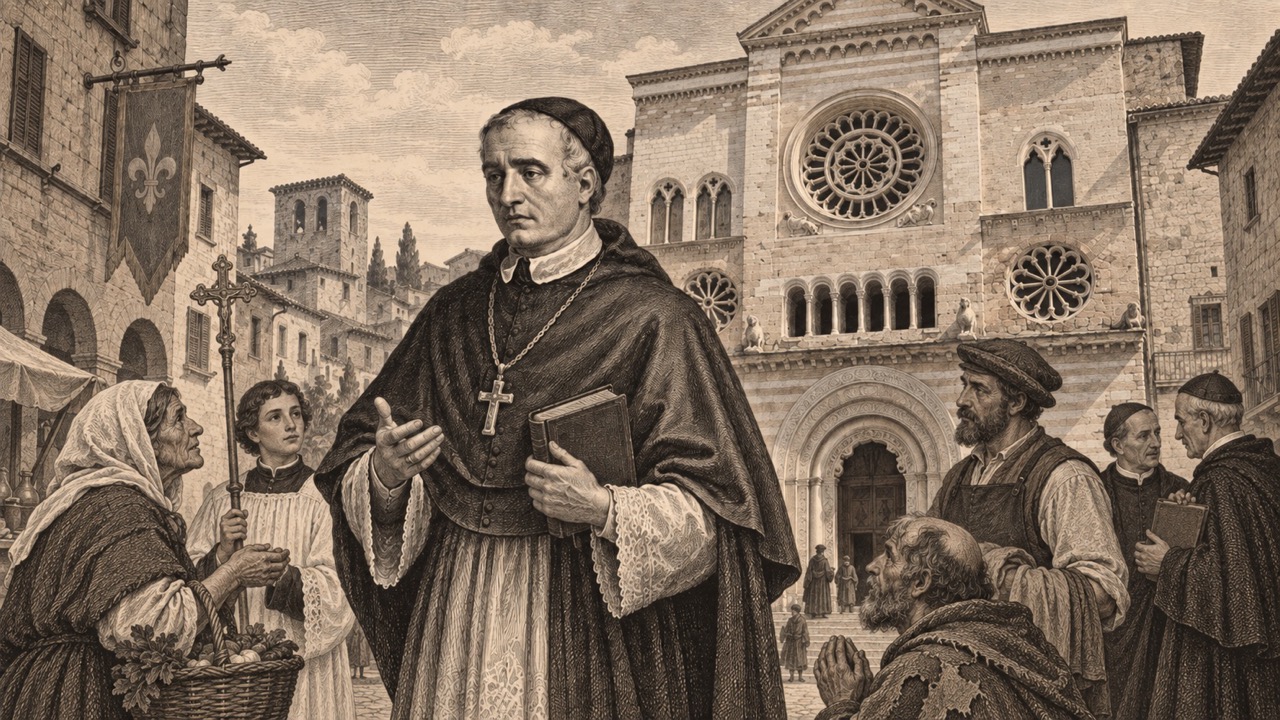
Ambrogio Catarino Politi (c. 1483–1553), born Lancellotto de’ Politi, was a Sienese jurist who entered the Dominican order and became one of the most combative Catholic controversialists of the Reformation era—a participant at Trent and an opponent not only of Luther but of Cajetan and of his own confrères on several points. His commentaries on the Pauline and Catholic epistles appeared at Venice in 1551, and his handling of Colossians carries the polemical edge of a man writing with the confessional disputes of the century directly in view.
SOURCE: Catharinus, Ambrosius (Lancellotto de’ Politi). Commentarii in omnes Divi Pauli Apostoli et alias VII canonicas epistolas. Venice: Vincenzo Valgrisi, 1551. Colossians, pp. 370–389.
TRANSLATION: Politi, Ambrogio Catarino. Commentary on the Epistle to the Colossians. Translated by Phil Thompson. Greenville, SC: Institute for Colossians Studies, 2026.
Licensed under Creative Commons Attribution 4.0 International (CC BY 4.0): https://creativecommons.org/licenses/by/4.0/
Editorial note. The argument and commentary are followed in their supplied order. The numbered notes preserve the source’s marginal annotations, including its polemical headings. These are distinguished typographically from the running exposition and retained in both languages.
English Translation
[page 370]
Argument of Saint Paul the Apostle’s Epistle to the Colossians
Colossae was a city of Phrygia near Laodicea. Saint Paul wrote this letter to its church after hearing that they had received the gospel. For this reason, he first commends them and uses strong arguments to urge them to remain in it, lest they allow themselves to be deceived by false apostles. These false apostles taught things about angels and certain principles of empty philosophy that denied that our entire salvation must be credited to Christ the Redeemer. Paul therefore exhorts them to remain steadfast in the purity of the gospel itself. Then, according to his custom, after delivering doctrine he turns to matters of upright conduct, adding various greetings at the end of the letter.
Commentary on the Same Epistle of Saint Paul the Apostle to the Colossians
Colossians 1:1–2
“Paul, an apostle of Jesus Christ by the will of God, and Timothy our brother, to the saints and faithful brothers in Christ Jesus who are at Colossae: Grace to you and peace from God our Father.”
The greeting of this letter agrees with the preceding greetings of Paul’s other letters. Only one point seems worth noting against the interpretation of those who said that Saint Paul omitted mention of his apostleship in Philippians because he had joined Timothy, who was not an apostle, with himself as a companion. Here, however, he plainly names Timothy as a brother and nevertheless mentions his own apostleship. It should likewise be noted that the words “and from our Lord Jesus Christ,” which are found in the Greek manuscripts, are absent from the Latin manuscripts.
Colossians 1:3–8
“We always give thanks to the God and Father of our Lord Jesus Christ when we pray for you, since we have heard of your faith in Christ Jesus and the love you have for all the saints, because of the hope stored up for you in heaven. You heard of this hope in the word of truth, the gospel, which has come to you, just as it is in the whole world, where it is bearing fruit and growing, just as it has among you from the day you heard and truly knew the grace of God. You learned it from Epaphras, our dearly loved fellow servant, who is a faithful minister of Christ Jesus on your behalf. He has also made known to us your love in the Spirit.”
“We give thanks,” and so forth. As is his custom, the apostle testifies that he continually gives thanks and prays for them. The subject of his thanksgiving was the grace given to the Colossians, since they already had a living [page 371] faith in Christ and, consequently, love for all the saints—that is, for all Christians, who had been sanctified by the holy washing. They had these “because of hope,” that is, because of the good they hoped for, which awaited them in heaven. Heretics who deny that we can have regard for a reward when doing good pretend not to see passages such as this. For the reward in the Lord is the goal of our love, since people compete for the crown. Thus David says, “I have inclined my heart to perform your righteous decrees forever because of the reward” (Ps 119:112). I am not unaware that some of them drag this passage in another direction. Yet they do not escape on that account, since innumerable other statements of Scripture surround them, as one may readily gather throughout.
Paul says that they heard of this hope “in the word of the truth of the gospel,” that is, through the word of truth. This word, moreover, is the word of God, because those who proclaimed the gospel preached only what they had heard from God and what the Holy Spirit prompted. Thus they could not hand down or mix any falsehood into the gospel’s place. “Which has come to you, just as it is in the whole world, and is bearing fruit,” and so forth. By “the whole world” he means only the nations known in our hemisphere. This is a manner of speaking. Thus Scripture says that, at the command of Caesar Augustus, a decree went out that the whole world should be registered (Luke 2:1).
“From the day you heard and knew the grace of God in truth.” How did they know the grace of God in truth if not through the inward experience of its taste? Let those who deny that certainty about present grace is possible reflect on these passages of Scripture.
“Just as you learned from Epaphras,” and so forth. This apostle and man is mentioned nowhere else in Scripture except in this letter. When Paul says that Epaphras made known their love “in the Spirit,” the words can yield different meanings: either that he himself made it known in the Spirit, or that the love made known was spiritual love. Up to this point Paul has spoken about the subject of his thanksgiving. He now speaks about the prayer itself, indicating what he prayed for them.
Colossians 1:9–20
“For this reason, from the day we heard, we have not ceased praying for you and asking that you may be filled with the knowledge of his will in all spiritual wisdom and understanding, so that you may walk worthily of God, pleasing him in every way, bearing fruit in every good work and growing in the knowledge of God. May you be strengthened with all power according to the might of his glory, for all endurance and patience, joyfully giving thanks to God the Father, who has made us worthy to share in the inheritance of the saints in light. He has rescued us from the power of darkness and transferred us into the kingdom of the Son of his love, in whom we have redemption, the forgiveness of sins. He is the image of the invisible God, the firstborn of every creature, because in him all things in heaven and on earth were created, visible and invisible, whether thrones or dominions or principalities or powers. All things were created through him and in him. He is before all things, and all things hold together in him. He is the head of the body, the church. He is the beginning, the firstborn from the dead, so that he might hold first place in everything. For in him all fullness was pleased to dwell and, through him, to reconcile all things in him, making peace through the blood of his cross, whether things on earth or things in heaven.”
“For this reason, from the day we heard,” and so forth. The subject of the prayer was that they might be filled with the knowledge of God’s will. For if a person perfectly knew God’s exceedingly kind will toward him and perceived it within himself with that taste which the saints possess—that is, as the apostle himself explains, “in all spiritual wisdom and understanding”—he would certainly order himself in such a way as to fulfill God’s will itself, unto the perfection of hope and future sanctification. Saint Paul explains all of this by adding, “so that you may walk worthily of God,” or worthily of the Lord, “pleasing him in every way.” What, then, do these people mean when they say that no one can walk worthily of God or please him through works?1 These words of the apostle teach the exact opposite with perfect clarity, since he prayed this for them. No one prays for something impossible.
“Bearing fruit in every good work.” If you ask the heretics about the fruit of a good work, you will find none at all. Catholics, however, affirm that the fruit of a work is an increase of righteousness in the present life and, in the age to come, an increase of eternal happiness and glory.
“And growing in the knowledge of God.” That golden saying of the most blessed Father Fran[page 372]cis2 is true: “Each person knows as much as he does.” For the knowledge of God by which we know God is the fruit of good work. The more someone works for God, the more his knowledge of him grows, and the better he understands the force of that prophetic exclamation: “How good the God of Israel is to those whose hearts are upright” (Ps 73:1).
“Strengthened with all power.” Here “power” is understood simply as strength and might. Knowledge and love of God make people strong, robust, and energetic, so that they are stronger even than death itself.
“According to the might of his glory, for all endurance and patience.” Let the heretics hear what it is that makes us strong and robust in patient endurance. Saint Paul declares that it is the might of God’s glory. For his glory, set before us as reward and crown, is so powerful that it awakens in us a wonderful hope by which we cheerfully suffer and endure every extremity. In the same way, strong and noble soldiers are set on fire and double their courage when they look toward the precious spoils of their enemies that have been set before them.
Notice, however, what the apostle adds: “joyfully giving thanks to God the Father.” Thus the patient endurance of tribulations is joined with joy—of the inward spirit, of course—and with thanksgiving. When this occurs, a person knows certainly and beyond any doubt that Christ dwells in his heart, so that he may say with the prophet, “The light of your face has been marked upon [page 373] us, Lord; you have put joy in my heart” (Ps 4:6–7). All the ancient Fathers, by unanimous agreement, testify from Sacred Scripture—which is exceedingly clear—that this certainty is present.
Thanksgiving is offered to the Father, “who has made us worthy to share in the inheritance of the saints.” What, I ask, is the inheritance of the saints if not to suffer joyfully for Christ? Yet because heretics also say that they suffer for Christ and appear to suffer joyfully, the blessed apostle added teaching peculiar to the matter by saying, “in light.” The heretics, in their pride, do indeed rejoice in darkness—if they rejoice at all. There is a kind of imaginary joy produced by false conviction and an obstinate mind, but it cannot be true and full. The true light that bears witness to them is not present. The devil himself, who incites and persuades them, does not come in the light. Otherwise no one could recognize the difference between spirits, which would be utterly absurd.
Those who suffer in Christ, however, suffer in the light and possess true certainty, while Christ plainly says to them within the heart, “I am your salvation; do not fear. Act courageously; let your heart be strengthened, and wait for the Lord” (Ps 35:3; 27:14). I have treated these things more precisely elsewhere because of the error of certain people who have written differently—falsely and, in my judgment, dangerously—as learned and devout men have also concluded.
“Who has rescued us from the power of darkness,” that is, from the demons, who are sheer darkness because Christ the Truth does not shine in them, and because they are lovers and makers of lies. We were all under their power. “And transferred us into the kingdom of the Son of his love.” The Son’s kingdom is the kingdom of light. “I am the light of the world,” he says (John 8:12). Thus he transferred us from darkness into light.
Paul calls him “the Son of his love” by a Hebrew figure of speech, that is, the Son uniquely loved. He speaks according to the part by which Christ was human. For perhaps one would speak differently about that eternal Word according to his eternal nature, lest anyone perversely understand him to be an adopted son. But these scholastic matters do not pertain to the present passage.
“In whom we have redemption.” The Greek manuscripts have, “through his blood.” We were captives in the hand of the God whom we had offended, in the hand of sin, and in the hand of the devil, by whom we were conquered. But the Lord Jesus discharged to the Father on our behalf that obedience which stood opposite the first man’s disobedience, doing so in the shedding of his blood. By that one work, satisfaction was made to God, who received the price of the blood. In that blood the efficacy of obedience was found, extending even to the dishonoring of his divinity, which the Lord himself in a certain way cast aside for us because we had seized it. In this way satisfaction was made to sin, to which that blood was paid, as it were, as a price. It was made in a similar way to the devil, who secretly arranged and sought that shedding of blood.
“Who is the image of the invisible God.” Christ is said, in a unique and preeminent manner, to be the image of the invisible God. Of us, however, it is said that we were created according to the image of God. Nor have I forgotten that Saint Paul once said that man is the image and glory of God, and therefore ought not to cover his head (1 Cor 11:7). But here it is said of Christ, “who is the image of the invisible God,” so that we may understand that he bears the perfect likeness of God the Father, who is invisible, such that whatever is in the Father may be seen in Christ. He himself said, “Whoever sees me sees my Father also” (John 14:9). A man, however, may be called the image of the visible God, that is, of Christ. Christ, insofar as he is human, is not the perfect image of the invisible God.
“The firstborn of every creature.” As the holy teachers commonly maintain, Paul calls him firstborn according to his eternal generation, not with reference to those who came afterward, as though others were begotten after him. Nevertheless, according to Scripture’s manner of speaking, the firstborn is understood as the one before whom no one was begotten, not as one after whom another was. When Paul says “the firstborn of every creature,” however, he does not regard creation according to the manner of generation, but speaks as though he had said, “Begotten before every creature.” For what is eternal is said to precede whatever is created.
I do not deny that these things can be said and are true. I do, however, doubt whether they are suitably applied to the apostle’s meaning in this passage. For why would he have spoken of the firstborn according to divine generation, when not only was no one begotten after him, but no one could have been begotten? “Firstborn,” as I understand it, always has reference to one who comes afterward, at least according to a possibility conceived in the mind. Yet it is altogether absurd to think this about God, and in my judgment the apostle did not wish to lead anyone into that thought.
Furthermore, “the firstborn of every creature” does not seem to mean the same thing as “begotten before every creature.” Rather, it means that he is the firstborn among creatures. For creatures also are said to have been begotten, not with respect to how they were created at the beginning, but with respect to how they were adopted. Thus the brother of the Lord says, “Of his own will he begot us by the word of truth, so that we might be a kind of beginning of his creation” (Jas 1:18).
Therefore, I believe it can be said both in a catholic manner and truly that Christ, insofar as he is human, has a kind of generation that can be compared with that of other creatures, and that he possesses a certain prerogative of primacy. For insofar as he is human, he is said to have been sanctified by the Father, but in an extraordinary way above other creatures. What else is that sanctification but a kind of spiritual generation accomplished through the Holy Spirit? Is not his resurrection called a generation? Saint Paul interprets in this way the word of God the Father: “You are my Son; today I have begotten you” (Ps 2:7; Acts 13:33).
Thus, insofar as he is human, according to this manner of generation, he is called the firstborn of every creature. This generation was his sanctification and the bestowal upon him of the fullness of the Spirit in relation to the other creatures, which themselves also were adopted through the Spirit. Yet this difference is established between him and the creatures: though sanctified in this way, he is not called an adopted son but the natural Son. That man had it by grace that he was the natural Son, because of the one hypostasis in which those two natures are united. [page 373] For sonship belongs to the hypostasis, since one says that the person—not the nature—is the son.3
Accordingly, under this interpretation there is no need to fear that the Lord himself, in relation to us, could be called the Firstborn according to every kind of sanctification. He is called “the firstborn of the dead” in Revelation and in Romans: “so that he might be the firstborn among many brothers” (Rom 8:29). Saint Paul indicates here the truth and rationale of this by adding what follows.
“Because in him all things in heaven and on earth were created.”4 Consider the reasoning. There is one Christ, one person, God and man, and it is true of that person that all things were created in him. But what does this mean, “all things were created in him”? Some explain “in him” to mean “through him.” This is refuted, however, because the text immediately says, “through him and in him.” Others therefore say that “in him” means as in an exemplar, because the forms of all creatable things are in him, according to whose exemplar whatever exists was created. If this is so, it should not have been said that all things were created in him, for nothing is said to be made in an exemplar but rather according to it.
I therefore prefer that we say all things were made through him, because the Son created every creature together with the Father. All things, however, were created in him as in that decreed head and foundation in which everything would be placed and hold together. For this reason he is also called “the beginning of God’s creation” (Rev 3:14) in this sense: God’s creature is joined to him through faith and remains in him like a branch on the vine, drawing from him every necessary supply.
Let no one be troubled that, in time, he came after many who had already been sanctified. For no one has been sanctified who did not receive from his fullness.5 According to divine predestination he was before them all. Knowing this perfectly well, that great Baptist said, “The one who comes after me was made before me, because he existed before me” (John 1:15). These words certainly confirm our interpretation elegantly.
He therefore had to be the Firstborn, since all things were created through him and decreed to hold together in him. First, before all creatures, his creation according to his human nature was decreed. Before the sanctification of any creature, his sanctification was decreed. Thus he became Firstborn even with respect to the angels, for they too were created, sanctified, and glorified in him. Hear the apostle express this in clear words: “Things in heaven and things on earth, visible and invisible, whether thrones,” and so forth. Here he places principalities before powers. Yet Saint Dionysius, The Celestial Hierarchy, testifies that powers are superior in dignity. Therefore an argument for superior dignity cannot always be drawn from the order in which things are named.
“And he is before all things, and all things hold together in him.” The apostle appears to speak of Christ insofar as he was God, the Word of God the Father. I understand all things to hold together not only with respect to their essential existence—since nothing except God alone can continue in existence by itself—but also with respect to every added mode of existence, by which I mean the existence of grace and blessedness.
“And he is the head of the body, the church.” He is the head because spiritual graces flow from him as from a head into us, his members. “Who is the beginning,” namely, the one from whom we proceed and in whom we hold together. He must therefore also be the head who supplies his influence, so that we may hold together in him.
“The firstborn from the dead.” Notice how “firstborn” always has a relation to others. It should be known, however, that in Scripture “firstborn” very often signifies not so much temporal order as dignity.6 For Christ, who rose from the dead, was not only first in order with respect to this, but also first in dignity. He rose as the head of the entire body and its principal member, so that he might be the cause of the resurrection of all flesh.
“So that he might hold first place in everything.” He says “in everything” so that we may understand this of every order: the order of the original creation as well as that of re-creation; the order of nature as well as that of grace; and the order of visible creatures as well as invisible ones. From this it becomes clear that Christ would have come even if Adam had not sinned.7 For he is the Firstborn of every creature and holds first place in everything. To teach otherwise is entirely contrary to reason and altogether destroys this apostolic praise of the One who glorifies. For this primacy must be considered not according to the aspect by which he was God, but according to that by which he was human, although the rationale and cause of this man’s primacy was the divinity itself.
“For in him all fullness was pleased to dwell.” The expression “was pleased” speaks of good pleasure and excludes every merit with respect to such fullness, for once this fullness was established, his merits arose. When Paul says “all fullness,” understand every fullness that can possibly be conceived. That human nature was graciously grafted into the supposit and filled with every gift that can be conceived, so that nothing could possibly be added. For this reason he is God’s unique and worthy temple, in whom the fullness of divinity dwells bodily, and in whom God the Father was well pleased (Matt 17:5).
The fullness of divinity is said to dwell in him, not because divinity admits division and can dwell in one part but not in another, but because divinity kept back for itself no gift that it did not bestow upon Christ, from whose fullness all the rest of us would receive. For nothing fuller can be conceived than that extraordinary grace of union, from which all gifts necessarily followed, since through that union this man truly was the Son of God.
“And through him to reconcile all things in him.” In the same way that all things were effectively created through him and in him, it was also fitting that all things which had been broken apart and placed under God’s wrath because of sin should be restored and reconciled through him and in him. Here also notice that all things were created through him insofar as he was God and the Word of the Father. Yet they were created in him not only insofar as he was God, but also insofar as he was human. For they were altogether appointed to hold together in Christ as man.
Because all things had been scattered and disturbed after sin and no longer held together in him according to the existence of grace, they had to be reconciled so that they might once again hold together in him. Paul therefore adds, “making peace through the blood of his cross.” The Greek adds, “through him,” intending to signify the offering of that blood made by the supreme Priest. Through it all things were made peaceful, both things in heaven and things on earth.
There is no doubt about heaven, for a great battle took place in heaven. It should be known, however, that all things were made peace[page 374]ful in the hope of Christ’s coming kingdom, through which the ruin of the angels had to be completely repaired. After recounting that expulsion and fall, the Beloved explains this, saying, “And I heard a loud voice in heaven saying, ‘Now have come the salvation and the power and the kingdom of our God and the authority of his Christ’” (Rev 12:10).
Yet afterward, when the earth was undermined by sin through the devil’s craft and envy and everyone was corrupted, Christ’s kingdom was not merely disturbed but so completely destroyed that nothing of it remained, unless he once more acquired and restored it for himself, insofar as this could be done. For heaven lamented its citizens: it no longer saw the angels who had fallen, and it mourned that those who had been appointed to take their place in the restoration had been cast out through the devil’s craft.
Christ therefore once again made peace with all things through his blood. Through it earthly people were brought to life, and many of them have become and are becoming victors over the demons in a new battle with him. To the words quoted above, the Beloved added this: “For the accuser of our brothers has been cast down, who accused them before the sight of our God day and night. And they conquered him because of the blood of the Lamb and because of the word of their testimony, and they did not love their lives even unto death. Therefore rejoice, heavens, and you who dwell in them” (Rev 12:10–12). Notice how aptly and harmoniously this agrees with the statement that all things in heaven were made peaceful.
But it is doubtful how all things on earth have been made peaceful. This not only fails to appear true but would seem altogether false if we wished to follow the opinion of certain people and maintain that Christ’s blood was shed only for those predestined and elected from the beginning, so that, according to the divine arrangement, some—that is, most—of that mass of humankind were left in their perdition before any new merits or demerits were foreseen. This plainly would not have been to make peace with all things, because God’s eternal wrath remained upon that majority with whom he made no peace at all.
For this reason I see no way that claim can be asserted; indeed, I cannot hear it without horror. The Savior and Redeemer of all certainly made peace with all things. Unless something new occurs, or unless someone willingly falls into a new crime, everyone without exception is restored. No one, I say, will receive eternal punishments because of that ancient sin, as we have often proved effectively and at length.
Colossians 1:21–29
“And you, who were once alienated and enemies in mind through evil works, he has now reconciled in the body of his flesh through death, to present you holy, spotless, and blameless before him—if indeed you remain grounded and steadfast in the faith, unmoved from the hope of the gospel that you heard, which has been preached to every creature under heaven. I, Paul, became its minister. I now rejoice in my sufferings for you, and in my flesh I fill up what is lacking in Christ’s sufferings for his body, which is the church. I became its minister according to the stewardship from God that was given to me for you, to fulfill the word of God: the mystery that was hidden from ages and generations but has now been revealed to his saints. God willed to make known to them among the Gentiles the riches of the glory of this mystery, which is Christ in you, the hope of glory. We proclaim him, warning every person and teaching every person in all wisdom, so that we may present every person perfect in Christ Jesus. For this I also labor, striving according to his working, which works powerfully in me.”
“And you, who were once alienated,” and so forth. In this passage Paul recalls the effective fruit of the gospel in them and how they were transferred from the power of darkness into the kingdom of God. He says that they were once alienated from God and were also enemies in feeling—or rather, in mind—through evil works, because they approved of those works and consented to sin according to the higher part of the human person, which is mind and will.
He says that these same people were reconciled to God, not by works, since their works were evil and they were unable to perform good ones. He therefore teaches that reconciliation was accomplished in the body of the Son’s flesh, in which God placed our sins, and that through his death all of them are found to have been extinguished, provided his death is applied to us, which occurs through baptism. Up to this point the heretics appear to agree with us. But they disagree most sharply over what follows, in which the benefit of our salvation consists. Let us therefore hear attentively, and not with deaf ears, what end the apostle assigns to reconciliation. He says:
“To present you holy, spotless, and blameless before him.” The meaning here is plain: he reconciled you in this way so that he might present you holy, not by imputation but in truth; “and spotless,” that is, without the stain of crime; “and blameless,” that is, deserving no blame—not before people, who can be deceived and often are, but “before him,” God.
Nevertheless, this demand for blamelessness should not be understood so minutely that a person is entirely free from every fault, since human frailty does not permit that. Rather, anyone who abstains from crime and is not a violator or transgressor of a commandment is to be regarded as sufficiently blameless, for these terms signify mortal sin. This, then, is what the Lord requires of us, not merely an idle and dead faith. We provide this if we embrace the Mediator sincerely and without deceit; then, coming through grace, he purifies our hearts.
Yet that is not enough. We must remain steadfast in the faith. The heretics also confess this, but they assert that it is sufficient. They are greatly mistaken and, what is more, deceive others. See what Saint Paul adds:
“And unmoved from the hope of the gospel.” A person who is deprived of grace through faults and sins and is empty of good works is not immovable from the hope of the gospel. True gospel hope rests upon good works, so that it may be the hope which does not disappoint and which, according to the apostle’s testimony, has love as its companion (Rom 5:5). Heretics who wish to depend upon faith alone do not weigh these things. [page 375] Therefore, they first strip themselves and then those who trust them of true and living faith, and in lamentable ways they kill and destroy them.
Saint Paul continues speaking about the gospel they heard, testifying that even at that time it had been preached “to every creature under heaven.” Do not understand this to mean that it had then been preached in every place. Rather, its fame had already reached every nation under heaven; he is speaking of the known nations. For at Rome, Jerusalem, and many other celebrated places where the gospel had already been preached, people of every nation were living. Otherwise, Saint Augustine testifies that even in his own time the preaching of the gospel had not reached every part of the world.
When Saint Paul calls himself a minister of the gospel, he adds the following to prove it: “I now rejoice in my sufferings for you.” Here Cajetan pointedly says that one should observe how this joy in afflictions clearly verifies a true minister of the gospel. From this we may gather that certainty of grace is experienced through tribulations patiently endured.
“And in my flesh I fill up what is lacking in Christ’s sufferings for his body, which is the church.” This statement of the apostle utterly cuts down and pierces the heretics, and they have nothing with which to answer it except deceptions and mere cavils mixed with their customary blasphemies. Therefore, before I descend to the true exposition of this passage, I will quote the words from the commentaries of one of them, Burlinger, so that the prudent reader who desires his own salvation may recognize how they are pressed by the very force of truth when they are compelled in this way to fly into a rage and to seek some color for their falsehood.
“Certain blasphemous men,” he says, “have twisted this passage into an insult against the Lord Jesus’ absolute satisfaction, as though something were lacking in his merit which could be supplied by our powers, our afflictions, and our distinguished meritorious works. The mind shudders at such great blasphemy. By this interpretation the principal doctrine of the Christian faith is violated. For all Scripture and all the saints from the beginning of the world testify that the sin of the whole world is washed away by the precious blood of Christ. Paul says the same here, while elsewhere he reckons the sufferings of the present time as nothing in comparison with the future glory that is to be revealed toward us (Rom 8:18). Common sense also suggests that earthly and feeble things bear no comparison with heavenly and absolutely perfect things. Be ashamed, therefore, of this foul, blasphemous, sacrilegious, and abominable invention. Could your weakness fill up what the absolutely perfect Son of God left imperfect? O devilish presumption!”
These are the words of that unhappy slanderer and utterly feeble defender of his error. Please hear how he interprets the passage itself and for what reason he rebukes us—that is, the Catholics—for he immediately adds:
“Hear Paul speaking more plainly in Greek: καὶ ἀνταναπληρῶ τὰ ὑστερήματα τῶν θλίψεων τοῦ χρ̄υ, that is, ‘and I fill up what remains—not what is lacking—of Christ’s afflictions.’ For the Greeks use ὑστερήματα not only for things that are lacking but also for what comes afterward and for remnants, in which sense Ambrose used the word: ‘The things that remain and that have been left for later.’ Peter says that Christ suffered for us, leaving us an example so that we might follow in his footsteps (1 Pet 2:21). The apostle therefore says that he filled up these remnants.”
These, again, are the words of that truly unhappy heretic. Reader, pay attention. Since this man appeals to the meaning of the Greek word as though it had been wrongly translated, a few things must first be said about the word itself. Recognize his great dishonesty joined with equal ignorance. He himself admits that the word has the meaning in which our translator renders it, since he says it signifies not only “the things that are lacking,” but also “the things that remain” and “the things left for later.” With what shamelessness, then, do you lash the translator, Burlinger, when the word itself, by your own judgment, signifies that? Indeed, all who are most skilled in the Greek language have interpreted it in this way. In fact, no one who is not senseless could interpret it otherwise.
Does not the apostle say that he fills something up? What, then, is filled up: what abounds, or what is lacking? For this reason the word also signifies what is left for later, because what comes later is lacking to what came before. Nor do we grant you as true that it signifies “the things that remain” except in the sense that the things which remain do not yet exist but will come afterward. Saint Paul himself uses precisely the same word when writing to the Thessalonians, where he says that he completes what is lacking in their faith (1 Thess 3:10), with the same meaning in which he uses it now.
But I confront you again, miserable man, who, as though fighting for the gospel, call us blasphemers because—if you were to be believed—we have twisted this passage into an insult against absolute satisfaction. What, then, are those remnants that Saint Paul testifies he fills up here? Tell us, please; cast off your shame. You say it is the example which the Lord left behind. But the example he left is not filled up, nor is there anything later that fills up so perfect an example, even though it was left for posterity to take up. You must therefore admit that Paul fills up the imitation which remains.
Now listen. Does not Saint Paul say elsewhere, “Be imitators of me, just as I am of Christ” (1 Cor 2 [sic]; cf. 1 Cor 11:1)? But why does this not injure the absolutely perfect example? If Christ was given to us as an example, why was Paul required in addition? Indeed, why did Paul himself present himself as an example? Was Christ’s example perhaps diminished? Far from it. Therefore, just as it did not obstruct the absolutely perfect example of the Head if other, more excellent imitators of his could present themselves as an example to others, so nothing detracts from his absolutely perfect merits and satisfaction when the merits and satisfactions of others are obtained for others and benefit them. Christ himself merited that they could do this; he himself willed, granted, and helped those same people to accomplish it.
To explain this still more fully, let us first consider the truth, according to the church’s understanding, concerning the satisfaction and merits of Christ, which he obtained for us through his afflictions. This is the solid teaching of God’s holy church: Christ Jesus our Redeemer, by his passion and satisfaction—or by the merits of his passion—accomplished the forgiveness of [page 376] sins for everyone. Yet he did this not absolutely, but in an ordered manner according to the proper and appropriate conditions: namely, if those merits are applied, grace is given, and the person is properly established in Christ Jesus.
Those merits are applied through faith and sacrament. The prayers and merits of the saints help some people come to faith and receive the sacraments. That every sin is entirely removed from those who receive the first sacrament of baptism is accomplished by Christ’s passion and satisfaction alone, and no Catholic denies it.
But if those who are in Christ through faith and have already become members of Christ the Head in the body of the church fall into sins again, Catholics have never doubted that the prayers and sufferings of the saints benefit them, so that they may return and live and—provided they come to their senses—make satisfaction for sins. See how our Savior is moved by the prayer and faith of others to heal the paralytic from the diseases of sins (Matt 9:2–6). The gospel narrative plainly proves this.
If the prayer of the saints benefits people toward this end, does it therefore injure the prayer of Christ, who prays for everyone, as though something were lacking in it? Far from it. Your argument is worthless, heretic—I repeat, it is worthless—because through the prayer of Christ it was brought about that the prayers of the saints also have power. Thus, in the end, everything is encompassed within the merits of Christ. Because of this grace, in the church under the direction of the Holy Spirit, every prayer in which the intercessions of the saints are invoked concludes in this way: “Through our Lord Jesus Christ.”
It is no different with satisfactions for liability to punishment. The afflictions of the saints do benefit us, so that in this way the punishments we owe may be paid through them. Yet the fact that they benefit us in this way proceeded from the merits of the Lord himself, so that the merits of the saints are reckoned as his merits. For the entire body of the church together with its head is the one Christ called mystical. The whole of this Christ must be struck with wounds, so that from the crown of the head to the sole of the foot no soundness remains in it (Isa 1:6), both to make satisfaction and to merit glory. In this way Christ both made satisfaction for us in our need and merited the greatest glory for his own.
I now return to the interpretation of the present passage. Paul had first said that they were reconciled to God, and that this occurred through the Lord’s death and satisfaction. For no other saint contributed to that work by his own sufferings, except through the ministry of preaching alone. “Of which I became a minister.” Then he says “now.” When? Now—that is, only after their reconciliation, after they became members of the Redeemer and capable of receiving saving influences through other, more important members.
“Now, therefore, I rejoice in my sufferings.” Why, holy apostle, do you rejoice in your sufferings? What good can there be in them? Certainly sufferings in themselves are not merely not good, but evil. Paul therefore says, as though answering, “I rejoice for you.” It is as if he had said, “I am filled with joy for this reason: these sufferings benefit you.”
“And I fill up.” Here “and” is used for “because,” a usage customary in Scripture: “because I fill up”—or, as they prefer, “because I supply what is lacking,” or “what remains to be added.” In this way they are lacking “from the sufferings of Christ,” that is, from those sufferings which Christ himself endured. I supply them “in my flesh,” that is, in the outward person, for the inward person was rejoicing. He suffered for Christ’s body, “which is the church.”
Here the heretic cries out as though zealous against us—or rather, not against us but against the apostle: “O blasphemous, sacrilegious, abominable people! Did Christ, then, not endure enough sufferings for an absolutely perfect satisfaction, so that it was necessary for Paul to suffer as well?” Please listen and understand, lest you burst because you have been so inflated and distended with zeal.
The Lord was indeed filled with sufferings to redeem the universal church, the purpose for which he came, and he lacked no sufferings for reconciling it. Yet after reconciliation, when the members willingly fall back into sins and various weaknesses and liabilities, they do not have—so that they may be restored again—the primary satisfaction from the Lord’s sufferings in the same complete form that they had at the beginning. This is not because his sufferings and merits, which are boundless and infinite, are exhausted. Rather, it is because it is not fitting for them to be spent so cheaply and with such great contempt, with the result that he is crucified again and again—not once, but twice, three times, ten times, a hundred times, a thousand times, and finally without end.
This would occur if, after Christ’s death had once been applied to each person, that person wished to apply it to himself again, and in a certain manner to have Christ die for him again and to hold him up to public shame, as Saint Paul says (Heb 6:6). Therefore, when a new sin arises after reconciliation, the Lord does not will that satisfaction be made for it entirely anew from his own sufferings, so that every liability to punishment is removed. Instead, he most justly willed that the member who sinned should make satisfaction for himself.
And since the church, which is one body, has many members, for the sake of fittingness he willed that one member should also be able to suffer and make satisfaction for another because they are bound together in one Spirit. In this way, what one member pays on behalf of another is reckoned before God as though that member had paid it.
Now because the greater and nobler members of Christ, living innocently after their reconciliation so that they might be more conformed to the image of the Head, endured sufferings beyond measure, God willed—and this through the merits of the Firstborn himself—that those sufferings should turn to the good and satisfaction of the other members. This serves the greater glory of the Leader himself.
For the Savior first redeemed and acquired the church by his blood alone. Yet he does not wish to preserve and benefit the church he acquired by himself alone. Rather, so that he might unite us more tightly by the bond of love, he arranged for one member to be helped by another and for one to make satisfaction on behalf of another who was in need. I repeat—because it must be said more often on account of deaf heretics—not as though Christ’s merits were exhausted. On the contrary, this honor was obtained here by his merits, and this Spirit was given to the members so that they could help one another.
This is the communion of saints in the Apostles’ Creed, which the heretics do not accept. What belongs to Christ’s greatest glory they most slanderously turn into a detriment to him. Christ’s sufferings are therefore “lacking,” not because he failed in the least to suffer to the utmost, or because there is any deficiency in his merits, as though he had not abounded in mer[page 377]its beyond all measure. Rather, it is because the Lord does not wish those merits of his to be spent except in the manner he prescribed, so that room may be given to his saints to supply what is lacking—something that also derives from Christ’s own merits. For the merits of the saints are Christ’s merits. He himself merited that they should exist, and now merits of this kind are one with Christ. Thus, whoever persecutes the church also persecutes him, as the Lord charged Paul (Acts 9:4).
From this is formed that treasury of the merits of Christ the Head, the most holy Virgin Mother, and the saints of God. Its administration has been entrusted to the most blessed Pope, Christ’s supreme Vicar on earth, and indulgences flow from it.8 The mocking heretics ridicule this treasury and this authority to administer it. Yet soon those wretched people will themselves pay the penalties for their mockery and will laugh no longer. They defraud their wretched and sinful congregations of such great goods and aids, so that they do not share communion with the saints. They do not know the ointment that first runs down upon Aaron’s beard and then down to the hem of his garments (Ps 133:2).
Lest anyone falsely suppose that we say these things to flatter the Pontiffs, we add that we do not at all deny that shameful abuses have occurred in administrations of this kind. We do not deny them; we do not defend them. But what has this to do with destroying the truth of the matter? The abuses themselves should have been corrected; the truth of the practice should not have been abolished. But enough on this matter.
“Of which I became a minister.” He calls himself a minister of the church, though earlier he said that he was a minister of the gospel. There he spoke of the thing he ministered; here he speaks of the persons for whom, or for whose benefit, he ministered, who were the church. He can also be called a minister of the church in the sense that he was ordained by the church and acted in the church’s name—that is, in the name of the Head of the church. In this way all of us are ministers of this kind, provided that by “the church” you understand its supreme and primary Prelate. The Lord meant it in this sense when he said, “Tell it to the church,” as the holy teachers explain (Matt 18:17).
What Paul adds next makes clear, however, that he received this ministry from God and not from the church: “according to the stewardship from God that was given to me for you,” that is, with respect to you, because the apostle had been chosen particularly for the Gentiles. “To fulfill the word of God,” by which God had promised that his kingdom would also reach the Gentiles. The Lord often threatened the unbelieving Jews with this. They objected, “Will he go to the dispersion among the Gentiles and teach the Gentiles?” (John 7:35). In the parable of the vineyard, when he concluded, “The kingdom of God will be taken away from you and given to a nation producing its fruits,” the leaders understood, the Evangelist says, that he was speaking about them (Matt 21:43, 45).
“The mystery that was hidden from ages.” This has already been explained in the commentary on Ephesians. Paul calls it a mystery, that secret unknown “from ages,” that is, unknown to the children of this age. Or “from ages” can mean from the beginning of the ages. The first is truer, however, since he adds “and generations,” the various generations which have existed within the ages. There was the generation of the Jews, and there was also that of the Gentiles, which was divided into many groups, Greeks and barbarians. Nevertheless, it was known to many prophets of both peoples.
“But has now been revealed to his saints.” Although the Scriptures contained it, it was not understood while it was covered by veils. Therefore, Paul says that it has now been revealed by God to his saints, through whom it would be revealed to the ages and generations themselves.
“To whom God willed to make known among the Gentiles the riches of the glory of this mystery.” He signifies the apostolic preaching commanded by God, through which this mystery would be disclosed to the Gentiles by signs, wonders, and astonishing mighty works, as may be seen in part in the Acts of the Apostles.
“Which is Christ in you, the hope of glory.” This is how the Latin reads, and the clause should be referred to the mystery. The Greek reading, however, permits it to be referred to those riches of glory which Paul says are Christ in them. For the pledge of the Spirit given to Christians is nothing other than Christ received through faith and love, who alone surpasses all the riches of this world, even when accompanied by persecutions.
Yet no one experiences riches of this happiest kind unless he first completely frees his heart from perishable things and follows Christ without reservation. Then, even in this life, he finds the precious pearl and the treasure hidden in the field (Matt 13:44–46). Hear the Evangelist’s testimony. Jesus answered and said, “Amen, I tell you, there is no one who has left house, brothers, father, mother, children, or fields because of me and because of the gospel who will not receive a hundred times as much now, in this time—houses, brothers, sisters, mothers, children, and fields, with persecutions—and eternal life in the age to come” (Mark 10:29–30). Christ is now seen through a mirror in an enigma (1 Cor 13:12), and he is the hope of our perfect glory. He gives the pledge that meanwhile makes us certain of the future, provided we remain in the grace we have received.
“Whom we proclaim, rebuking”—or rather, warning—“every person, and teaching.” Here the Greek manuscripts add “every person,” for teaching is necessary for everyone. It had been written, “They will all be teachable by God” (Jer 31:33–34; John 6:45), that is, they will receive the things necessary for a person to be directed toward God. “In all wisdom,” which looks toward the end and leads to it.
“So that we may present every person perfect in Christ Jesus.” Listen, whoever you are who remains ignorant of the divine gifts and the power of God, so that when you act negligently you are very quick to excuse yourself and say, “We cannot all be perfect. We cannot all renounce everything we possess.” But here the apostle taught every person so that he might present every person perfect in Christ Jesus. He did not say absolutely perfect, but perfect “in Christ Jesus.” Everyone who exists in him is in some manner called perfect if he remains in love. For in Christ Jesus every imperfection is swallowed up through sincere confession, so that the person who both recognizes and confesses his imperfection is called perfect.
There are nevertheless different degrees or states in the church and kingdom of Christ. When these are compared with one another, one is said to possess perfection above another. Such is the state of bishops, which demands the highest and perfect works of love. Likewise there is the state of members of religious orders, who profess those things which more readily lead to stricter perfection.
Yet one point should not be passed over in silence. Let the attentive reader consider how often, and not without reason, Saint Paul repeats “every person,” saying [page 378] that he warns every person, teaches every person, and finally presents every person perfect in Christ Jesus. These things, I repeat, must certainly be considered against that doctrine preached in our time by certain people to the great scandal of the peoples: the doctrine concerning those who are elected and those left in the mass of perdition. Nothing more destructive than this can be spread among the common people, as we taught above.
“For this I also labor, striving according to his working, which works powerfully in me.” Here is the goal of all the labors and struggles of Christ and the apostles: that through them we may be perfect in Christ Jesus, equipped for every good work (1 Tim 3 [sic]; cf. 2 Tim 3:17). Devout reader, you will also note how the apostle always attributes everything to the power of God working in him, especially those heroic works that he performed, which were utterly full of divine strength and power.
Chapter II
Colossians 2:1–7
“For I want you to know how great a concern I have for you, for those at Laodicea, and for all who have not seen my face in the flesh, so that their hearts may be comforted, joined together in love and unto all the riches of the fullness of understanding, in the knowledge of the mystery of God the Father and of Christ Jesus, in whom all the treasures of wisdom and knowledge are hidden. I say this so that no one may deceive you with lofty speech. For although I am absent in body, I am nevertheless with you in spirit, rejoicing as I see your good order and the firmness of your faith in Christ. Therefore, just as you received Jesus Christ the Lord, walk in him, rooted and built up in him and established in the faith, just as you were taught, abounding in him with thanksgiving.”
“For I want you to know,” and so forth. The text is easy. Paul conveys the longing that set him on fire for them to know his almost motherly concern. In Greek it reads, “struggle,” which he felt on their behalf and on behalf of those who were at Laodicea, even though they did not know him by sight. The Laodicea of which he speaks here was a city of Asia.
He desired this so “that their hearts may be comforted, joined together in love.” “Joined together,” “fitted together,” or “glued together in love” would be better. For brothers who are joined together in Christ receive the greatest comfort when they hear that faith is prospering and Christ’s glory is growing. Refreshed by this experience, the prophet says, “See how good and how pleasant it is for brothers to dwell together in unity” (Ps 133:1).
“And unto all the riches of the fullness of understanding.” The word πληροφορία (here appearing as πληροφορίας), which the translator renders “fullness,” signifies certain knowledge and conviction in the understanding without any doubt.
“In the knowledge of the mystery of God the Father and of Christ Jesus.” The Greek reads, “both of the Father and of Christ.” Without doubt, the knowledge of the entire mystery consists in these two persons, since the Spirit of both is consequently understood. Indeed, it consists even in Christ alone, since he says, “Whoever sees me sees my Father also” (John 14:9). The apostle makes this still clearer when he says, “in whom”—namely, Christ—“all the treasures of wisdom and knowledge are hidden.” It is certainly the greatest knowledge to know Christ, since all the Father’s wisdom and the knowledge of everything desirable and most delightful to know are hidden in him. To recount these things would require a long history and lies beyond our ability.
“I say this.” Reflecting on human misery, the apostle knew that unless a person is truly and perfectly rooted in Christ, he can easily be led astray and fall through temptations, weariness with the practice of a good life, and false persuaders. He therefore explains his concern and the reason for the concern he had for them when he says, “I say this so that no one may deceive you with lofty speech.”
The Greek word πιθανολογία is used, which signifies the persuasiveness—so to speak—of speech. But the kingdom of God is not in speech, but in power and truth that penetrates the heart, not in language that caresses the ears (1 Cor 4:20). Nearly all the founders of heresies have possessed polished speech and eloquence. For they are assisted—which many people do not believe—by the devil, who is an outstanding rhetorician and sophist. He has produced such people for us in our own time.
So that Saint Paul might not seem to be concerned in vain, he says, “For although I am absent in body, I am nevertheless with you in spirit,” and so forth—that is, in concern and loving affection. Let those entrusted with the care of souls take note, particularly the hirelings. Most of them are indeed bodily present so that they may empty purses, not cleanse consciences. In love, however, they have gone very far away—not by changing place, but by withholding comfort.
The apostle was not like this. Although in spirit he joyfully saw their good order and the firmness of their faith, he did not consider it so stable that he failed to foresee the danger threatening them from false teachers. Therefore he exhorts them to remain firm.
“Therefore, just as you received Christ the Lord,” that is, received that he is the Lord who acquired us by his own blood and rescued us from the tyrannical dominion of the vilest one, “walk in him” by continually advancing through good works, “rooted and built up.” The Greek is better: “be rooted and built up in him, and be established in the faith, just as you were taught.” Good works are what accomplish this rooting, building up, and establishing of faith, just as the Prince of the Apostles says: “Be diligent to make your calling and election certain, or firm, through your good works” (2 Pet 1:10).
It should also be noted that the apostle was endowed with a more certain, particular gift by which he prophetically foresaw the condition in which the churches found themselves. For he had care for them but could not be bodily present everywhere.
“Abounding in him.” The Greek has “in it,” namely, in faith, and this is more correct. The person who works through love abounds in faith, “with thanksgiving.” This is supremely necessary. What is more due than grateful remembrance? What is more effective for preserving and increasing gifts? Otherwise, even the gifts already given are deservedly taken away.
[page 379]
Colossians 2:8–15
“See that no one deceives you through philosophy and empty deceit, according to human tradition, according to the elements of the world and not according to Christ. For in him all the fullness of divinity dwells bodily, and you have been filled in him, who is the head of every principality and power. In him you were also circumcised with a circumcision not made by hands, in the stripping away of the body of the flesh, but in the circumcision of Christ. You were buried with him in baptism, in which you were also raised through faith in the working of God, who raised him from the dead. And when you were dead in your offenses and the uncircumcision of your flesh, he made you alive together with him, forgiving you all your offenses. He erased the handwritten record of the decree that stood against us, which was contrary to us. He took it out of the way, fastening it to the cross; and stripping the principalities and powers, he confidently exposed them in public, triumphing over them in himself.”
“See that no one deceives you,” and so forth. After warning them not to allow themselves to be led astray through eloquence and persuasive speeches, Paul now warns them again to take care that they not be deceived or become captives and spoils through “the snares of philosophy and words composed to deceive, according to human tradition.”
There were philosophical traditions that held sway in the schools of Greece and stood in the way of our faith. For example:
- Nothing comes from nothing, and nothing can return to nothing.
- There is no return from privation to possession.
- The existence of an accident is to inhere.
There were other propositions of this kind. Unless these are understood with restraint, the foundations of our faith are removed. The first removes the creation of the world. The second denies many miracles and the resurrection of the dead itself. The third removes the most holy Sacrament of the Altar.
These axioms, therefore, are either false and are not axioms, or else they must be admitted only according to natural causes. For no efficient cause other than God can generate or create anything from nothing—that is, without presupposing a subject and by way of generation. Nor can the resurrection of the dead, the restoration of sight, or an accident without a subject arise from the power of nature. But there is no reason, not even an apparent one, why these things should be impossible for Almighty God.1
For this reason, from the day I began to devote myself to these studies, I have never been able sufficiently to marvel at certain philosophers who maintained that philosophy had persuaded them otherwise. They displayed no less ignorance than unbelief. The apostle therefore exhorts his readers against these people in this passage and touches upon the true cause of their error: they derive those false and empty principles from human tradition.
But someone might object, “Were not those human traditions established by wise men through reason so that they would be evident?” Our Teacher answers that those traditions are “according to the elements of the world,” that is, they were taken from the elements of the world and from the order and causes observed in the world. Because the philosophers saw that nothing was brought into existence unless matter first existed, they said without qualification that the world could not have been produced but had existed from eternity. Likewise, because they had never seen anything return from privation to possession, they denied without qualification that this could occur. Similarly, when they observed that inherence is proper to an accident, they believed that this entered into its formal definition and belonged to its essence.
But this is not so. An accident is one thing and a substance another. Although an accident, because of the weakness of its existence, is by nature unable to subsist naturally by itself, can the one who gave existence to all things not also sustain weak things by his power? And has the Lord of order and causes bound his own hands so that he cannot act beyond that order and beyond those causes?
The fallacy of the philosophers is therefore plain. From these elements they establish for themselves principles that indeed help in understanding the powers of nature, but do not apply against omnipotence. Omnipotence must not be understood from these elements, but from a higher and far more perfect principle—namely, Christ. Therefore Paul says, “but according to Christ.”
To think “according to Christ” is to hold that no word is impossible with God (Luke 1:37), that Christ is the fountain and beginning of all things that exist, the life of all who live, and the resurrection of all who die. Not only are all things possible for Christ; they are also possible for everyone who believes in him (Mark 9:23). Christ declared these things to be absolutely true not by a bare word, but by experience and the thing itself: giving sight to the blind, raising the dead and himself, and not only performing countless other works himself but also giving others power to perform the same works and greater ones (John 14:12).
Because they understood this passage foolishly, certain stupid and senseless people took from it an opportunity for error.2 They therefore condemned the sciences and arts established by natural light, because philosophy appears to be condemned here by the apostle. In their lack of judgment, they do not notice which philosophy is condemned. The apostle does not condemn true philosophy, but the kind constructed from human opinions and traditions, which opposes God and does not rest upon any true and effective natural reason.
Otherwise, light does not oppose light; indeed, it favors it and is even presupposed by it. If we lacked natural light, how could supernatural light be learned? The apostle himself, our teacher, very often uses natural arguments which have force among human beings for persuading them of things above the order of nature itself.
Yet the heretics—than whom no class of people more deceptive and underhanded can be imagined—also twist this passage against the church’s institutions, which they reject as though they were human traditions. One of them writes the following on this passage:
“The false apostles at Colossae followed this kind of philosophy. In part, they fled to the defenses of human wisdom; in part, they urged circumcision, sacrifices, and legal observances, as though Christ [page 380] alone were ineffective for obtaining justification and true wisdom. Today too one may see how much equipment certain people teach is necessary for obtaining the blessed life. They do this not without an appearance of goodness and not without arguments. Add also that they do not act without passages of Scripture—though passages they have twisted. One preaches the powers of free choice, another boasts of meritorious and satisfactory works, another praises the rules of the monastic life in all their variety and strictness, and still another urges people to embrace the most generous graces of the saints, Masses, and indulgences. Christ and his expiation are mentioned very rarely. Very extensive disputations have been written about these things. But Paul condemns them all here. They are philosophical, that is, empty things produced by human institution, concerned with externals and leading people away from Christ.”
These are the words of that beast. Yet how impiously—not merely falsely and foolishly—he speaks is very easy even for a child to see. What could be more stupid than to say that the monastic life, Masses, indulgences, and invocations of the saints arose from philosophy? What could be more false than to call them human traditions, when they are drawn from the very fountain of the gospel? Likewise, what could be more impious than to assert that these things lead us away from Christ, when by them we are made to cling most tightly to him?
Finally, what could be so slanderous as to charge that Christ is not mentioned in them, when everywhere and in all the church’s prayers and ceremonies the name of Christ himself is repeatedly—as is fitting—expressed with honor, adored, and invoked? O singular shamelessness! And what else is the Mass but an offering and sacrifice, and the memorial of Christ’s sacrifice and expiation? What are indulgences themselves but the administration of the merits of Christ and the saints? What is the monastic life but the following of Christ, the distilled essence of the gospel life and purity, and a profession of more perfect righteousness in imitation of Christ?
Why, then, does the unhappy heretic babble here—indeed, blaspheme—by saying that Christ is not mentioned in these things? What I say against this scoundrel I say also against the others made of the same flour, who dare to attack these things and condemn them with such great blasphemies. But let us return to our subject so that we do not wander too far.
Because the apostle had said that we should seek knowledge not according to the elements of the world but according to Christ, he added, “For in him all the fullness of divinity dwells bodily.” This is a wonderful and unheard-of way of speaking, because the reality that had to be explained is itself wonderful beyond every wonder and unheard of.
The first wonder is that divinity dwells in Christ. For it is not customary to say that God or deity dwells in anything according to its nature. We do indeed say that God exists in every thing through power or might. Yet Scripture does not ordinarily use “dwell” except of those who have been made temples of God. Thus Revelation says, “See, God’s tabernacle is with humanity, and he will dwell with them” (Rev 21:3). And in Corinthians, from the testimonies of Scripture, the apostle says, “God says, ‘For I will dwell in them and walk among them, and I will be their God,’” and so forth (2 Cor 6:16).
But the fullness of deity is said to dwell in no one except Christ alone. Although some people are said to be full of God, we do not read that the fullness of God is in them. Most extraordinary of all, Paul says “bodily,” that is, according to the flesh. For this is unique to Christ because of that singular union of natures: the Word became flesh and dwelled among us (John 1:14).
From this passage Nestorius inferred that there were two persons in Christ,3 constructing the following argument: If deity dwells in Christ, then there must be one hypostasis of the God who dwells and another of that which is indwelt, the body. But he was greatly mistaken. For our soul is also said to dwell in the body, and yet it does not have a person of its own; rather, the person of the body and soul is one and the same.
Furthermore, the apostle’s statement that deity dwells “bodily”—as the holy teachers have observed—sufficiently indicates the mode of that divinity in which the body participates. This is what he means by “bodily.” Deity does not cease to be deity on this account, nor can any confusion or mixture be understood to have occurred because he said “dwell.” For one who dwells is not confused or mixed with the thing in which he dwells.
Yet so great a reality is not adequately explained even in this way. It is a new thing the Lord has done upon the earth (Jer 31:22), more worthy of veneration and wonder than of anxious and curious investigation.
“And you have been filled in him, who is the head of every principality and power.” Since you have been filled in the one who is the head even of all the angels, as though you were his members through the inflowing of the Holy Spirit, you must not turn from the right way, listen to impostors and deceivers, and withdraw from the head. The inflow of life immediately ceases when the members do not remain under the head but are cut off or separate themselves.
Because the false apostles were preaching circumcision of the flesh—a proclamation that acquired considerable authority because of Abraham and Moses—Saint Paul discloses the truth of the matter and adds what follows so that they may not be deceived in a third way. Three things at that time opposed Christian truth.4
“In whom you were also circumcised.” The first was the loftiness or persuasiveness of speech. The second was the pronouncements of the philosophers. The third was the law of Moses, particularly the part concerning ceremonies and that first ceremony of circumcision, which came not from Moses but from the patriarchs. Having rejected the first two, Paul comes to the third. As a most learned theologian anticipating what some people objected and answering it at the same time, he appears to ask them: “What do these people want from you? Is it not that you should be circumcised? But you have already been circumcised.” If they were to ask, “How?” he answers, “In Christ.”
Many people still do not understand what it is to be circumcised in Christ—indeed, they do not even understand what it is to be circumcised. But since circumcision is nothing other than the removal of the foreskin with a stone knife, if we do not understand what the foreskin is, neither will we understand what circumcision itself is.
There is, then, a foreskin according to the flesh and a foreskin according to the spirit.5 [page 381] What the foreskin according to the flesh is, is well known, but God cares little for this circumcision. According to a spiritual understanding, the foreskin is therefore a blockage of the ears—both the ears of the heart and those of the body. Those whose ears are covered over, dulled, and blocked against God’s commandments by the disposition of the flesh—as all of us are by nature because of sin and because of that lack of original righteousness—are rightly called uncircumcised and “foreskin” in the Scriptures.
For this reason Moses, the prophets, and finally Saint Stephen rebuked the carnal Jews, who were uncircumcised in heart and ears (Acts 7:51). Those are therefore truly circumcised in spirit whose heart is circumcised—that is, whose carnal disposition has been cast away. This disposition cannot be removed or cut away from us unless the sin that obstructs us is removed and God’s grace and righteousness, by which we are justified before him, are restored.
This work of taking away sin and restoring righteousness belongs to God alone. Through the Lord Christ, in the profession of baptism, God brings it about that in baptism we too die with him to sin itself, are buried with him, rise again, and are renewed through the righteousness bestowed upon us from heaven so that we may live to God. In this way, therefore, we are circumcised in Christ, and with the carnal desire of the heart cast away, we are found pleasing to God.
Although the tinder of sin still remains in the flesh, love has nevertheless been infused into the mind. Through it we delight in the law of God, since the mind’s foreskin has been cast away by the stone blade. This is the gospel proclamation. When received by faith and accompanied immediately by infused love, it cuts away the affections of the flesh and purifies hearts. Therefore the Lord said, “You are clean because of my word” (John 15:3), namely, the word received and joined with faith.
This, then, was the circumcision of the spirit that pleased God, without which circumcision of the flesh profited nothing. This spiritual circumcision, however, has always had power without the other. The apostle said that the Colossians had been circumcised with this circumcision, which was in Christ and not in Moses. For the circumcision that belonged to Moses, precisely as Moses’ circumcision, was carnal and belonged to carnal Jews. Christ’s circumcision, however, was spiritual, in the heart, as Paul immediately explains more fully by saying:
“With a circumcision not made by hands, in the stripping away of the body,” and so forth—that is, for the purpose of stripping away the body of the sins of the flesh. The apostle calls the human person himself “flesh” insofar as he is found to be a child of the old Adam, the transgressor, as the Lord says: “What is born of flesh is flesh” (John 3:6). The Greek article is not without significance, since it designates a particular flesh, which once bore fruit for death (Rom 6 [citation as given]; cf. Rom 7:5).
Paul likewise calls it “the body of sins,” which elsewhere he calls “the body of sin” (Rom 6:6). This signifies the human powers which, gathered together, rush in agreement toward various desires. A person is stripped of such powers through this circumcision as sin departs and righteousness comes, because even the desire remaining in the flesh as material for merit does not rule the mind, as the apostle testifies, if we walk according to the Spirit and the law of the mind (Rom 8 [citation as given]; cf. Gal 5:16; Rom 7:23).
“But in the circumcision of Christ.” The Greek reading, without “but,” is altogether more authentic, so that the words stand in apposition and identify the circumcision not made by hands as the circumcision of Christ—that is, the circumcision Christ accomplished. Unless perhaps we wish to say, and better, that Christ himself was in some manner circumcised in this way, and that through his circumcision this circumcision was obtained for us.
Why should we not say that he was circumcised in his death, since he himself said that he had to be baptized in that way (Luke 12:50)? For his flesh had already become in a certain manner the flesh of sin when he transferred the liability of our sins onto himself. That flesh had to be cut away so that the other flesh, incorruptible and possessing everlasting life, might come. Therefore, in that circumcision of Christ, when that flesh died, we too are circumcised when we are baptized, because in baptism we die with him and are buried so that we may rise again to true life.
“Buried with him in baptism, in which you were also raised.” See the whole mystery and the marvelous circumcision. Just as Christ’s body died because of sin, so the body of sin is said to die in us because its life has perished with respect to the mind and appears only in the flesh. That flesh, like a corpse, must be embalmed with spices and buried so that in the meantime it does not smell foul before God because of the sin dwelling in it.
It is embalmed with entreaties and repentance, confession, contrition, tears, and other mortifications, which preserve it from putrefaction like spices. It is further covered and buried in works of love toward one’s neighbor. And just as Christ rose after death, so we too rise in baptism and are renewed, as has been said.
Paul adds that all this occurs “through faith in the working of God, who raised him from the dead.” We believe that Christ died and was buried, which is signified by the immersion beneath the water that takes place in baptism. We likewise believe that he rose on the third day, which is also signified by emergence from the water. We must therefore believe that this same thing takes place spiritually in us through baptism. We die to sin, the corpse of the flesh that remains is embalmed and buried, and we rise into new life so that we no longer serve sin.
“And when you were dead in your offenses and the uncircumcision of your flesh, he made you alive together with him.” Paul applies the doctrine to the fact itself, showing that everything he had said beforehand had been fulfilled in them. He first sets out how they were dead in offenses and in the uncircumcision of the flesh, since they had never been circumcised spiritually. They therefore remained in death, lacking the grace of God. But through baptism, as through circumcision, God made them alive with Christ.
“Forgiving you all your offenses.” The Greek manuscripts have “forgiving us,” but this would cohere less suitably with what precedes. For the discourse had been about them and their spiritual circumcision, through which Paul wished to show that their offenses had been forgiven. If he were to say “us,” the discourse would seem to pertain only to the Jews and would not fit—unless perhaps it refers to everyone, both Gentiles and Jews, making no distinction, so that the words that follow are restricted to the Jews alone, as the interpreters seem to agree. “He forgave all offenses to us,” that is, to Jews and Gentiles.
[page 382]
“Erasing the handwritten record of the decree that stood against us.” This pertains specifically to the Jews. In Greek it reads “decrees.” But what was this handwritten record that stood against them, and what does the addition “decrees” mean? The meaning indeed appears clear. Paul speaks of the law with respect to that part which consisted in decrees.6
He properly calls “decrees” those things that arise from the decision of the one who decrees and whose transgression is sin, not because those actions would otherwise be sins in themselves, but because they had been forbidden by a decree. Once that decree was removed, they became lawful. In Greek, decisions or judgments of this kind, forbidden by the wise, are called dogmata (“decrees”), from δοκεῖν, which in Greek means to hold an opinion, to make a dogmatic pronouncement, and to decree.
Paul therefore speaks of the law of Moses with respect to the part that the scholastics would call positive law. The Jews committed very many transgressions concerning it, and therefore a handwritten record stood valid and legally binding against them. The written law was like a handwritten bond, since both parties had promised to observe everything contained in the law. For the Jews heard and freely and voluntarily accepted it, saying, “We will do everything” (Exod 24:3). If they omitted anything, those wretched people subjected themselves to the law’s curse, ignorant of what powers they possessed for carrying it out. The Lord therefore erased both the decrees themselves and this handwritten record found against the Jews, who as transgressors of the decrees were held under the curse. He “took it out of the way, fastening it to the cross,” and so forth.
So that I may conceal nothing, although I do not disapprove of this interpretation, I approve still more, as truer, the view that Paul speaks of the handwritten record and the decrees or decisions which the Lord established at the beginning with Adam our father and, consequently, with us his children.7 For the Lord decreed, “You shall not eat from the fruit of that tree, for whenever you eat from it, you will die” (Gen 2:17). These were the decrees contained in that handwritten record, which God wrote in their consciences.
A handwritten record of this kind was therefore against us, Gentiles and Jews, because we all ate in Adam our father and were found liable to death. The Lord himself cut this record out of the midst and fastened it to the cross. He received into himself the payment of its debt and paid it upon the cross, so that it remained crucified and dead with his flesh and we might take life back up through his resurrection.
Jesus did this and consequently stripped the principalities, taking their spoil from them—namely, us human beings, who were oppressed under their tyranny. “And he confidently exposed them in public,” that is, with the supreme confidence and freedom with which victors are accustomed to treat defeated enemies, he openly displayed that they had been conquered. “Triumphing over them in himself,” that is, because he once conquered and overcame the Evil One himself, he triumphed over them in himself.
For when, at the devil’s instigation, he was provoked: “If you are the Son of God, come down from the cross. Save yourself, you who save others” (Matt 27:40, 42), he refused to come down and refused to save himself. Instead, he awaited salvation from God, and in this way he triumphed over them all and took the spoil from his enemies. This interpretation should please us and be received, because under it there is no need to restrict these words of the apostle to the Jews alone. Saint Paul was speaking primarily to the Gentiles, whose appointed teacher he was. Indeed, the present letter and everything contained in it were written for their benefit.
Colossians 2:16–17
“Therefore, let no one judge you in food or drink, or with respect to a feast day, a new moon, or Sabbaths. These are a shadow of things to come, but the body is Christ’s.”
Paul concludes that, since they have been spiritually circumcised in Christ and renewed and perfected in him, with the ancient sin and all the others removed, they should not be judged—that is, condemned—by the Jews if they do not receive the legal observances.
“Therefore,” he says, “let no one judge you in food or drink.” For the law prohibited many different foods, as well as drink taken from a vessel without a covering. “Or with respect to a feast day,” that is, with respect to the observance of feast days. “Or a new moon,” that is, the feast of the new moon, which marked the beginning of their months. For particular sacrifices were commanded for them on those days. “Or Sabbaths.” There were Sabbaths of days, months, and years.8 There were also other feasts that came under the name “Sabbaths” because they had seven days of rest.
“These are a shadow of things to come, but the body is Christ’s.” Here Paul supplies the reason why these things should no longer be observed: they were a shadow of things to come. But the body was Christ’s—understand the word “body”—so that the meaning is this: Those observances were a shadow, and the body casting that shadow was the body of Christ, which is the church. Would not the person able to possess the body act foolishly if he vainly pursued the shadow?
In Hebrews, Paul called it a shadow of the good things to come, namely, heavenly things (Heb 10:1). Meanwhile, we who are in Christ have a certain taste and image of them, not a shadow, which is exceedingly far removed from the reality of the perfect body whose shadow it is. But these things require a longer discussion in which they may be set before the eyes and illustrated by the examples themselves. God helping me, I trust that I will provide this in the commentary on Hebrews.
[page 383]
Colossians 2:18–23
“Let no one seduce you, delighting in humility and the religion of angels, walking in things he has not seen, vainly puffed up by the mind of his flesh and not holding fast to the head. From the head the whole body, supplied and joined together through its ligaments and connections, grows with the growth of God. Therefore, if you have died with Christ to the elements of this world, why do you still submit to decrees as though living in the world? ‘Do not touch, do not taste, do not handle.’ All these things perish with their use, according to human commandments and teachings. They indeed have an appearance of wisdom in superstition and humility and in not sparing the body, not showing it any honor for the satisfaction of the flesh.”
“Let no one seduce you, delighting,” and so forth. The apostle now wishes to remove the Jewish arguments that could be drawn from the authority of the law, which was administered through angels. He therefore says, “Let no one seduce you, delighting,” and so forth. The Greek is more expressive: “Let no one deprive you of the prize.” Notice how properly and aptly he expresses everything.
Concerning eloquence and persuasiveness of speech he said, “See that no one seduces you,” namely, with the fallacious arguments rhetoricians use. Concerning philosophy, however, he said, “Let no one take you captive.” For it is in a certain manner to make spoil of those devoted to the faith when people, acting in the name and authority of wisdom, draw them to their sects by saying, “Aristotle proved this by arguments; Plato proved this.” But the Lord testifies, “All who came before me were thieves and robbers” (John 10:8).
Now, concerning those who were attempting to lead them back to Moses, he says that they led them away from the prize, as though diverting them from the race: “in humility and the religion of angels, walking in things he has not seen,” and so forth.
This is a difficult passage. To understand it, we must keep in mind the example the apostle used in Galatians: as long as an heir is a child, he differs in no way from a slave but must be humbled under guardianship, care, and a tutor (Gal 4:1–2). For this reason the ancient observances were given to that people through the ministry of angels, by which they were oppressed beyond measure. Servile burdens were imposed until the appointed time.
The meaning and order of the letter therefore appear to be this: “Let no one, delighting in it, lead you away from the race and the prize of the race, walking in humility,” and so forth. That is, let no one who willingly—so to speak—and voluntarily, with no one compelling him, walks in humility lead you away. He does not walk worthily of God or as a freeborn person in living works according to the perfect law of liberty. Rather, he walks in that state of subjection given to that people while they were children, and in the religion or superstition of angels. The Greek word admits both meanings.
For the legal observance was once, for its proper time, religion; afterward it became superstition. The authority of the angels made it religion for a time. The legal observances were devised through angels and handed down to Moses until the appointed time. The progress of time, however, caused it afterward to pass into superstition, when the child had already grown up and become a man who required another life, other conduct, and therefore another law of perfection and liberty.
For this reason Paul adds that the person who willingly walked in that humility and religion while retaining obsolete rites had not seen those things. What did he not see, if not his own subjection and superstition? And why did he not see it, if not because “he was vainly puffed up by the mind of his flesh”? As a Jew, he was held fast by the affection of the flesh, “but vainly,” because this brought no benefit and came to nothing. Indeed, the Jews were instead brought low.
This also happens to some—I do not say all, and I do not say many, since many are persuaded—of my brothers whom I love and respect in the Lord. Trusting in the glory of their order because of the Fathers, they insist obstinately, against the custom and understanding of all the churches declared in the ritual and worship of God, that the most pure Mother of God was in fact subject to the ancient sin and was enslaved under God’s wrath and the devil’s dominion—which I shudder even to think—for at least one moment of time. Would that it could not also be said truly of them in this matter that they are vainly puffed up by the mind of their flesh and, what is far worse and more destructive, that they are “not holding fast to the head, from whom the whole body through its ligaments,” and so forth.
I am nevertheless aware that the apostle’s words here, “not holding fast to the head,” can be explained in two ways. First, in relation to the matter proposed, they signify that those people—whoever they were, whether one or many—did not hold fast to the true head, “from whom the whole body, supplied and joined together”—or fitted together—“through its ligaments and connections, grows with the growth of God.” For they were returning from Christ to Moses. But Moses himself sent them to Jesus. Those who returned to Moses after obtaining the promised land found Moses dead; thus they found themselves deprived of both Jesus and Moses.
Consequently, they could not be in Christ’s body. Anyone who does not hold fast to the head is not a member and does not share in that inflowing life by which the members are joined to one another and grow together, so that the body grows unto the growth of God—that is, the perfect growth fitting for the body of God, the mystical Christ.
The other explanation is that those false apostles did not hold fast to the head of the church, since in this respect they withdrew from apostolic preaching, from which it was necessary for them to learn and observe the things belonging to faith. For the apostles were the foundations, and among them Peter stood in Christ’s place. Let whoever withdraws from Peter know that he is not with Christ. But this does not please the heretics. And why does it not please them, unless because they are heretics?
“Therefore, if you have died with Christ to the elements of this world, why do you still submit to decrees as though living in the world?” In Greek, dogmatizamini, that is, “why are you subjected to dogmas” or entangled in decrees such as “Do not touch; do not handle”? These matters are commanded at length in Exodus, Leviticus, Numbers, and Deuteronomy. They were the elements of this world—that is, they were the elementary things by which those who still remained in the world had to be trained, so that they might be led to Christ and taken out of the world, since these commands were suited to those who were still living in this world. But they do not suit those who have risen with Christ and are now found dead to the world. The world’s decrees do not befit God’s children who have already grown up.
“All these things perish with their use.” The Greek reads more correctly, “with their misuse.” He calls such observances a misuse because they were not supported by God’s authority. For the law and Moses himself had now ceased. At that time they were supported only by human commandment and teaching, since the rulers of the synagogues willed it so.
Paul continues concerning these things: “They are,” he says, “things that have an appearance”—or a claim and form—“of wisdom in superstition.” The Greek word is not the same as the one the translator rendered “religion” shortly before, although Cajetan says otherwise. Above one reads θρησκεία, while here it is ἐθελοθρησκεία, which signifies voluntary religion or worship, and this is superstition. Saint Augustine and Thomas say that every rite for worshiping God which does not come from God and has not been handed down by the Holy Spirit through the church, but is devised by human choice and will, is superstition.
[page 382] In this matter, as it seems to me, those to whom this vigilance belonged certainly erred greatly by permitting forms of worship to creep into the churches without examination and approval. What was voluntarily undertaken as worship and religion therefore had an appearance of wisdom. Such, I believe, were the sects of the Essenes and perhaps of the Brahmans and Pythagoreans, and of heretics of this kind. By their own will they prescribed for themselves a certain harsh pattern of life and religion because of humility, or abasement of spirit. They brought themselves low and reduced themselves to servitude without cause, so that they might appear to perform something admirable beyond others who remained in the ordinary course of life. This is what Saint Paul says in this passage when he adds, “and humility.”
“And in not sparing the body.” It was difficult to render the sense of the Greek word in Latin. Literally it signifies “in severity toward the body.” For the common people are accustomed to admire those who do not spare the body but afflict it through a harsh life. Thus idolatrous priests cut their flesh with knives and lances and were covered with blood, as one reads in the book of Kings (1 Kgs 18:28).
“Not showing it any honor for the satisfaction of the flesh.” Paul says that this religion and worship consisted in not sparing the body, since they showed it no honor that would satisfy the flesh but instead afflicted it. Those who lowered and humbled themselves to such practices presented themselves in this respect as religious and devout. Yet because they acted inappropriately by their own will and treated as religious matters things that could no longer pertain to religion, they acted in vain. Indeed, these observances brought their practitioners to destruction.
This is one of the common passages in which heretics parade about arrogantly and, with their impious mouths, blaspheme the Roman church and the institutions of monks, fasts, distinctions between foods, and the other bodily hardships and saving afflictions imposed by the church or voluntarily undertaken. It seems to them that Saint Paul condemns these things under the law of Christ. One of them, Gigas, wrote in this way:
“But what of it, friendly reader? Do the pontifical laws, Roman trifles, and monastic regulations not come to mind? Believe me, water is nowhere more like water, nor milk more like milk. The teachers, the commands, and the end of the commands agree in every respect on both sides. But hear now how the apostle refutes them. All those elements, he says, perish through their very consumption. He is speaking about food and drink, which are consumed through use and excreted into the latrine. For we are properly said to ‘use up’ the things which are consumed in use. He appears to allude to the Lord’s words: ‘It is not what enters the mouth that defiles a person, but what comes out of the mouth makes the person unclean. For whatever enters the mouth goes into the stomach and is expelled into the sewer. But the things that proceed from the mouth come from the heart itself, and these make the person unclean’ (Matt 15:11, 17–18).
“These words refute not only the Jews, who boasted of sacred foods and rejected certain foods as unclean because God’s law prescribed it, but also, at least to some extent, the Christians who burdened the necks of the faithful with distinctions between days and foods. Paul then says that those things are nothing other than human commandments and teachings. Yet it is written concerning them from Isaiah in Matthew 15: ‘They worship me in vain, teaching human commands as doctrines’” (Matt 15:9; Isa 29:13).
That cunning deceiver spews forth these words and many other things like them. Through this apostolic teaching he plainly, impiously, and brazenly condemns fasts and the mortification of the flesh as superstitious. He is an enemy of the cross of Christ whose god is his belly (Phil 3:18–19). He condemns fasting as though it were false, deceptive, deadly, and dangerous. For a message that gratifies the flesh wins applause; it is no less pleasing than hands and fingernails that touch and scratch the itching spot of people afflicted with scabies.
So that we may make the matter clearer than daylight, let us question these fierce defenders of the flesh and belly.9 If bodily affliction, abstinence, and mourning are condemned in the Christian state, with what judgment and wisdom—indeed, with what insult against Christ’s merit—did the great John the Baptist come clothed in camel’s hair, neither eating nor drinking (Matt 3:4; Luke 7:33)? Why did he dwell in the wilderness and preach repentance not only with his voice but with the entire pattern of his life?
Why did Christ himself fast forty days, eating nothing, and spend his whole life in sorrow (Matt 4:2)? Why did he foretell concerning his disciples that the time would come when the Bridegroom would be taken from them, “and then,” he said, “they will fast” (Mark 2:20)? Why did he not answer those who slandered him in this way: “I do not prescribe fasts to my disciples because observing them and distinguishing among foods would savor of superstition”?
Why does Saint Paul himself include this mourning among his glories, since he spent his life in many vigils and fasts (2 Cor 6:5; 11:27)? When grace was implored from heaven in both the New and the Old Testament, why were fasts proclaimed and joined with prayers, as is evident in the Acts of the Apostles (Acts 13:2–3; 14:23)? Why does the Lord, the supreme Truth, say that a kind of demon could not be cast out except by fasting and prayer (Mark 9:29)? Are these Roman inventions or monastic institutions?
Perhaps they will say that they do not condemn fasting, but only the fact that fasts are proclaimed and commanded, that they are mingled with and preferred for devotion and religion, and finally that eternal rewards are assigned to them. Yet let them hear, if they can, the voice of Christ. He himself said, “Blessed are those who mourn, for they will be comforted,” and, “Woe to you who laugh, for you will weep” (Matt 5:4; Luke 6:25). See how he pronounces blessed the mourning that consists chiefly in fasts and the mortification of the flesh.
Saint Ignatius, a disciple of Saint John the Evangelist, testifies that the forty-day fast was appointed by the apostles.10 All the ancients received and approved it as a certain tradition from them. I mean the brightest and most learned lights of the church—lest the heretics slander it as something received from simple and uneducated people—Saint Ambrose, Jerome, Augustine, and others. These were not only the most sacred bishops of the Roman church, whom those people call “Romans” as a term of disgrace, but also bishops and teachers of other churches whose everlasting praise shines in the church.
If fasts have no relation at all to devotion, why are they proclaimed and preached by such great consensus [page 383] if they receive no reward from God? Why does the Lord himself pronounce them blessed? Why did all the saints, the more learned and holy they were, devote themselves to afflicting their bodies more severely through these practices if they expected no reward from them?
And why did the supreme Truth say, “When you fast, do not become gloomy like the hypocrites. For they disfigure their faces so that they may appear to others to be fasting. Amen, I tell you, they have received their reward. But when you fast, anoint your head and wash your face, so that you may not appear to others to be fasting, but to your Father who is in secret; and your Father who sees in secret will repay you” (Matt 6:16–18)? See how plainly Christ not only does not abolish fasting but also teaches the manner in which fasting, already established, ought to be observed. “And the Father,” he says, “will repay you with your reward in heaven,” just as the hypocrites received theirs on earth.
Although these things are so clear, these most shameless people are nevertheless unafraid to condemn holy fasts. The reason they have taught in this way is readily apparent: they wished to attract to themselves more numerous and willing disciples, to whom a proclamation of this kind would be pleasing. They had indeed been ready for a long time, but they did not dare to move openly to the rhythm of such a song while no one was present to play the lyre. God permitting it, the devil raised up these flute players. At the very first sound, those who had been rejoicing inwardly began openly to dance and leap.
I am reminded of what a certain man often used to say against these founders of heresies: they are like swineherds who, noticing a herd of hungry pigs beneath an oak tree, climbed the tree and vigorously shook down the acorns. The herd began to eat and drink and to trample underfoot the life of the saints that had been spent in fasting.
O blind age, ignorant of Christian mourning! These people wish to live in perpetual wedding festivities after the Bridegroom has been taken away, and in the meantime they refuse to acknowledge that the church is a widow. Hear what the Beloved says in Revelation: “Give her as much torment and mourning as she glorified herself and lived in delights, because in her heart she says, ‘I sit as queen; I am not a widow, and I will not see mourning.’ Therefore, in one day her plagues will come: death, mourning, and famine, and she will be burned with fire, because the God who will judge her is powerful” (Rev 16 [citation as given]; cf. Rev 18:7–8).
But someone will say, “Then how do you resolve what is asserted by Isaiah and Paul, and indeed by Christ himself: ‘They worship me in vain, teaching human doctrines and commandments’ (Isa 29:13; Matt 15:9); ‘It is not what enters the mouth that defiles a person’ (Matt 15:11); ‘The Spirit explicitly says,’ and so forth (1 Tim 4:1); ‘All things are clean to the clean’ (Titus 1:15); and ‘Nothing received with thanksgiving is to be rejected’ (1 Tim 4:4), along with statements of this kind?”
We have already answered this abundantly elsewhere. For the present, therefore, we touch on the matter briefly and say that with respect to devotion there truly is no distinction among foods, nor with respect to uncleanness and cleanness (Rom 14:14, 20), because all things are clean to the clean. Every creature of God is good, and food itself cannot of itself defile the soul. Whoever defends another opinion is condemned by Saint Paul, the church, and finally the Lord himself.
Nor are monks and devout men ensnared by this superstition. Unless fasts themselves have been undertaken with blameworthy lack of discretion or rashness, who but an impious person can condemn them? Should not the life of the Savior himself, of the apostles, and of absolutely all the saints be accepted as the legitimate and living interpretation of the Scriptures? Who has ever been called a saint who did not practice fasting? But, as we have said, these things are too clear. Where the will is lacking, nothing is easy.
Moreover, what the apostle wishes to persuade us of is not at all obscure. He condemns those Jewish observances, as numerous as they were useless at that time. Deceitful Jews were urging them as still necessary and not rendered obsolete by the law of the gospel. These, I say, he deservedly condemns and denounces.
But the things which the holy church, instructed by the Holy Spirit, and the holy Fathers in their rules—with the church’s approval—prescribed for their monks must not be counted among these. Nor, as that bewitching slanderer alleges, are they similar. Rather, just as water resembles water and milk resembles milk, so he is most similar to the rest of the heretics and schismatics, who forsake the law of their Mother—not so that grace may be added to their head and a chain to their neck, but, on the contrary, so that these may be removed (Prov 1:8–9). It now seems that nothing remains except for the devil to fasten a rope and noose around them in place of an honorable chain, so that these ruined people may be strangled unless they soon come to their senses, if that is possible.
I am certainly aware of the inconsistent claims they afterward make, lest they appear inferior in this respect to the ancient philosophers. With a feigned and insincere mind they add, “We do not condemn moderate fasts,” and so forth. Then they immediately correct their statement by saying that fasts contribute nothing to devotion, to an increase of justification, or to any rewards before God; indeed, they say fasting is to worship God according to human teachings.
Reader, do you not see and perceive the deception? Is it not openly to abolish the power and observance of fasts to pronounce dogmatically in this way? Yet Holy Scripture, holy Mother Church, and all the saints teach something very different, assigning to fasts their own rewards and praise before God.
Does not the church sing during the most holy season of Lent and exalt the fruits of fasting with such great praise, saying: “By bodily fasting you restrain vices, lift up the mind, and bestow virtue and rewards through Christ our Lord”? This single testimony ought to arm every devout mind to execrate those gluttons, who can truly be called flesh and blood, defenders of the belly and slaves of the flesh. But the person who sows in the flesh will reap corruption from the flesh, for a harvest springs up corresponding to the seed (Gal 6:8). Those who do not wish to appear as hypocrites cannot speak differently from the way they live.
Yet cunning people are not lacking among them who pretend, as we have said, that the virtue of temperance pleases them, provided it is bound by no command. But these are few, and perhaps their weaker bodily constitution does not permit them to match their companions drink for drink. It is certainly no wonder if they say such violently contradictory things. For who can remain consistent amid so many lies?
[page 384]
Chapter III
Colossians 3:1–11
“Therefore, if you have risen with Christ, seek the things above, where Christ is seated at God’s right hand. Set your minds on the things above, not the things on earth. For you have died, and your life is hidden with Christ in God. But when Christ your life appears, then you too will appear with him in glory. Therefore, put to death your members that are upon the earth: sexual immorality, uncleanness, lust, evil desire, and greed, which is idolatry. Because of these things God’s wrath comes upon the children of unbelief. You too once walked in these things when you lived in them. But now you also must put them all away: anger, indignation, malice, blasphemy, and filthy speech from your mouth. Do not lie to one another, since you have stripped off the old person with his actions and put on the new person, who is renewed in knowledge according to the image of the one who created him. Here there is no male and female, Gentile and Jew, circumcision and uncircumcision, barbarian and Scythian, slave and free; but Christ is all and in all.”
At last the apostle wishes to conclude the entire matter and show the state of a Christian person: to have risen with Christ. For this reason a period of forty days was given, during which the risen Christ remained on earth, living an immortal life, and spent those days instructing his disciples about the kingdom of God (Acts 1:3). In the same way, we who have recovered the life of grace through his death must live immortally to God—which means blamelessly and without crime. After we have passed through our forty days, which are the limit of this life, we likewise await the blessed possession of our perfect resurrection through the ascent into heaven.
Nothing else remains for us to seek, since we have died to the world and risen with the Lord, except to live from now on for God and not for the world to which we have died. For it is not right to look back at the things behind, but toward the things ahead, so that we may reach the prize of eternal salvation set before those who compete according to the rules (Phil 3:13–14; 2 Tim 2:5).
“Seek the things above, where Christ is seated at God’s right hand.” But how are the things above sought? By faith alone, as the heretics teach, who are both deceived themselves and deceive others? Nothing could be further from the truth. All Scripture cries out that this is done through works and through holy perseverance in them. “He will repay each person,” says the apostle, “according to his works: eternal life to those who seek glory, honor, and incorruption through perseverance in good work” (Rom 2:6–7).
“Set your minds on the things above.” O great, saving, and beatifying word! “Set your minds,” he says, “on the things above.” It is as if he had said, “Taste and experience them.” But how are they tasted when they are above? And “how can they be experienced when the eye has never seen, the ear has never heard, and the things God has prepared for those who love him have never entered the human heart?” (1 Cor 2:9).
Hear how. For now, they are tasted in the pledge itself, in the experience that God is good to the upright in heart (Ps 73:1). He did not leave us entirely without a pledge—indeed, without a down payment to confirm the promise. In this consists the foretaste. Otherwise, who would act while enticed by no sweet morsel, so to speak, from the heavenly confectioner, since by nature we are evil and flee from labor? Who could endure the hardships of this miserable life without succumbing?
“Not the things on earth.” This is the surest sign of our grace: that we feel within ourselves a love for heavenly things and a true contempt for earthly things, provided that the hidden desire for glory does not deceive us. But if someone asks, “If we who are earthly do not seek earthly things, how can we live?” the Lord long ago answered this human timidity: “Seek first the kingdom of God and his righteousness, and all these things will be added to you” (Matt 6:33). For everyone who truly seeks God’s kingdom consequently also seeks these things necessary for life, without whose aid we could not complete the journey of our pilgrimage.
“For you have died.” Paul does not speak of death according to a fleshly understanding but according to a spiritual one. By this death we die to the world and to all the things of this world: the desire of the flesh, the desire of the eyes, and the pride of life, which are not from the Father (1 John 2:16).
“And your life is hidden with Christ in God.” This means the life of glory that belongs to you but for now is kept hidden for you in God with the Son, who himself is also hidden from you while you walk amid enigmas, so that afterward you may enjoy him face to face (1 Cor 13:12; 1 John 3:2).
“But when Christ your life appears, then you too will appear with him in glory.” He says that our Savior is now hidden from us with respect to perfect vision and comprehension. Yet he is seen to some extent by the eye of faith in the light of grace. Therefore, when he has been revealed, we too will be revealed with him in glory, since we will be light. For “everything that is revealed is light” (Eph 5:13), and we will know just as we have been known (1 Cor 13:12).
“Therefore, put to death your members that are upon the earth,” and so forth. There are organs of the understanding and mind—that is, of the higher part of the soul, which the apostle calls the inward person. According to these we must be so dead that there is no need to put them to death. But there are also other members of ours upon the earth—that is, the organs of the body and the outward person. These are not yet dead, but they must be put to death continually so that they do not revive, drag the higher part into their lusts, and make a person’s [page 385] last state worse than the first, according to the Lord’s statement (Matt 12:45).
In this passage that most eloquent and delightful prince of Christian eloquence, Saint Chrysostom, Homily 8 on Colossians, proposes a question to himself and resolves it with a most beautiful and appropriate example. His words are these:
“The apostle says, ‘Put to death your earthly members.’ What are you saying? Did you not say, ‘You have been buried; you have been circumcised; you have stripped off the body of the sins of the flesh’? How, then, do you again say, ‘Put to death’? Are you playing with us? Do you not speak as though these things still existed in us? This way of speaking does not contradict itself. Suppose someone had a statue that was previously filthy but has now been cleaned—indeed, polished again and made splendid. If he were to say that the rust had been wiped and removed, and yet were to warn again that any rust must be diligently removed, he would not contradict himself. For he urges the removal not of the rust already wiped away but of what afterward appears again. In the same way, Paul speaks here not of the former putting to death or the former acts of sexual immorality, but of those that come afterward.”
The Lord testifies that it is not enough for the house here to be vacant, swept, and decorated (Matt 12:44). The flesh must be disciplined with vigils, fasts, and prayers so that the Spirit may live and conduct business until the King returns and settles accounts with his servants (Luke 19:13, 15). Otherwise, God allows those who wish to snore away in idleness and sluggishness through faith alone to return as captives under the power of the flesh and its members, so that demons may live there and incite things that are shameful even to mention.
For whoever avoids laboring in the Lord’s vineyard necessarily falls into Satan’s hands. Satan trains him to spend his days amid good things, and in a moment the unhappy person descends to the grave, as Scripture says (Job 21:13). For this reason Paul exhorts the Colossians not to allow the flesh to raise its head, since it would perpetrate the crimes customary among those who have no concern for mortification. He says:
“Sexual immorality, uncleanness, lust,” and so forth. He calls these crimes “members” because they are committed through the organs of the body in the outward person. Where we read “lust,” the Greek reads πάθος, a generic term for all the passions of the soul. These must be restrained and put to death so that they do not break out into evil desire.
Next, it should be noted how Paul calls greed “service,” that is, the worship of idols. For those who are entirely devoted to greed and gain have truly appointed silver and gold as their god, so that they no longer believe any heavenly riches exist. Consequently, they willingly sell their souls as they rush toward profits by right or wrong. “Nothing,” says the Wise Man, “is more wicked than the greedy person” (Sir 10:9).
Because of these things “God’s wrath comes upon the children of unbelief.” Here Paul speaks about the wrath of God that he often displays and exercises in this life. “In which you once walked,” and so forth. The apostle calls these things to their memory so that they may recognize the shameful errors of their former life, be grateful for the light of gospel purity they have received, and likewise take every care against returning to wallow in the mud (2 Pet 2:22).
“But now you also must put them all away: anger,” and so forth. We have previously reminded the reader that Saint Paul customarily uses the adverb “now” to signify the time of grace and the new state to which they have been raised. In this state they must renounce all the vices he recalls: anger, indignation, and the remaining stains and sins of the soul.
“Do not lie to one another.” He forbids every lie, but especially a fraudulent one against one’s neighbor. “Stripping off”—or, more truly, “since you have stripped off,” namely, in the sacraments of baptism—“the old person.” The meaning is this: It is altogether fitting that you do this in your new profession, since you have stripped off the old person, who is indeed a liar and incites you to sins and frauds.
“And putting on the new person,” and so forth. Paul speaks about the inward person, who through the arrival of God’s grace is changed into a new person and is directed toward all that is best. This whole mystery is recognized in baptism, in which one acquires the knowledge of God, as is fitting. To know him as the philosophers knew him is not truly and absolutely to know him.
For this reason Paul says that a person is renewed in the knowledge of God according to the image of the one by whom he was created. In baptism a person recovers the image of God lost through sin and is made like God, so that he may also know him as Creator and Glorifier. Absolutely no one is excluded from this knowledge except by his own fault. For Christ chose to suffer not within the city walls but outside them (Heb 13:12), so that Gentile and Jew, male and female, slave and free might approach him without any distinction. Since he deigned to be clothed with the flesh common to all, who would dare to deny that he took up the common cause of all? He is all things in all, since every creature is in some manner contemplated in him.
Colossians 3:12–17
“Therefore, as God’s elect, holy and loved, put on heartfelt mercy, kindness, humility, gentleness, and patience, bearing with one another and forgiving one another if anyone has a complaint against another. Just as the Lord forgave you, so you also must forgive. Above all these things, have love, which is the bond of perfection. And let the peace of Christ rejoice in your hearts. You were also called to this peace in one body. And be grateful. Let the word of Christ dwell in you abundantly. In all wisdom, teach and admonish one another in psalms, hymns, and spiritual songs, singing with grace in your hearts to God. Whatever you do, in word or deed, do everything in the name of our Lord Jesus Christ, giving thanks to God the Father through him.”
“Therefore, as God’s elect,” and so forth. The words of the present context require not so much exposition as earnest action, so that we live in this way, forgiving one another’s offenses, because the one who commands us to act in this manner first forgave us far more serious debts. For his [page 386] sake he demands that if we are unwilling to forgive our brothers, neither will the heavenly Father forgive us (Matt 6:14–15).
“Above all these things, have love.” In Greek the verb “have” is missing. Perhaps they refer the otherwise incomplete statement to the preceding verb, “put on.” The heretics of our age exalt faith above all things. But Saint Paul, as you see plainly here and at far greater length in Corinthians, teaches that love itself precedes all the other virtues (1 Cor 13:13). Yet these half-educated people boast that they have fashioned themselves to Paul’s mind.
“Which is the bond of perfection.” Paul most properly calls love the bond of perfection, because love binds us together so that it makes us one perfect body under the primary Head. In a ship, even if its equipment is great and varied, it is useless unless there are ropes to bind it. The same is true in the construction of houses if ties and beams are lacking, and in the human body itself: even if the bones are great and exceedingly hard, they will be useless if there are no ligaments and joints.
In the same way, whatever rightly performed deeds a person may possess, they will all be empty unless the queen of virtues, love, is present to bind them together. Everything will perish unless joined with love. “If I do not have love,” he says, “it profits me nothing” (1 Cor 13:3). Love is what binds and embraces everything.
Yet it troubles me a little why Paul says, “Above all these things.” For he appears to compare love with the great works of love itself: suffering, suffering with others, and practicing kindness. Is not love itself patient and kind, bearing all things and forgiving all things (1 Cor 13:4, 7)? Let us say, then, that these words mean the proper act of love, which theologians call the act elicited by love itself. This is most true.
“And let the peace of Christ rejoice.” The Greek reads, “And let the peace of God win the prize in your hearts.” In Galatians, Paul says that the fruit of the Spirit is love, joy, peace, and so forth (Gal 5:22). Joy is born from love, for when that which is loved is possessed, joy immediately arises in the heart. From this comes peace—that is, rest and tranquility of heart. Nothing further is sought by the person who has peace, because peace holds the prize.
Let those who deny that certainty of grace is possible weigh this reasoning and consider whether they can establish peace together with uncertainty. “In which”—namely, peace—“you were also called in one body.” God does not will only that each individual have peace within himself. In addition, he commands a tranquil state throughout the body of the church and mutual harmony of souls and conduct. For to this we were called. “God,” Paul says elsewhere, “has called us in peace” (1 Cor 7:15).
“And be grateful.” For you have been rescued from the power of darkness and the foulness of vices, transferred into the status of God’s children, and called to possess the happiest and everlasting kingdom together with the Only Begotten. O timely word, which must always be turned over in the heart! Let each person pay close attention and consider how grateful he is to God for receiving such great benefits. If he is grateful only in words, let him consider whether he imitates that Pharisee who, while giving thanks verbally, thought that he possessed every kind of absolute righteousness and judged himself devout, religious, and innocent above other people (Luke 18:11–12).
“Let the word of Christ dwell in you abundantly,” that is, let the gospel and teaching of the Redeemer take root in your hearts with the complete fullness of such lovable knowledge, which paves the way toward the enjoyment of the divine vision. “In all wisdom,” by which you direct everything in right order toward the true end—that is, toward the love which is the fulfillment of the law and of every commandment, from a pure heart, a good conscience, and an unfeigned faith (1 Tim 1:5).
“Teaching and admonishing one another in psalms, hymns,” and so forth. In ancient times Christians also sang, observed hours suitable for divine worship, and formed alternating choirs for the praise and glory of God the Father, the Son, and the Spirit of both. In this psalmody the Christian people experienced wonderful consolations of the Spirit. Interpretations of various mysteries hidden in Scripture were then suggested, by which faith was made stronger, love more ardent, and hope increased in incredible ways.
Psalmody is likewise exceedingly powerful whenever cruel persecutions by tyrants or heretics break upon the church. That most serious and fearless bishop Ambrose used this remedy to keep his people in their duty when oppressed by the attacks of the Arians. As Saint Augustine testifies in book 9, chapter 7 of the Confessions, he instituted hymns to be sung with devout melody in the church’s common fellowship. Through them the souls of the afflicted faithful were wonderfully relieved amid such great troubles.
But I confess that I cannot conceal what unworthy singing has gradually gained strength in certain churches, even principal ones.1 In such places the voices of many are not merely unpleasing to God but intensely displeasing. God is honored with the lips alone—indeed, not even with the lips, though one might expect them at least to observe that in so great a matter—because they do not express what they are singing.
I remember writing about this matter before. Yet these things must be impressed upon them more often, so that at last they may penetrate the ears of those to whom vigilance of this kind belongs and awaken in them zeal for the house of God, whose cause is at stake.
“Whatever you do”—or will do—“in word or deed, do everything in the name of Jesus Christ,” and so forth. This command is given to everyone who receives the gospel faith: they must refer everything said and done to God’s glory. Therefore, they sin if they act otherwise, because the life of a Christian person should no longer be one that is poured away in games, jokes, and idle words.
For we are servants redeemed at so great a price that we are most fully and strictly bound to carry out the Redeemer’s will. “Bear God,” Paul says elsewhere, “and glorify him in your body” (1 Cor 6:20). Since we are continually enriched by his gifts and benefits and cannot exist without him, can it seem unreasonable if we judge that we are bound continually to give thanks and to repay him according to our measure?
Nevertheless, because of the weakness of our mind and nature, these things are not required actually and at every moment, but habitually and, as the better theologians teach, virtually. Thus there must be no action of ours that we do not will to tend toward the glory of God and our Savior. [page 387]
This teaching nevertheless has some scholastic opponents, among whom no trivial disputes exist over what must finally be held. Here Cajetan denies that it is a sin for a person existing in mortal sin if he has not observed this command. He concludes only that such a person lacks the merit of the work, lest an unbeliever who performs some virtuous works—such as returning a deposit or honoring parents—and does not sin should be in a better condition.
From this it seems to follow that only those who exist in grace are bound by this command, so that they are reckoned to sin if they do not fulfill it. An unbeliever, then, will be in a better condition than someone established in grace, which is utterly absurd. But if it is not a sin even for one who exists in grace to act otherwise than the apostle admonishes, Saint Thomas’s teaching collapses, since he admits no middle ground in a human act between the meritorious and the demeritorious.
Therefore, I believe that certain people have spoken less than theologically about this matter and less in accord with the canons of Scripture. They regard as absurd something whose opposite will truly appear absurd to those who meditate upon God’s law. For if we are commanded to be grateful, how can someone truly be grateful who does not at every moment direct all his powers, at least virtually as we have said, toward God’s glory?
Otherwise, that command would be erased for us: “You shall love the Lord your God with all your heart, all your mind, all your soul, all your strength, and all your powers” (Matt 12 [citation as given]; cf. Mark 12:30; Matt 22:37). All these things are repeatedly emphasized by the Evangelists. But this question would require a separate treatment.
Colossians 3:18–25
“Wives, be subject to your husbands, as is fitting in the Lord. Husbands, love your wives and do not be bitter toward them. Children, obey your parents in everything, for this is pleasing in the Lord. Fathers, do not provoke your children to anger, lest they become discouraged. Slaves, obey your earthly masters in everything, not serving only while watched as people-pleasers, but with sincerity of heart, fearing God. Whatever you do, work from the heart, as for the Lord and not for people, knowing that you will receive from the Lord the reward of the inheritance. Serve the Lord Christ. For the one who does wrong will receive back what he has unjustly done, and there is no partiality with God.”
“Wives, be subject to your husbands,” and so forth. Nearly all these things have already been explained in the commentary on Ephesians. Where we read in this passage, “Fathers, do not provoke your children to anger,” the Greek reading does not have “to anger” but rather “to indignation.” What follows, “lest they become discouraged,” reads in Greek, “lest they collapse in spirit through sadness,” or, “lest they lose heart.” The translator nevertheless does not depart from the true meaning.
Likewise, where we read concerning slaves, “Serve the Lord Christ,” the Greek is far better: “For you serve the Lord Christ,” and it is joined to the preceding command. Here it must continually be noted against the heretics that the reward and recompense of the inheritance are promised to obedient slaves.
Finally, where we read, “For the one who does wrong,” the Greek more truly reads, “But the one who acts unjustly,” and so forth. Most interpreters refer this to masters, but it seems truer to me to refer it to slaves. For it is clear how, after these words, the discourse about masters follows. The meaning is therefore that slaves who do not obey their masters act unjustly. For this reason they will receive back whatever they have done, and they will not be excused by their condition of slavery, the pretext of poverty, or perhaps even the tyranny of their masters. For God shows no partiality in judgment.
Chapter IV
Colossians 4:1–6
“Masters, provide your slaves with what is just and fair, knowing that you too have a Master in heaven. Devote yourselves to prayer, keeping watch in it with thanksgiving. At the same time, pray for us also, that God may open for us a door for the word, so that we may speak the mystery of Christ, because of which I am also imprisoned, and that I may reveal it as I ought to speak. Walk in wisdom toward outsiders, redeeming the time. Let your speech always be gracious, seasoned with salt, so that you may know how you ought to answer each person.”
“Masters, provide your slaves with what is just and fair.” These words would more suitably be joined to the preceding passage. Now it is fair, and divine justice requires, that slaves be supplied with what their condition requires—such as food and clothing—so that they can fulfill their duties.
Those who are their masters should attentively consider that they are not absolute masters in such a way that they recognize no far more excellent and supreme Master who is in heaven. Yet very few grasp this. Therefore, most command with such great arrogance as though God had handed human beings over to be trampled beneath their feet. But to treat slaves in this manner is injustice.
O what a terrifying change of state and condition such people will see when the course of this life is completed! Many slaves and lowly people will be counted among God’s children, provided they patiently endure temporary slavery with thanksgiving, do not become slaves of vices, and render the service they owe their masters with complete faithfulness.
For this reason the apostle most wisely added, “earthly masters,” as if to say, “in matters pertaining to bodily service.” In matters that pertain to God and the church, the soul is free. Slaves are not bound to obey when something contrary to God and the church is commanded.
On the other hand, those who excel in the splendor of [page 388] birth, riches, and power are not rarely—I speak of the wicked—slaves of vices. Puffed up and swollen, they forget God’s law and fear, and they are handed over to the one who is prince over all the children of pride (Job 41:34), so that in eternal punishment they may become companions of the one whom they served. May the peaceful King, who came not to be served but to serve, deign to turn this away from all who are placed in high positions (Matt 10 [citation as given]; cf. Matt 20:28; Mark 10:45).
“Devote yourselves to prayer, keeping watch in it with thanksgiving.” We have already explained all these things in the preceding letters. What remains is for us to show through deeds and actions that we know the things that have been clearly disclosed. For “to the one who knows the good and does not do it, it is sin” (Jas 4:17). True knowledge of upright conduct is knowledge that consists in action, not in bare and mere cognition. In these matters one sees plainly how many people fail in many ways, since they do not actually carry out what they understand with the intellect.
Furthermore, it should again be observed that although one must walk wisely with everyone and for one’s neighbor’s edification, the holy fragrance of the Christian life must spread especially “toward outsiders”—namely, those who are outside the faith (2 Cor 2:15). As they consider our wisdom and abandon the foolishness they follow, they may turn to the true God of all and to our Redeemer Jesus Christ, and live.
In this matter Paul exhorts us to “redeem the time offered,” that is, to acquire the occasion and opportunity even at a price so that it does not slip from our hands. In other words, we must seek, even at some cost, speech that is “gracious and seasoned with salt,” which indicates that it must be prudent and discreet, so that we can answer each person who asks about our profession of faith.
The apostle wishes to train them in such a way that through effective actions and wise speech they may conduct themselves so as to give everyone clear testimony that they are disciples of the one who began to do and to teach (Acts 1:1), and who left this example for all who would follow.
Colossians 4:7–11
“Tychicus, our dearly loved brother, faithful minister, and fellow servant in the Lord, will make known to you everything concerning me. I have sent him to you for this very purpose, so that he may learn what concerns you and comfort your hearts. He comes with Onesimus, our dearly loved and faithful brother, who is one of you. They will make known to you everything happening here. Aristarchus, my fellow prisoner, greets you, as does Mark, the cousin of Barnabas, concerning whom you received instructions: If he comes to you, receive him. Jesus who is called Justus also greets you. These are from the circumcision. They alone are my fellow workers in the kingdom of God, and they have been a comfort to me.”
“Everything concerning me,” and so forth. There is no difficulty in these words, unless perhaps the names themselves contain some mystery. For it is clear that the letter was sent through Tychicus and Onesimus. Paul commends both of them, showing that Tychicus, a faithful minister and fellow servant in advancing the gospel, would refresh their hearts by speaking with them in person. Almost exactly the same things are written in the letter to the Ephesians (Eph 6:21–22).
He further adds Onesimus and identifies him as one of them—that is, a Colossian. It seems worthy of consideration how affectionately the apostle speaks of him, testifying that he is his dearly loved and faithful brother. For his sake Paul wrote the special letter to Philemon, which is utterly full of paternal love, although Onesimus had once offended his master.
From this we may weigh how immense God’s kindness is toward fallen people when, recalled to repentance and better conduct, they are brought to men endowed with devotion and discernment. The apostle won this man while in chains and converted him in such a way that he changed from a runaway and fraudulent slave into a follower and most faithful, useful servant—not now of a human being but of Christ.
Perhaps for this reason Paul commends him to the Colossians with more effective testimony, so that no suspicion at all concerning his former error might remain in their minds. This is the marvelous excellence of gospel power: many tax collectors and sinners go ahead into the kingdom before those who do not appear so burdened by sins (Matt 21:31). For when people are sincerely converted to the Lord, where the offense abounded, grace abounds still more (Rom 5:20).
Colossians 4:12–18
“Epaphras, who is one of you, a servant of Christ Jesus, greets you. He is always concerned for you in his prayers, that you may stand perfect and complete in all the will of God. For I testify about him that he labors greatly for you, for those at Laodicea, and for those at Hierapolis. Luke, the dearly loved physician, and Demas greet you. Greet the brothers who are at Laodicea, Nympha, and the church in her house. And when this letter has been read among you, see that it is also read in the church of the Laodiceans, and see that you also read the one from Laodicea. And say to Archippus, ‘See that you fulfill the ministry you received in the Lord.’ This greeting is in my own hand—Paul’s. Remember my chains. The grace of our Lord Jesus Christ be with you. Amen.”
“Aristarchus greets you,” and so forth. Just as in almost every letter, greetings are inserted here also. First comes the greeting of Aristarchus, who was a fellow prisoner with the apostle, a man from Thessalonica whose name we may interpret as “best ruler.” Paul adds Mark, who had been polished and cleansed of rust through trials. This Mark was the cousin of Barnabas, whose name means “son of consolation” (Acts 4:36). Paul says that they had received instructions concerning him. It is ambiguous whether this refers to Barnabas or rather to Mark himself, but knowing this is not of great importance.
The interpreters think this Mark was the one on whose account so sharp a dispute once arose between Saint Paul and Barnabas that they separated from one another (Acts 15:37–39). But this passage plainly proves that he was afterward reconciled with the apostle. For it is likely that with Barnabas he acquired greater courage and became stronger for undergoing the dangers of persecution. According to Saint Luke’s testimony, he had once been more fearful and had withdrawn (Acts 13:13). Therefore, Paul asks the Colossians to receive him with all love in the Lord whenever he came to them. [page 389]
“He also adds Jesus who is called Justus.” It is by no means certain whether this is that Joseph, or Joses, whom the apostles put forward with Matthias for the lot to take the traitor Judas’s place (Acts 1:23). Some have thought that this man was a Gentile, but the name itself plainly protests that it is Hebrew.
“Who have been a comfort to me.” Paul indicates that these alone were a comfort to him and worked with him. It is certainly marvelous how God sometimes leaves his people deprived of almost every human help so that they may learn true humility. Thus, in the midst of so many other heroic works and miraculous powers, they are not exalted but are humbled before God and human beings when necessary.
He adds the greeting of Epaphras, whom he had also mentioned at the beginning of the letter and whom he says is a Colossian, as was Onesimus. He adds how Epaphras was accustomed to be concerned for them in his prayers and sighs. For nature itself has arranged that love for one’s homeland and fellow citizens urges a person to greater care, so that, all other things being equal, we act more diligently to secure the salvation of those joined to us by a relationship of this kind.
Added to this affection of Epaphras was the memory of the preaching by which he had instructed the Colossians, lest they be led from the right way of truth by false prophets, who are never absent, and he thus have run in vain. Here preachers are given an example: they must not abandon the peoples to whom they have ministered God’s word, but must sustain them with continual prayers even if the course of their preaching among them has meanwhile been interrupted.
“Those at Laodicea and Hierapolis.” He shows that these cities were near Colossae. Paul also greets them in the name of Luke, the dearly loved physician, who was the Evangelist and Saint Paul’s inseparable companion. Last, he places the greeting of Demas, who afterward loved the more licentious life of the present age and deserted the apostle, as Paul laments in the letter to Timothy (2 Tim 4:10).
It is not enough to have once entered the right way. We must consider how many traps our enemies—the world, the flesh, and the demons—have constructed. A person becomes entangled in them when he gradually neglects to work out his salvation with fear and trembling (Phil 2:12). For we do not compete for some trivial things, but for that crown which the evil spirits see and so greatly envy.
“Greet the brothers who are at Laodicea, Nympha, and the church in her house.” We read no mention of this Nympha anywhere else in Scripture. Yet this exceedingly honorable greeting makes her more than sufficiently famous. We must understand her as a devout and most honorable matron, since Saint Paul dignifies her house and household with the name “church,” that is, as devoted to Christian works. For women themselves greatly assisted Christ the Lord and the apostles from their resources (Luke 8:2–3).
“And when this letter has been read,” and so forth. One matter must certainly not be suppressed in silence: Saint Paul’s letters pertain not only to the particular churches to which they were sent by name, but universally to all, because conduct should be alike everywhere. Therefore he commands that this letter be sent and read in the Laodicean church. There was also another letter from Laodicea, which he commands to be read in turn to the church of the Colossians.
Some have thought that there was also a letter to the Laodiceans which we no longer possess. Jacques Lefèvre d’Étaples arranged for one such letter to be published. I, however, consider it spurious and falsely attributed. For the apostle does not in fact say here that the letter was written by him to them, but that it came “from that place,” as the Greek reading conveys. It does not read, “and the one that belongs to the Laodiceans,” but rather, “and the one from Laodicea, see that you too read it.” Therefore, he indicates a different letter, perhaps—as some think—the first letter to Timothy.
“And say to Archippus,” and so forth. This is an excellent warning: namely, that he should fulfill the ministry, not the mystery. I would believe this to refer to the priesthood, the diaconate, or even preaching, for Paul did not disclose what kind of ministry it was.
At that time people were ordained in the church with great selectivity, and hands were not laid quickly on anyone (1 Tim 5:22). From this we see the shameful face of the church today, spattered with spots and wrinkles, since numerous ignorant people, admitted without selection, have rushed into holy orders. They do not seek ministry through the grade of priesthood; on the contrary, they seek to spend their lives more comfortably in idleness, sluggishness, and gluttony. Lord Jesus, have mercy on us and on them. Amen.
Source Text
Commentaria
R. P. F. Ambrosii Catharini Politi Senensis, Episcopi Minoriensis, in omnes Divi Pauli, et alias septem canonicas epistolas, ad Sanctiss. D. N. Julium III. Pont. Max.
Quid in his Commentarijs præſtitum ſit, cum ad intelligentiam Apoſtolicæ & catholicæ doctrinæ, Tum ad confutationem hæreſum, præſertim recentiorum, indicabit primùm ipſius Autoris Præfatio: comprobabit autem deinceps ſyncerum ſtudioſi Lectoris in toto opere legendo iudicium.
Cum ſummi Pontificis, & Illuſtriſs. Senatus Veneti Priuilegio, ad Decennium.
Venetijs, in officina Eraſmiana Vincentij Valgriſij M D L I.
[page 370]
Argumentum in Epistolam B. Pauli Apostoli ad Colossenses
Colosse civitas Phrygiae finitima Laodiceæ, ad eius eccleſiam ſcripſit B. Paulus hanc epiſtola poſtquam audiſſet eos euangelium recepiſſe. Cuius rei gratia primum illos commendat, & ut in eo perſtare uelint firmis argumentis utitur, ne à pſeudoapoſtolis ſeſe patiantur decipi, qui de Angelis & quibuſdam inanis philoſophiæ principijs ea docebant, quæ integram noſtram ſalutem CHRISTO Redemptori acceptam referendam negabant. Hortatur igitur ut permaneant ſtabiles in ipſa euangelij puritate. Tum pro conſuetudine poſt traditam doctrinam, ad ea quæ ad probos mores pertinent deſcendit, uarias in fine ipſius epiſtolæ ſubiungens ſalutationes.
Commentaria in eandem Epistolam B. Pauli Apostoli ad Colossenses
Colossians 1:1–2
“PAVLVS Apoſtolus IESV CHRISTI per uoluntatem Dei, & Timotheus frater, iis qui ſunt Coloſſis, ſanctis & fidelibus fratribus in CHRISTO IESV, Gratia uobis & pax a Deo Patre noſtro.”
Haec præſentis epiſtolæ ſalutatio cum ſuperioribus reliquarum epiſtolarum ſalutationibus conuenit. Hoc unum ſolum annotandum eſſe uidetur contra eorum expoſitionem, qui proptereà ad Philippenſes B. Paulum Apoſtolatus ſui mentionem prætermiſiſſe aiebant, quòd Timotheum non apoſtolum ſibi ſocium adiunxerat. Hîc autem perſpicuè & Timotheum fratrem nominat, & tamen ſui Apoſtolatus mentionem facit. Item notandum, quòd in latinis codicibus deſunt ea uerba : “& domino noſtro IESV CHRISTO” : quæ habentur in græcis.
Colossians 1:3–8
“Gratia agimus Deo & Patri domini noſtri IESV CHRISTI ſemper pro uobis, orantes: audientes fidem ueſtram in CHRISTO IESV, & dilectionem quam habetis in ſanctos omnes, propter ſpem quæ repoſita eſt uobis in cœlis, quam audiſtis in uerbo ueritatis euangelij quod peruenit ad uos, ſicut & in uniuerſo mundo eſt, & fructificat, & creſcit ſicut & in uobis, ex ea die qua audiſtis & cognouiſtis gratiam Dei in ueritate: ſicut didiciſtis ab Epaphra chariſſimo conſeruo noſtro, qui eſt fidelis pro uobis miniſter CHRISTI IESV: qui etiam manifeſtauit nobis dilectionem ueſtram in ſpiritu.”
“Gratias agimus &c.” More ſuo Apoſtolus gratias aſſiduè ſe agere teſtatur, & orare pro illis. Gratiarum actionis materia erat in gratiam Coloſſenſium, ut qui iam fidem CHRISTI uiuam [page 371] haberent, & conſequenter charitatem in ſanctos omnes, ideſt, in omnes Chriſtianos, qui ſanctificati erant lauacro ſancto, idque “propter ſpem”, ideſt, propter ſperatum bonum, quod illos manebat in cœlis. Hæc loca hæretici diſſimulant, qui negant nos poſſe bene operando habere intuitum ad mercedem. Finis enim dilectionis noſtræ præmium eſt in Domino: nam propter coronam certatur. Vnde Dauid: “Inclinaui cor meum ad faciendas iuſtificationes tuas in æternum propter retributionem.” (Pſal. 118) Non me latet quoſdam illorum hunc locum aliò trahere. Sed non proptereà elabitur, qui comprehenduntur per alias innumeras ſcripturarum ſententias, ut paſſim licet colligere. Ait autem illos audiffe hanc ſpem ; “in uerbo ueritatis euangelij”. hoc eſt, per uerbum ueritatis. Hoc autem uerbum, Dei eſt uerbum. Quoniam promulgantes euangelium ſolum quæ a Deo audierant, & Spiritus ſanctus ſuggerebat prædicabant: ita ut non poſſent tradere, aut admiſcere loco euangelij ullum mendacium. “Quod peruenit ad uos, ſicut & in uniuerſo mundo eſt, & fructificat &c.” Mundi uniuerſi appellatione ueniunt ſolummodo gentes notæ in hemiſpherio noſtro. Et eſt quidam modus loquendi. Sic ex hiſce dicitur iubente Cæſare Auguſto, ædictum ut deſcriberetur uniuerſus orbis. “Ex ea die qua audiſtis, & cognouiſtis gratiam Dei in ueritate.” Quomodo cognouerunt gratiam Dei in ueritate, niſi experientia interna aſſectus? Hæc ſcripturarum loca cogitent illi qui negant eſſe poſſe certitudinem præſentis gratiæ.
“Sicut didiciſtis ab Epaphra &c.” Huius apoſtoli & uiri nulla alibi in ſcripturis mentio eſt, niſi in hac epiſtola. Quòd autem ait illum Epaphram manifeſtaſſe eorum dilectionem in ſpiritu, poteſt uarium reddere ſenſum, uel quòd ipſe manifeſtauerit in ſpiritu: uel quòd ipſa dilectio manifeſtata, erat dilectio ſpiritualis. Hactenus locutus eſt de materia gratiarum actionis: nunc de oratione ipſa loquitur, indicans quid oraret pro eis.
Colossians 1:9–20
“Ideo & nos ex qua die audiuimus, non ceſſamus pro uobis orantes, & poſtulantes ut impleamini agnitione uoluntatis eius, in omni ſapientia & intellectu ſpirituali: ut ambuletis dignè Deo per omnia placentes, in omni opere bono fructificantes, & creſcentes in ſcientia Dei, in omni uirtute confortati ſecundum potentiam claritatis eius, in omni patientia & longanimitate, cum gaudio gratias agentes Deo Patri, qui dignos nos fecit in partem fortis Sanctorum in lumine. Qui eripuit nos de poteſtate tenebrarum, & tranſtulit in regnum Filij dilectionis fuæ: in quo habemus redemptionem, remiſſionem peccatorum. Qui eſt imago Dei inuiſibilis, primogenitus omnis creaturæ: Quoniam in ipſo condita ſunt uniuerſa in cœlis & in terra, uiſibilia & inuiſibilia, fiue Throni, fiue Dominationes, fiue Principatus, fiue Poteſtates: omnia per ipſum & in ipſo creata ſunt. Et ipſe eſt ante omnes, & omnia in ipſo conſtant. Et ipſe eſt caput corporis ecclefiæ, qui eſt principium, primogenitus ex mortuis: ut fit in omnibus ipſe primatum tenens. Quia in ipſo complacuit omnem plenitudinem inhabitare, & per eum reconciliare omnia in ipſo, pacificans per ſanguinem crucis eius fiue quæ in terris, fiue quæ in cœlis ſunt.”
“Ideo & nos ex qua die audiuimus &c.” Materia orationis erat ut impleretur agnitio diuinæ uoluntatis. Si enim homo perfectè noſſet tam benignam Dei erga ſe uoluntatem, eamque in ſemetipſo guſtu illo perſentiret, quem Sancti habent, ideſt, ut declarat ipſemet Apoſtolus: “in omni ſapientia & intellectu ſpirituali:” profectò ita ſe componeret, ut expleret ipſam Dei uoluntatem ad perfectionem ſpei, & futuræ ſanctificationis. Hoc totum explicat B. Paulus ſubdens. “Vt ambuletis dignè Deo,” ſeu dignè Domino; “per omnia placentes:” Quid eſt autem quod iſti dicunt non poſſe quenquam dignè Deo ambulare, nec illi per opera placere?1 Hæc Apoſtoli uerba apertiſſimè oppoſitum docent: qui hoc pro illis orabat. Non oratur autem pro re impoſſibili. “In omni opere bono fructificantes.” Si quæras ab hæreticis fructus boni operis, nullos prorfus inuenies. Catholici autem operis fructum aſſerunt in præſenti uita eſſe incrementum iuſtitiæ, & in alio ſæculo incrementum æternæ fœlicitatis & gloriæ. “Et creſcentes in ſcientia Dei.” Vera eſt illa Beatiſſimi patris Fran[page 372]ciſci2 aurea ſententia: “Tantum quiſque ſcit, quantum operatur.” Scientia enim Dei illa qua Deum cognoſcimus, fructus eſt boni operis. Quantò magis quis propter Deum operatur, tantò magis ſcientia de illo creſcit, & benè intelligit quam uim habeat prophetica illa admiratio. “Quàm bonus Iſrael Deus his qui recto ſunt corde.” (Pſal. 72)
“In omni uirtute confortati.” Non accipitur hîc uirtus, niſi pro potentia & robore. Scientia Dei & dilectio fortes & robuſtos ac ſtrenuos facit homines, ut uel ipſa morte ſint fortiores. “Secundum potentiam gloriæ eius in omnem patientiam & longanimitatem.” Audiant hæretici quid illud ſit, quo nos in ſubſtinendo patienter fortes efficiamur & robuſti. B. Paulus declarat eſſe potentiam gloriæ eius. Gloria enim eius nobis propoſita in præmium & coronam ita fortis eſt, ut ſpem in nobis excitet admirabilem ad patiendum alacriter, & ſubſtinendum cuncta extrema. Sic & fortes ac generoſi milites accenduntur, & fortitudinem geminant, cum ad propoſita ſibi hoſtium pretioſa ſpolia reſpiciunt. Animaduerte autem quid addat Apoſtolus: “Cum gaudio gratias agentes Deo Patri:” ita ut patientia tribulationum ſit cum gaudio coniuncta, nimirum ſpiritus interno, & cum gratiarum actione. Quod dum accidit, certò noſcit homo & procul ullo dubio, CHRISTVM habitare in corde ſuo, ut cum propheta dicat: Signatum eſt ſuper [page 373] nos lumen uultus tui Domine, dediſti lætitiam in corde meo. Hanc adeſſe certitudinem omnes antiqui Patres unanimi conſenſu ex ſacra ſcriptura, quæ nimis clara eſt, teſtantur.
Gratiarum autem actio redditur Patri. “Qui dignos nos fecit in partem ſortis ſanctorum.” Quænam eſt, obſecro, ſanctorum ſors, niſi pati cum gaudio pro CHRISTO? Verùm quia & hæretici dicunt ſe pati pro CHRISTO, & uidentur cum gaudio pati, adiecit B. Apoſtolus doctrinam propriam dicens; “In lumine:” Hæretici præ ſuperbia gaudent quidem in tenebris, ſi modo gaudent. Eſt quoddam gaudium phantaſticum à falſa perſuaſione & animo obſtinato: ſed uerum eſſe ac plenum non poteſt. Non enim adeſt uerum lumen teſtificans illis. Diabolus ipſe qui inſtigat & ſuadet nō uenit in lumine. Alioqui nullus cognoſcere poſſet differentiam ſpirituum: quod eſſet abſurdiſſimum. Qui autem patiuntur in CHRISTO, in lumine patiuntur, & ueram habent certitudinem, dicente illis CHRISTO in corde intus apertè. Salus tua ego ſum, noli timere: uiriliter age, confortetur cor tuum & ſuſtine Dominum. Hæc alibi proſequutus ſum exactiùs propter quorundam errorem, qui aliter falsò, & (meo iudicio) periculosè ſcripſerunt: quemadmodum etiam uiri docti ac pii cenſuerunt.
“Qui eripuit nos de poteſtate tenebrarum,” ideſt, Dæmonum, qui meræ ſunt tenebræ, cum in illis nō luceat CHRISTVS ueritas: & ipſi ſint dilectores & fabricatores mendaciorum, in quorum poteſtate eramus omnes. “Et tranſtulit in regnum Filij dilectionis ſuæ.” Regnum Filij regnum lucis eſt. “Ego ſum lux mundi,” inquit, ille (Ioan. 8). Sic è tenebris in lucem nos tranſtulit. Vocat autem Filium dilectionis ſuæ tropo hebraico, hoceſt, Filium fingulariter dilectum. Et loquitur ſecundum illam partem qua homo erat. Nam de VERBO illo æterno ſecundum æternam naturam fortè aliter diceretur, ne prauè quiſquam intelligeret ipſum eſſe filium adoptiuum. Sed hæc ſcholaſtica ad præſentem locum non pertinent. “In quo habemus redemptionem.” Græci codices habent: “per ſanguinem ipſius.” Eramus nos captiui in manu Dei quem offenderamus: in manu peccati, & in manu Diaboli, à quibus ſuperati ſumus. At Dominus IESVS exſoluit Patri pro nobis obedientiam illam, è regione ad inobedientiam primi hominis in ſanguinis ſui effuſione: qua una opera ſatisfactum eſt Deo recipienti pretium ſanguinis, in quo efficacia obedientiæ inuenta eſt uſq; ad inhonorationem ſuæ diuinitatis, quam quodam modo proiecit pro nobis ipſe Dominus: quia nos illam rapueramus. Sic ſatisfactum eſt peccato, cui quaſi pro pretio ille ſanguis eſt perſolutus: & ſimili modo Diabolo, qui eam ſanguinis effuſionem clanculum procurauit & expetiuit.
“Qui eſt imago Dei inuiſibilis.” De CHRISTO dicitur ſingulariter atq; eminenti modo, eſſe illum Dei inuiſibilis imaginem. De nobis autem dicitur nos eſſe ad imaginem Dei conditos. Nec mihi excidit dictum eſſe ſemel à B. Paulo, uirum eſſe imaginem & gloriam Dei, atq; ideò non debere uelare caput ſuum (1. Cor. 11). Sed hîc dicitur de CHRISTO; “qui eſt imago Dei inuiſibilis;” ut intelligamus eundem Dei Patris qui eſt inuiſibilis, perfectam gerere ſimilitudinem, ut quodcunque eſt in Patre poſſet in CHRISTO uideri. Ipſemet dixit: “Qui uidet me, uidet & Patrem meum.” (Ioan. 14) Vir autem poteſt dici imago Dei uiſibilis, ideſt, CHRISTI. CHRISTVS autem quatenus homo non eſt perfecta Dei inuiſibilis imago. “Primogenitus omnis creaturæ.” Primogenitum uocat illum, ut communiter uolunt ſancti doctores, ſecundum æternam generationem, non reſpectu poſteriorum, quaſi alij poſt illum geniti fuerint. Attamen iuxta morem ſcripturæ, primogenitus is intelligitur, ante quem nullus ſit procreatus, non autem poſt quem alius. Dum uerò ait; “primogenitus omnis creaturæ:” non reſpicit ad creaturam ſecundum generationis modum, ſed eo ſenſu quaſi dixiſſet; Genitus ante omnem creaturam. Nam quod æternum eſt, præcedere dicitur quodcunque creatum.
Hæc poſſe dici, & uera eſſe non inficior. An uerò ad mentem Apoſtoli hoc in loco aptè accommodentur, ego quidem ambigo. Cur enim dixiſſet primogenitum iuxta diuinam generationem, cum non folum nullus genitus poſt eum ſit, ſed nec ullus gigni potuerit? Primogenitus autem, ut exiſtimo, ſemper habet reſpectum ad poſteriorem, ſaltem ſecundum poſſibilitatem quæ cogitatur in mente. Abſurdum eſt autem omninò hoc cogitare de Deo: nec in hanc cogitationem uoluit (mea quidem ſententia) Apoſtolus quenquam adducere. Prætereà non idem uidetur fignificare; Primogenitus omnis creaturæ: quod ſignificat; Genitus ante omnem creaturam, ſed quòd inter creaturas ipſe fit primogenitus. Nam & de creaturis dicitur eas eſſe genitas, non ea conſideratione qua creatæ ſunt ab initio: ſed qua funt adoptatæ. Vnde frater Domini: “Voluntariè enim genuit nos uerbo ueritatis, ut ſimus initium aliquod creaturæ eius.” (Iac. 1)
Quare exiſtimo catholicè ac uerè dici poſſe CHRISTVM, in eo quòd homo eſt, aliquam genituram habere quæ poſſit cum alijs creaturis conferri, & aliquam prærogatiuam primatus obtinere. Ipſe enim in eo quòd homo ſanctificatus dicitur à Patre, ſed eximiè præ cęteris creaturis. Illa autem ſanctificatio quid aliud eſt, quàm quædam ſpiritualis generatio per Spiritum ſanctum facta? Nonne reſurrectio eius dicitur generatio? Ita exponit B. Paulus uerbum Dei Patris: “Filius meus es tu, ego hodie genui te.” Sic ergo quatenus homo ſecundum hunc modum generationis, dicitur primogenitus omnis creaturæ. Hæc autem generatio fuit ſanctificatio & collatio plenitudinis Spiritus reſpectu cæterarum, quæ & ipſæ per Spiritum adoptatæ ſunt. Hæc tamen inter illum & creaturas conſtituitur differentia: Ille quidem ſic ſanctificatus non dicitur filius adoptiuus, ſed naturalis: tametſi hoc habuerit ille homo gratiosè ut eſſet naturalis Filius propter unam hypoftaſim, in qua ſunt duæ illæ naturæ unitæ. [page 373] enim conuenit hypoftaſi: quoniam de perſona dicit quòd eſt filius, non de natura.3 Non eſt igitur metuendum iuxta hunc intellectum, quin ipſe Dominus reſpectu noſtri dici potuerit Primogenitus ſecundum omnem ſanctificationem Primogenitus mortuorum dicitur Apoc. & ad Rom. (Rom. 8) Vt ſit ipſe primogenitus inter multos fratres. Huius rei ueritatem & rationem indicat hîc B. Paulus ſubdens.
“Quia in ipſo condita ſunt uniuerſa quæ in cœlis, & quæ in terra.”4 Perpende rationem. Vnus eſt CHRISTVS, una perſona Deus & homo: & de illa perſona uerum eſt in ipſo condita eſſe uniuerſa. Verùm quid hoc ſibi uult, In ipſo condita ſunt uniuerſa? Quidam exponunt: In ipſo, ideſt, per ipſum. Sed iſtud reſellitur: quoniam ſtatim dicitur; “per ipſum, & in ipſo”. Alij igitur dicunt: in ipſo: uelut in exemplari: quia in illo ſunt omnium rerum formæ creabilium, ad quarum exemplar ſunt condita quæcunque ſunt. Si res ita ſe habet, non erat dicendum in ipſo eſſe condita uniuerſa, Nihil enim dicitur fieri in exemplari, potius quòd ſit ad idem. Placet igitur mihi ut dicamus, per ipſum facta eſſe omnia: quia cum Patre Filius omnem condidit creaturam. In ipſo autem ſunt condita omnia tanquam decreto illo capite & fundamento, in quo cuncta collocarentur atq; conſiſterent. Quamobrē & principium dicitur creaturæ Dei (Apoc. 3), in hac ſignificatione: quoniam illi annectitur Dei creatura per fidem, & tanquam palmes in uite manet in illo, ex quo omnem neceſſarium ſuccum trahit. Nemo uerò turbetur, ſi ipſe uenerit ſecundum tempus poſt multos ſanctificatos. Nullus enim ſanctificatus eſt, qui non ex eius plenitudine acceperit.5 Ille nanque ſecundum diuinam prædeſtinationem ante omnes fuit. Hoc optimè ſciens Magnus ille Baptiſta dixit: “Qui poſt me uenit, ante me factus eſt: quia prior me erat:” (Ioan. 1) quæ certè uerba noſtrum intellectum eleganter probant. Oportuit ergo ipſum eſſe Primogenitum, cum per eum condita ſint omnia, & ut in ipſo conſiſtant decreta. Primò ante omnes creaturas decreta eſt illius creatio ſecundum humanam naturam. Et ante cuiuſlibet creaturæ ſanctificationem decreta fuit eius ſanctificatio. Et ita uenit Primogenitus etiam reſpectu Angelorum. Nam & Ipſi in illo conditi ſunt, & ſanctificati, & glorificati. Audi Apoſtolum claris id uerbis exprimentem; “Quæ in cœlis & quæ in terra, uiſibilia & inuiſibilia ſiue Throni” &c. Præſert hîc principatus poteſtatibus. At dignitate ſuperiores eſſe poteſtates B. Dionyſius teſtatur. Itaque non ſemper ab ordine nominationis ualet argumentum pro dignitate excellentiori ſumenda.
“Et ipſe eſt ante omnes: & omnia in ipſo conſtant.” Loqui uidetur de CHRISTO Apoſtolus ſecundum quod idem erat Deus Dei patris Verbum. Conſiſtere autem omnia non intelligo ſolummodo quoad eorum eſſentiam (quandoquidem nihil poteſt conſiſtere per ſeipſum in eſſe, niſi ſolus Deus) ſed etiam quoad eſſe quodcunque ſuperadditum, dico eſſe gratiæ ac beatitudinis. “Et ipſe eſt caput corporis ecclefiæ.” Ideò caput, quia ex illo tāquā è capite fluunt gratiæ ſpirituales in nos eius membra. “Qui eſt principium:” uidelicet unde proceſſimus, & in quo conſtimus. Neceſſe eſt ergo ut ſit & caput influens, ut poſſimus in eo conſiſtere: “Primogenitus ex mortuis;” Vide ut ſemper primogenitus habet relationem ad alios. Sciendum tamen, Eſſe primogenitum in ſcripturis, plerūq; ſignificare non tam ordinem temporis quàm dignitatem.6 CHRISTVS enim qui reſurrexit ex mortuis, non ſolùm primus fuit ordine quantum ad hoc, uerùm etiam dignitate primus. Et eſt irrexit enim ut caput totius corporis & primarium membrum, ut ſit cauſa reſurrectionis totius carnis. “Vt ſit in omnibus primatum tenens.” Dicit: “in omnibus:” ut intelligamus, in quouis ordine, tam in ordine creationis ab initio, quàm recreationis: & in ordine naturæ, & in ordine gratiæ, & in ordine uiſibilium creaturarum, & inuiſibilium. Vnde per hæc manifeſtatur, CHRISTVM etiam ſi Adam non peccaſſet, uēturum.7 Eſt enim Primogenitus omnis creaturæ, & in omnibus primatum tenens. Et aliud docere omninò præter rationem eſt: & omnino deſtruit hoc apoſtolicum de Glorificatore encomium. Siquidem primatus iſte non eſt ea parte conſiderandus qua erat Deus, ſed qua erat homo: quanquam ratio & cauſa primatus huius hominis eſſet ipſa Deitas.
“Quoniam in ipſo complacuit omnem plenitudinem inhabitare.” Complacuit, beneplaciti uerbum eſt excludens omne meritum reſpectu talis plenitudinis. Nam hac poſita plenitudine, exorta ſunt eius merita. Et cum dicit: “omnem plenitudinem,” intellige poſſibilem excogitari quoniam gratioſè inſita eſt illa humana natura in ſuppoſito, & repleta cūctis donis quæ poſsint excogitari, ita ut nihil addi poſsibile fuerit. Iccirco ipſe eſt peculiare & dignum Deo tēplum, in quo inhabitat plenitudo diuinitatis corporaliter, in quo Deus Pater bene ſibi complacuit (Matth. 17). Dicitur autem diuinitatis plenitudo inhabitare: non quia diuinitas recipiat diuiſionem, & poſsit ex parte inhabitare, & ex parte non: ſed quia diuinitas nullum ſibi donum ſeruauit quod non contulerit CHRISTO, de cuius plenitudine uos omnes alij acciperemus. Nihil enim plenius poteſt excogitari quàm illa eximia unionis gratia, cui conſequentiſſimè omnia dona debebantur, cum per illam ille homo uerè eſſet filius Dei.
“Et per eum reconciliari omnia in ipſo.” Eo enim modo quo condita ſunt per ipſum efficaciter omnia, & in ipſo: ita decuit & per ipſum inſtaurari & reconciliari omnia in ipſo, quæ diſſoluta erant, & ſub ira Dei propter peccatum. Vbi etiam aduerte omnia condita eſſe per ipſum ſecūdum quod erat Deus & Verbum Patris. In ipſo tamen condita ſunt non ſolùm quatenus Deus, ſed etiam ſecundum quòd homo. Nam deſignata ſunt omnino, ut in eo CHRISTO homine conſiſterent. Quoniam uerò diſiecta erant & perturbata omnia poſt peccatum, ſecundum eſſe gratię non amplius in ipſo conſiſtentia, reconciliari oportuit ut rurſum in ipſo conſiſterent. Quare addit: “Pacificans per ſanguinem crucis eius,” græcē additur: “per ipſum:” uolens ſignificare oblationem illius ſanguinis per ſummum Sacerdotem factam. Vnde pacificata ſunt omnia & quæ in cœlis & quę in terra. De cœlis haud dubium. Factum enim eſt pręlium magnum in cœlo. Sciendum tamen omnia pacifica-[page 374]ta fuiſſe in ſpe regni CHRISTI futuri, p quod oinò reparari debebant Angelorum ruinæ. Hoc poſt enarratā illā eiectionē & ruinam Dilectus declarat, aiens. “Et audiui uocē magnā in cœlo dicentē: Nunc facta eſt ſalus, & uirtus, & regnum Dei noſtri, & poteſtas CHRISTI eius.” (Apoc. 12)
Attamē cum poſtmò aſtu & inuidia Diaboli labefactata eſt à peccato terra, & corrupti ſunt omnes; non modò turbatum eſt regnum CHRISTI, quin etiā ita deperditum totū ut nullum iam maneret, niſi ipſe denuò (quatenus fieri poterat) illud ſibi acqreret & inſtauraret. Cœlum enim deplorabat ſuos ciues, dum nec Angelos ſuos qui ceciderant, uidebat, & qui ad reparationē loco illorū inſtituti erāt, exturbatos arte diaboli lugebat. CHRISTVS ergo rurſum per ſanguinem ſuū pacificauit omnia. Per illum uiuificati ſunt hoīes terreni: & multi eorum facti ſunt & fiunt i noua pugna cū illo, uictores Dæmonū. Dilectus ſuperioribus uerbis iſtud adiūxit: “Quia proiectus eſt, inquit, accuſator fratrum noſtrorum, qui accuſabat illos ante conſpectū Dei noſtri die ac nocte: & ipſi uicerūt eum propter ſanguinem Agni, & propter uerbū teſtimonij ſui: & non dilexerunt animas ſuas uſq; ad mortē.” Proptereà lętamini cœli, & qui habitabis in eis. Vide quàm appoſitè & concorditer ad hoc, quòd pacificata ſunt omnia in cœlis.
Sed dubium eſt, quo pacto in terris ſint pacificata omnia. Hoc nedum apparet uerum, ſed falſum oinò uideretur, ſi quorūdā opinionē ſequuti, ſuſtinere uelimus fuſum ſanguinem pro ſolis prædeſtinatis atq; electis ab initio: ita ut ſecundū diuinā diſpoſitionē, de illa humani generis maſſa ante ulla pręuiſa noua merita aut demerita quidam, ideſt, plurimi relicti ſint in ſua illa perditione. At illud manifeſtè non fuit pacificare oīa: quoniam ira Dei ęterna manſit ſuper illos plurimos, quibuſcum pacem minimè fecit. Ideoq; nulla ratione uideo poſſe illud aſſeri: imò uerò abſq; horrore audire non ualeo. Pacificauit certè omnia omnium Saluator ac Redemptor. Et niſi quid noui accidat: aut niſi quis in nouum crimen ſua ſponte incidat, nullus non reſtituitur. Nullus inquam ob illud peccatum uetus æternas pęnas recipiet, Vt ſępius efficaciter & copioſè probauimus.
Colossians 1:21–29
“Et uos cum eſſetis aliquando alienati & inimici ſenſu in operibus malis : nunc autē reconciliauit in corpore carnis eius per mortem, exhibere uos ſanctos, & immaculatos, & irreprehenſibiles coram ipſo: ſi tamē permanetis in fide fundati, & ſtabiles, & immobiles à ſpe euangelij quod audiſtis, quod prædicatum eſt in uniuerſa creatura quæ ſub cœlo eſt. Cuius factus ſum ego Paulus miniſter, qui nunc gaudeo in paſsionibus pro uobis: & adimpleo ea quæ deſunt paſsionum CHRISTI in carne mea pro corpore eius, quod eſt Eccleſia. Cuius factus ſum ego miniſter ſecundum diſpenſationem Dei, quæ data eſt mihi in uobis, ut impleam uerbum Dei, myſterium quod abſconditum fuit à ſæculis & generationibus. Nunc autem manifeſtatum eſt ſanctis eius, quibus uoluit deus notas facere diuitias gloriæ ſacramenti huius in gentibus, quod eſt CHRISTVS, in uobis ſpes gloriæ: quem nos annuntiamus corripientes omnem hominem, & docentes omnem hominem in omni ſapientia, ut exhibeamus omnem hominem perfectum in CHRISTO IESV: in quo & laboro certando ſecundum operationem eius, quam operatur in me in uirtute.”
“Et uos cum eſſetis aliquando alienati” &c. Hoc in lo loco commemorat fructum euangelij in illis ſecundum efficaciam: & quomodo de poteſtate tenebrarum translati ſint in regnum Dei. Vocat illos olim alienatos a Deo: uocat etiā inimicos ſenſu, aut potiùs mēte in operibus malis: quoniā probabant ea, & conſentiebat peccato ſecundum ſuperiorem hominis partem, quæ eſt mens & uoluntas. Et ait eoſdem eſſe reconciliatos Deo, non ex operibus cum mala eſſent, nec operari bona poſſent. Reconciliationem ergo factam docet in corpore carnis Filij, in quo Deus poſuit peccata noſtra, & per eius mortem inueniuntur extincta omnia: modo applicetur nobis mors eius, quod fit per baptiſmum. Hactenus nobiſcum hæretici conuenire uidentur. At in ijs quæ ſequuntur, & in quibus eſt lucrum noſtræ ſalutis, maximè diſſentiunt. Apoſtolus enim quem reconciliationis finem ponat, attentè & non ſurda aure audiamus, ait.
“Exhibere uos ſanctos, & immaculatos, & irreprehenſibiles coram ipſo.” Hîc eſt ſenſus apertus: Sic reconciliauit ut exhiberet uos ſanctos non imputatione, ſed ueritate: “et immaculatos:” ideſt, abſq; macula criminis: “& irreprehenſibiles;” ideſt, nulla dignos reprehenſione: non coram hominibus qui decipi poſſunt, & ſæpè decipiuntur, ſed: “coram ipſo:” Deo. Nec tamen ſic ad minutum exactio iſta irreprehenſibilitatis intelligenda eſt, ut omni penitus uacet culpa, cum id non permittat humana fragilitas: Sed ſatis eſt irreprehenſibilis habendus, qui abſtinet a crimine, nec eſt præuaricator uel tranſgreſſor præcepti: quibus uocibus peccatum mortale ſignificatur. Hoc igitur eſt quod à nobis exigit Dominus, & non fidem tantum otioſam ac mortuam. Hoc autem præſtamus, ſi amplexamur Mediatorem ſyncerè & abſq; dolo: tum ipſe per gratiam adueniens purificat corda. Illud uerò non ſatis eſt, ſed oportet permanere in fide ſtabiles. Hoc fatentur etiam hæretici, ſed ſatis eſſe aſſerunt. At longè falluntur ipſi, & alios inſuper fallunt. Vide quid addat B. Paulus.
“Et immobiles à ſpe euangelij.” Non eſt autē immobilis à ſpe euangelij, qui deſtitutus eſt gratia per culpas & peccata, & uacuus eſt bonorum operum. Vera ſpes euangelij innititur in operibus bonis, ut ſit ea ſpes quæ non confundit, quæ & charitatem, teſte Apoſtolo, ſecum habet comitem. Hæc hęretici qui à ſola fide pendēre uolunt, non ponderant: [page 375] ideò ſemetipſos primùm, & deinde alios qui illis habent fidem, fide uera & uiua ſpoliant, & miſerandis modis occidunt ac perdunt.
Proſequitur B. Paulus de euangelio quod illi audierunt, conteſtans uel eo tempore eſſe prædicatum “in uniuerſa creatura quæ ſub cœlo eſt.” Non tamen intelligas ubique locorum tunc fuiſſe prædicatum, ſed quod illius fama ad omnes iam peruenerat nationes quæ ſub cœlo erant: & de notis gentibus loquitur. Romæ enim, Ieroſolimis, & alijs multis celebris famæ locis, ubi iam prædicatum erat euangelium, habitabant cuiuſlibet nationis uiri. Alioqui teſtatur B. Auguſtinus nec ſuo tempore ad omnes orbis partes perueniſſe euangelicam prædicationem. Cum autem ſe B. Paulus miniſtrum euangelij dicat, ut hoc probaret, adiecit. “Qui nunc gaudeo in paſsionibus pro uobis.” Hîc notanter dixit Caietanus animaduertendum eſſe, quòd manifeſtè per hoc gaudium in afflictionibus comprobatur uerus euangelij miniſter: ut inde colligamus certitudinem gratiæ ex tribulationibus patienter toleratis ſentiri.
“Et adimpleo ea quæ deſunt paſsionum CHRISTI in carne mea pro corpore eius, quod eſt eccleſia.” Hæc Apoſtoli ſententia hæreticos prorfus iugulat & confodit: nec habent quod reſpondeant, niſi fucos, & meros cauillos ſolitis blaſphemijs mixtos. Quocirca prius q̃ ad iſtius loci ueram expoſitionem deſcendam, recitabo uerba ex commentarijs cuiuſdam illorum Burlingeri, ut prudens & ſuæ ſalutis cupidus lector dignoſcat, q̃ ipſius ui ueritatis premantur, dum ſic ad excandeſcentiam adptexendum falſitatis aliquem colorem confugere compelluntur. Detorſerunt (ait) blaſphemi quidam homines hunc locum in contumeliam abſolutæ ſatisfactionis Domini IESV, quaſi illius merito nonnihil deſit, quod per noſtras uires, per noſtras afflictionēs, perque egregia noſtra opera meritoria ſuppleri poſsit. Verùm animus horret ad tantam blaſphemiam. Peccatur hanc expoſitione in præcipuum dogma fidei Chriſtianæ. Omnis enim ſcriptura, & Sancti omnes ab exordio mundi teſtantur pretioſo CHRISTI ſanguine dilui peccatum totius mundi. Et idem hîc Paulus: alibi non reputat afflictiones præſentis temporis quicquam facere ad gloriam futuram, quæ erga nos reuelanda eſt. Et communis ſenſus ſuggerit nullam eſſe collationem rerum terrenarum & imbecillium ad cœleſtes ac perfectiſsimas. Pudeat ergo uos iſtius fœdi, blaſphemi, ſacrilegi atque abominandi commenti. Veſtra ne imbecillitas expleret, quod abſolutiſsima filij Dei perfectio imperfectum reliquiſſet? O Diabolicam præſumptionem. Hæc iſte infœlix calumniator, & ſui erroris frigidiſsimus defenſor. Audi, quæſo, quo pacto locum ipſum interpretetur, & qua de re nos, ideſt, Catholicos repræhendat: continenter enim ſubdit. Audite Paulum græcè planius loquentem, καὶ ἀνταναπληρῶ τὰ ὑστερήματα τῶν θλίψεων τοῦ χρ̄υ, ideſt, & ſuppleo quæ ſuperant (non quæ deſunt) afflictionibus CHRISTI. Nam ὑστερήματα uocant Græci non modò ea quæ deſunt, ſed poſteritatem quoque & reliquias: quo uerbo uſus eſt Ambroſius.
Quæ ſuperſunt, & quæ poſterius relicta ſunt. CHRISTVS autem afflictus eſt pro nobis, ait Petrus, nobis relinquens exemplum ut inſectaremur ueſtigia eius. Haſce ergo reliquias expleſſe ſe dicit Apoſtolus. Hæc iſtius iterum dictum, uerè infelicis hęretici uerba. Lector attende. Pauca quędam de uocabulo ipſo præmittenda ſunt, poſtquam iſte homo nos ad ſignificationem gręcę uocis tanquàm perperam translatæ, prouocat. Et agnoſce magnam illius iniquitatem cum pari imperitia coniunctam. Fatetur ipſe uocabulum eam ſignificationem habere, in qua illud uertit noſter interpres, cum dicat non modò ſignificare q̃ deſunt, ſed etiam quæ ſuperſunt, & quę poſterius relicta ſunt. Qua ergo impudentia interpretem ſuggillas Burlingere, cum uox ipſa, te iudice, illud ſignificet? imò uerò cum omnes gręcę linguę peritiſsimi ſic interpretati ſint? imò cum nec aliter quisq̃, niſi deſipiat, interpretari poſsit? An non dicit Apoſtolus ſe ſupplere? Quid autem ſuppletur? quod ſuperabundat, an quod deeſt? itaq; ob id etiam ſignificat quod poſterius relinquitur, quia hoc poſterius deeſt priori. Nec tibi tanquàm uerum damus, ut ſignificet ea quæ ſuperſunt, niſi in hanc ſignificationem, quòd ea quę ſuperſunt, nondum ſunt, ſed poſterius ſunt uentura. Ipſa eadem prorfus uoce utitur ipſe B. Paulus ad Theſſ. ſcribens, ubi ait ſe complere quæ deſunt fidei eorum (1. Theſſ. 3), in eandem ſignificationem qua nunc utitur.
Verum te rurſum conuenio homo miſer, q̃ tanquàm pro euangelio certans nos blaſphemos appellas, qui, ſi tibi haberetur fides, detorſerimus locum hunc in contumeliam abſolutæ ſatisfactionis. Quid eſt ergo illud reliquiarum, quas ſe ſupplere hîc teſtificatur B. Paulus? Dic ſodes, exue pudorem? Exemplum, ais, quod reliquit Dominus. Sed exemplum quod ille reliquit non ſuppletur: nec eſt quicquam poſterius quod ipſum ſuppleat exemplum itam perfectum, etiamſi relictum ſit poſteris ſumendum. Oportet ergo fatearis imitationem ſuppleſſe Paulum, qui ſuperat. Nunc audi: Nonne B. Paulus aliâs dicit. “Imitatores mei eſtote, ſicut & ego CHRISTI?” (1. Cor. 2) At cur non ſit iniuria abſolutiſsimo exemplo? Si datus eſt nobis in exemplum, quid oportuit adiungi Paulum? imò Paulum ipſum ſe oſtentare exemplum? Nunquid fortè exemplum illius iminutum fuit? Abſit. Quemadmodum igitur non obſtitit perfectiſsimo Capitis exemplo, ſi & alij eius excellentiores imitatores ualerent alijs ſe prębere exemplum: ita perfectiſsimis eius meritis & ſatisfactioni non derogat quicquam, dum aliorum merita & ſatisfactiones pro alijs comparantur & proſunt. Vt enim hoc illi poſſent, ipſe CHRISTVS meruit: & ut efficeret ipſe uoluit, dedit, atque eoſdem adiuuit.
Quod ut latius adhuc declaremus, Videamus primò ueritatem iuxta ſenſum eccleſiæ, de ſatisfactione & meritis CHRISTI, quæ ſuis afflictionibus pro nobis comparauit. Hæc ſolida eccleſiæ ſanctæ Dei eſt doctrina: CHRISTVM IESVM Redemptorem noſtrum ſua paſsione & ſatisfactione, aut ſuæ paſsionis meritis operatum eſſe omnibus remiſsionem peccato-[page 376]rum. Verùm hoc non abſolutè, ſed ordinatè iuxta debitas & opportunas conditiones, uidelicet ſi merita illa applicentur, & gratia donetur, & ſtatuatur homo ut decet in CHRISTO IESV. Applicatio autem illorum meritorum fit per fidem & ſacramentum. Quòd uerò quidam ad fidem ueniant & ſuſcipiant ſacramenta, prodeſt oratio & merita ſanctorum. Quòd autem recipientibus ſacramentum primum baptiſmi tollatur prorfus peccata omnia, ſola CHRISTI paſsio & ſatisfactio operatur, idque nemo negat Catholicorum. Hij autem qui ſunt in CHRISTO per fidem, & iam in corpore eccleſiæ membra CHRISTI capitis facta, ſi iterum peccatis ſuccumbant, ſanctorum eis orationes & paſsiones prodeſſe ut reuertantur & uiuant, & ad ſatisfactionem peccatorum ſi modò illi reſipiſcant, nulla fuit unquàm apud Catholicos dubitatio. Ecce Saluator noſter ad orationem & fidem aliorum mouetur, ut paraliticum ſanet à morbis peccatorum (Matth. 9). Hoc manifeſtè probat euangelica hiſtoria. Si oratio ſanctorum ad hoc prodeſt, nunquid ergo CHRISTI orationi infertur iniuria orantis pro omnibus, tanquàm aliquid ei deſuerit? Abſit. Non ualet ô heretice, non ualet inquam argumentum hoc tuum: quoniam per orationem CHRISTI effectum eſt ut & orationes ſanctorum ualerent: unde cuncta tandem concluduntur in meritis CHRISTI. Et ob hanc gratiam in eccleſia Spiritu ſancto rectore, omnis oratio in qua interceſsiones Sanctorum implorantur, ita concluditur: Per Dominum noſtrum IESVM CHRISTVM. Haud aliter eſt in ſatisfactionibus à reatu pœnarum. Proſunt quidem nobis afflictiones Sanctorum, ut pœnæ nobis debitę hoc modo per illos perſoluantur. At quòd ſic nobis proſint, de meritis ipſius Domini proceſsit, ut & merita Sanctorum merita illius cenſeantur. Nam totum eccleſiæ corpus cum capite, unus eſt CHRISTVS qui dicitur myſticus, quem totum oportet eſſe plagatum, ut à uertice capitis uſque ad plantam pedis non ſit in eo ſanitas, tum ad ſatisfaciendum, tum ad promerendam gloriam. Sic ipſe & ſatisfecit pro nobis egenis, & ſibi proprij gloriam maximam promeruit.
Redeo nunc ad præſentis loci interpretationem. Primò dixerat eos reconciliatos fuiſſe Deo, idque per mortem & ſatisfactionem Domini. Nullus enim alius Sanctorum ſuis paſsionibus ad hoc opus concurrit, niſi ſolo prędicationis miniſterio. “Cuius factus ſum miniſter:” Deinde ait, “Nunc:” quando? nunc: niſi poſt eorum reconciliationem, poſtquàm ſunt facti membra Redemptoris, & capacia recipere ſalutiferos influxus per alia potiora membra? Nunc igitur gaudeo in paſsionibus meis. Quare gaudes Apoſtole ſanctè in paſsionibus tuis? Quid enim boni in his ineſſe poteſt? Certè paſsiones in ſeipſis nedum bonę non ſunt, ſed malæ. Ait ergo tanquàm reſpondens, “Gaudeo pro uobis:” ac ſi dixerit. Ego ob eam cauſam lætitiam aſſicior, quoniam paſsiones iſtæ uobis proſunt. “Et adimpleo.” Et pro, quia, uſitatum in ſcripturis: quia adimpleo, aut (ut uolunt) quia ſuppleo quæ deſunt, aut quæ addendæ ſuperſunt, ſic enim deſunt “paſsionum CHRISTI”, ideſt, earum paſsionum quæ ipſe pertulit. Suppleo autem illas: “in carne mea:” ideſt, in exteriori homine: nam interior homo gaudebat. Patiebatur autem pro corpore eius “quod eſt eccleſia.” Hîc clamat hæreticus quaſi zelans contra nos, imò non contra nos, ſed aduerſus Apoſtolum. O blaſphemi, ô ſacrilegi, ô abominandi. Non ergo ſatis paſsionum pertulit CHRISTVS ad abſolutiſſimam ſatisfactionem, ut neceſſe fuerit etiam Paulum pati? Audite, quęſo, & intelligite ne tāto zelo inflati ac diſtenti rumpamini.
Fuit quidem refertus paſsionibus Dominus pro uniuerſa eccleſia redimenda, ad quem finem ille uenit, & nihil ei deſuit paſsionum ad reconciliandam illam. At poſt reconciliationem cum membra ſponte ſua relabuntur in peccata, uariaſque infirmitates & reatus, ut iterum inſtaurentur non habent ſicut à principio habuerunt, ſatisfactionem primariam à paſsionibus Domini integram. Non quaſi paſsiones illius & merita exhauriantur, quæ ſunt immenſa & infinita: ſed quia non decet ut ſic uiliter & tanto contemptu expendantur, & ita non ſemel, ſed bis, & ter, & decies, & centies, & millies, et denique aſſiduè iterum atque iterum crucifigatur. Quod eſſet, ſi poſtquàm ſemel applicata eſt cuique mors, etiam rurſum uelit ille ſibi applicare, & quodammodo iterum mori pro ſe, atque ipſum habere oſtentui, ut ait B. Paulus (Hebr. 6). Ergo poſt reconciliationem nato nouo peccato, non uult Dominus ex integro pro his ſatiſfieri ex ſuis paſsioibus, ita ut omnis pęnarum reatus tollatur: ſed æquiſſimè uoluit ipſum membrum quod peccauit, pro ſe ſatisfacere. Et cum ipſius eccleſiæ quæ eſt unum corpus, multa ſint membra, uoluit pro decentia ut unum membrum poſſit etiam pro alio pati ac ſatiſfacere propter colligationem in uno ſpiritu: ut quod unum membrum pro alio perſoluit, ipſum perſoluiſſe apud Deum cenſeatur.
Cum autem maiora CHRISTI & nobiliora membra poſt reconciliationem ſuam innocenter uiuentes, ut magis conformes eſſent imagini Capitis, pertulerit paſsiones ſupra modum, uoluit Deus (& hoc per merita ipſius Primogeniti) ut illæ paſsiones cederent in bonum & in ſatisfactionem aliorum membrorum: quod ad maiorem ipſius Ducis gloriam facit. Saluator enim primò ſolus ſuo ſanguine redemit & acquiſiuit eccleſiam. Acquiſitam uerò non ſolus uult conſeruare & ei prodeſſe. Sed quò ſtrictiùs nos amoris uinculo unīret, diſpoſuit ut membrum à membro iuuaretur, & aliud pro alio egente ſatisfaceret. Non inquam (crebrius propter ſurdos hæreticos dicendum eſt) quaſi ſint eius exhauſta merita: imò quia eius meritis hîc honor eſt comparatus, & hîc datus membris ſpiritus, ut ſe inuicem iuuare poſſent. Et hæc eſt communio Sanctorum in Apoſtolico ſymbolo, quam hæretici non accipiunt: & quod eſt ad maximam CHRISTI gloriam, calumnioſiſſimè ad illius detrimentum conuertunt. Deſunt ergo paſsiones CHRISTI, non qui minimè ſit ad ſummum paſſus: Vel cuius meritis adſit aliquis defectus, quaſi non abundauerit me-[page 377]ritis ſupra omnem modum: ſed quia non uult Dominus ſic expendi merita illa ſua niſi præſcripto modo, ut detur locus Sanctis ſuis ad ſupplendum, quod etiam contrahitur de ipſius CHRISTI meritis. Nam Sanctorum merita, CHRISTI ſunt merita. Ipſe hoc meruit ut illa eſſent: & iam eiuſmodi merita unum ſunt cum CHRISTO. Vnde & ipſum perſequitur, quicunque eccleſiam perſequitur, ut Paulo fuit à Domino exprobratum.
Et hinc conflatur theſaurus ille meritorum capitis CHRISTI, & ſanctiſsimæ VIRGINIS Matris, & Sanctorum Dei: cuius credita eſt diſpenſatio Beatiſsimo Papæ ſummo eius i terris Vicario: inde effluunt indulgentiæ.8 Hunc theſaurum & hanc poteſtatem diſpenſandi rident irriſores hæretici, qui paulò poſt & ipſi miſeri dabunt irriſionis pœnas, nec ridebunt ulterius, qui defraudant miſeras & peccatrices plebes ſuas tantis bonis atque ſubſidijs, ut non communicent cum Sanctis, neſcientes unguentum quod deſcendit in barbam prius, ac deinde in oram ueſtimentorum Aaron. Ne quis autem falsò putet hæc à nobis Pontificibus aſſentandi gratia dici, addimus nos minimè negare fuiſſe in huiuſmodi diſpenſationibus indignos abuſus. Non negamus, non defendimus. Verùm quid hoc ad rei ueritatem deſtruendam? Abuſus ipſi corrigendi erant, non tollenda prātis ueritas. Sed hac de re ſatis.
“Cuius factus ſum ego miniſter.” Dicit ſe miniſtrum eccleſiæ, qui anteà dixit euangelij. ibi de re quam miniſtrabat loquebatur: hîc de perſonis pro quibus, aut in quorum gratiam miniſtrabat, qui erant eccleſia. Poteſt etiam dici miniſter eccleſiæ, hoc eſt, ab ipſa eccleſia ordinatus, & eccleſiæ nomine id agens, ideſt Capitis eccleſiæ. Sic & nos omnes tales miniſtri ſumus, ut eccleſiæ uoce intelligas ſummum & primarium Prælatum. Eo ſenſu intellexit Dominus, cum dixit: “Dic eccleſiæ,” ut Sancti Doctores exponunt (Matth. 18). Hoc autem miniſterium ſe à Deo accepiſſe non ab eccleſia, quod ſubijcit declarat. “Secundum diſpenſationem Dei quæ data eſt mihi in uos,” ideſt, erga uos. quia peculiariter ad gentes erat electus Apoſtolus. “Vt impleam uerbum Dei,” quo pollicitus erat & ad gentes peruenturum regnum Dei. Hōc Dominus ſæpenumerò incredulis comminatus eſt Iudæis, qui obiecerunt. “Nunquid in diſperſionem gentium iturus eſt, & docturus gentes?” (Ioa. 7) In parabola autem uineę, quādo concluſit. “Auferetur à uobis regnum Dei, & dabitur genti facienti fructus eius,” cognouerunt principes, ait Euangeliſta, quòd de ipſis dicerēt (Matth. 21).
“Myſterium quod abſconditum fuit à ſæculis.” Iam expoſitum eſt ad Epheſios. Vocat myſterium arcanum illud ignoratum à ſæculis, hoc eſt, à filiis ſæculi huius. Vel “à ſæculis,” ideſt, ab initio ſæculorum. Sed primum uerius, cum addat: “Et generationibus:” quæ in ſæculis uarię extiterunt. Erat enim Iudæorum generatio: erat & gentilium q in plures diſtribuebantur, in Græcos & Barbaros, & tamen notum fuit multis utriuſque gentis prophetis.
“Nunc autem manifeſtatum eſt ſanctis eius.” Quamuis ſcripturæ id continerent, non tamen cum eſſet contectum uelis, intelligebatur. Ideò ait eſſe nunc manifeſtatum à Deo ſanctis eius, per quos ipſis ſæculis ac generationibus manifeſtaretur. “Quibus uoluit Deus notas facere diuitias gloriæ myſterij huius in gentibus.” Significat apoſtolicam prædicationem à Deo mandatam, qua myſterium hoc gentibus patefieret in ſignis, & prodigijs, & portentis admirandis: ſicut ex parte in Actis Apoſtolorum uidere licet. “Quod eſt CHRISTVS in uobis ſpes gloriæ.” Sic latinè legitur, & ad myſterium referri debet. Græca tamen lectio patitur ut ad diuiuas illas gloriæ, quas ait eſſe CHRISTVM in illis, referatur: quoniam arrha Spiritus quę datur Chriſtianis, non aliud eſt q̃ CHRISTVS fide receptus ac dilectione, qui ſolus omnes ſuperat mundi huius diuitias etiam cum perſecutionibus. Sed huiuſmodi fœliciſsimas diuitias nemo probat, niſi prius à perituris liberet prorfus animum, & CHRISTVM abſolutè ſequatur. Tum inuenit pretioſam margaritam, & theſaurum in agro abſconditum etiam in hac uita. Audi Euangeliſtę teſtimonium. Reſpondens IESVS ait: “Amē dico uobis, nemo eſt qui reliquerit domum, aut fratres, aut patrem, aut matrem, aut filios, aut agros propter me & propter euangelium, qui non accipiat centies tantum, nunc, & in tempore hoc, domos, & fratres, & ſorores, & matres, et filios, et agros, cum pſecutionibus: & in ſæculo futuro uitam eternam.” (Marc. 10) Videtur nunc quidem CHRISTVS per ſpeculum in ænigmate, & ipſe eſt ſpes gloriæ noſtræ perfectæ, qui arrham donat qui certos nos interim facit de futuro, modò maneamus in accepta gratia.
“Quem nos annuntiamus, corripientes” (aut potius admonentes) “omnem hominem, & docentes.” Et hîc additur apud græcos codices: “omnem hominem:” Nam & doctrina oibus eſt neceſſaria. Scriptum erat: “Omnes erunt docibiles Deo” (Ierem. 31), ideſt, accipient quæ neceſſaria ſunt, ut homo dirigat̃ ad Deum. “In omni ſapientia,” quæ ad finem reſpicit, & ad illum conducit. “Vt exhibeamus omnem hominem perfectum in CHRISTO IESV.” Audi tu quicunque ignoras diuina dona & uirtutem Dei, ut dum negligenter operaris, promptiſſime te excuſes & dicas. Non poſſumus omnes eſſe perfecti. Non omnes poſſumus renūciare oibus quæ poſſidemus. At hîc Apoſtolus omnem hominem docebat, ut exhiberet omnem hominem perfectum in CHRISTO IESV. Non dixit perfectum abſolutè, ſed in CHRISTO IESV, in quo quilibet exiſtens aliquo modo dicitur perfectus, ſi manet in charitate. In CHRISTO enim IESV omnis imperfectio per ſynceram confeſsionem abſorbetur, ut perfectus dicitur qui imperfectionem ſuam & agnoſcit & confitetur. Sunt tamen gradus ſiue ſtatus diuerſi in eccleſia & regno CHRISTI, quibus inuicem comparatis, alius pfectionis præ alio dicitur, ut Epiſcoporum ſtatus qui exigit charitatis opera ſumma & perfecta. Item ſtatus Regularium, qui ea profitentur quæ ad perfectionem ſtrictiorem facilius conducunt.
Cæterùm illud non prætereundum eſt ſilentio, ut attentè lector conſideret, quàm crebrò B. Paulus non ab re repetit “omnem hominem”, dicens; [page 378] ſe admonere omnem hominem: docere omnem hominem: denique exhibere perfectum omnem hominem in CHRISTO IESV. Hæc inquam omninò conſideranda ſunt aduerſus dogma illud hac tempeſtate à quibuſdam cum magno populorum ſcandalo prędicatum de electis & relictis in maſſa perditionis: quo nihil poteſt pernicioſius in uulgus ſpargi, ut ſuperius docuimus. “In quo & laboro certando ſecundum operationem eius, quam operatur in me in uirtute.” Hîc finis omnium laborum & certaminum CHRISTI, & Apoſtolorum, ut per eos perfecti ſimus in CHRISTO IESV ad omne opus bonum inſtructi (1. Tim. 3). Notabis autem illud, pie lector, quomodo ſemper Apoſtolus uirtuti Dei in ſe operantis tribuit omnia, & præsertim opera illa quæ faciebat heroica, & diuinæ fortitudinis ac potentiæ pleniſsima.
Cap. II.
Colossians 2:1–7
“Volo enim uos scire qualem ſolicitudinem habeam pro uobis, & pro iis qui ſunt Laodiceæ, & quicunque non uiderunt faciem meam in carne: ut conſolentur corda ipſorum, inſtructi in charitate, & in omnes diuitias plenitudinis intellectus in agnitione myſterij Dei & Patris & CHRISTI IESV: in quo ſunt omnes theſauri ſapientiæ & ſcientiæ abſconditi. Hoc autem dico, ut nemo uos decipiat in ſublimitate ſermonum. Nam etſi corpore abſens ſum: ſed ſpiritu uobiſcum ſum, gaudens, & uidens ordinem ueſtrum, & firmamentum eius, quæ in CHRISTO eſt, fidei ueſtræ. Sicut ergo accepiſtis IESVM CHRISTVM dominum in ipſo ambulate, radicati & ſuperædificati in ipſo, & confirmati in fide (ſicut & didiciſtis) abundantes in illo in gratiarum actione.”
“Volo enim uos ſcire” &c. Facilis textus. Inſinuat deſiderium illud quo accendebatur, ut ſcirent ſuam ſollicitudinem quaſi maternam. Græcè legitur: “Agonem:” quem de illis, & is qui erant Laodicææ, ſentiebat: tametſi de facie nō eſſet illis notus. Lodicea de qua hic loquitur, erat urbs Aſię. Idque ut conſolationem caperent in cordibus ſuis, “Inſtructi in charitate.” Potiùs conſtructi, compacti, ſeu conglutinati in charitate. Etenim ſumma conſolatio eſt fratrum in CHRISTO compaſſorum, cum audiunt prouentum fidei, & CHRISTI gloriam creſcere. Hac experientia recreatus Propheta. “Ecce quàm bonum,” ait, “& quàm iucundum habitare fratres in unum.” (Pſal. 132) “Et in omnes diuitias plenitudinis intellectus.” Vox, πληροφορίας: quā interpres reddit, plenitudinis: ſignificat certam notitiam ac perſuaſionem abſq; ulla dubitatione in intellectu.
“In agnitionem myſterij Dei Patris, & CHRISTI IESV.” Græcè legitur: “et Patris, & CHRISTI.” In his duabus perſonis proculdubiò conſiſtit notitia totius myſterij: quoniam conſequenter utriuſque Spiritus ſubintelligitur. Imò uel in ſolo CHRISTO, cum dicat ille. “Qui uidet me, uidet & Patrem meum.” (Ioan. 14) Et hoc ipſum magis declarat Apoſtolus, dicens: “In quo:” nimirum CHRISTO: “ſunt omnes theſauri ſapientiæque ſcientiæ abſconditi.” Maxima certè eſt ſciētia noſſe CHRISTVM, utpote in quo abſcondita ſit tota Patris ſapientia, omniumque notitia ſcitu deſiderabilia ac periucunda: quæ enarrare lōgæ eſſet hiſtoriæ, nec noſtræ facultatis.
“Hoc autem dico.” Perpendens Apoſtolus humanam miſeriam: & niſi uerè ac perfectè radicatus ſit in CHRISTO, poſſe facile hominem per tentationes, & tædium aduerſus exercitium bonę uitæ, & per falſos ſuaſores ſeduci ac decidere, ſolicitudinem ſuam, & ſolicitudinis quam de eis habebat, explicat rationem dicens. “Hoc autem dico, ut nemo uos decipiat in ſublimitate ſermonum.” Græca uoxs πιθανολογία aſumta eſt quæ ſignificat ſermonis (ut ita dicam) perſuaſibilitatem. Sed regnū Dei non eſt in ſermone, ſed in uirtute & ueritate quę penetrat cor, non quæ aures demulcet. Omnes fermè hereſiarchę diſerto ſermone & eloquentia ualuerunt. Adiuuantur enim (quod multi non credunt) à Diabolo, qui rhetor eſt & ſophiſta egregius. Tales ille nobis hac tempeſtate peperit. Ne autem uideretur B. Paulus ſolicitari fruſtrà, ait. “Nam et ſi corpore abſens ſum: ſed ſpiritu uobiſcum ſum” &c. ſollicitudine & affectu dilectionis. Notent quibus cura animarum commiſſa eſt, & potiſsimum mercenarij qui corpore quidem præſentes plerique ſunt, ut emungant crumenas, non ut emundent conſcientias. Charitate autem longiſsimè recedunt, non quidem mutando locum, ſed ſubtrahendo ſolatium. At non ſic Apoſtolus, qui etſi ſpiritu cū gaudio uideret ordinem & firmamentum fidei illorum, non tamen ita conſtabilitum, ut non proſpiceret imminere à falſis doctoribus periculum. Hortatur itaque ut firmi perſtare uelint.
“Sicut ergo accepiſtis CHRISTVM Dominum,” ideſt, quòd ipſe eſt Dominus, qui proprio ſanguine nos acquiſiuit, & à dominatu Tyrannicum deliſsimi eripuit: “in hoc ambulate:” proſiciendo aſſiduè per opera bona, “radicati & ſuperædificati.” Meliùs græcè, radicamini & ſuperædificamini in ipſo; & confirmamini in fide: “Sicut didiciſtis,” ſiue edocti eſtis. Opera bona ſunt quæ hanc radicationem & ſuperædificationem & confirmationem fidei operantur, ſicut Apoſtolorum Princeps ait: “Satagite ut per bona opera ueſtra certam, ſeu firmam, uocationem & electionem ueſtram faciatis.” (2. Pet. 1) Eſt aūt notandum certius particulari dono Apoſtolum ſuiſſe præditum, quo propheticè præuidebat quo in ſtatu eccleſię uerſarentur. Curam enim de illis habebat, nec ubiq; p̃ſens corpore eſſe poterat. “Abundantes in illo.” Græcè, in illa; uidelicet fide: & emendatius. Abundat autem in fide, qui per dilectionem operatur, “in gratiarum actione.” Hæc maximè neceſſaria eſt. Quid magis debitū quàm grata memoria? Quid uiuacius ut conſeruentur & augeantur dona? Alioqui & quę data ſunt, meritò auferuntur.
[page 379]
Colossians 2:8–15
“Videte ne quis uos decipiat per philoſophiam & inanem fallaciam, ſecundum traditionem hominum, ſecundum elementa mundi, & non ſecundum CHRISTVM. Quia in ipſo inhabitat omnis plenitudo diuinitatis corporaliter: & eſtis in illo repleti, qui eſt caput omnis principatus & poteſtatis: in quo & circunciſi eſtis circunciſione non manufacta in expoliatione corporis carnis, ſed in circunciſione CHRISTI, conſepulti ei in baptiſmo: in quo & reſurrexiſtis per fidem operationis Dei, qui ſuſcitauit illum à mortuis. Et uos cum mortui eſſetis in delictis & præputio carnis ueſtræ, conuiuificauit eum illo, donans uobis omnia delicta, delens quod aduerſus nos erat chirographum decreti, quod erat contrarium nobis. Et ipſum tulit de medio aſſigens illud cruci: & expolians principatus & poteſtates, traduxit confidenter palàm, triumphans illos in ſemetipſo.”
“Videte ne quis uos decipiat” &c. Poſtquàm monuit ne ſe per eloquentiam & perſuaſibiles ſermones ſeduci paterentur: Nunc rurſum monet caueant ne decipiantur, aut ne captiui & præda fiant per “laqueos philoſophiæ, & uerba ad fallendum compoſita, ſecundum traditionem hominum.” Erant philoſophorum traditiones, quæ in Græciæ gymnaſijs regnabant, & obſtabant fidei noſtrę. Verbi gratia: Ex nihilo nihil: in nihilum nil poſſe reuerti. Aut: A priuatione ad habitum non eſt regreſsio. Aut: Accidentis eſſe eſt ineſſe, & alia huiusmodi. Ex quibus niſi ſobriè intelligantur, fidei noſtrę tolluntur fundamenta. Ex prima enim tollitur mundi creatio. Ex ſecunda negantur miracula multa, & ipſa reſurrectio mortuorum. Ex tertia, ſacroſanctum Altaris ſacramentum. Illæ igitur dignitates aut falſæ ſunt, & non dignitates: aut ſunt ſecundum cauſas naturales admittendæ. Nulla enim, præter Deum, effectrix cauſa poteſt quicquam generare aut creare ex nihilo, hoceſt, non præſuppoſito ſubiecto, & per modum generationis. Nec poteſt eſſe ex naturæ potentia reſurrectio mortuorum, nec uiſus reſtitutio, nec accidens ſine ſubiecto. At Omnipotenti Deo hæc eſſe impoſſibilia, nec ulla eſt ratio uel apparens.9 Quare ex qua die cœpi ijs ſtudijs uacare, non ualui ſatis demirari nonnullos philoſophos, qui ex philoſophia ſe aliter eſſe perſuaſos continebantur, non minus ignorantiam, quàm perfidiam præſe ferentes. Contra hos ergo Apoſtolus hoc in loco hortatur, & ueram tangit eorum erroris cauſam, qui ſcilicet è traditione hominū ſumunt falſa illa & inania principia.
Quòd ſi quis obijceret: Iſtę hominum traditiones nonne à ſapientibus ratione conſtitutę ſunt ut eſſent euidentes? Reſpondet Doctor noſter, illas traditiones eſſe “ſecundum elementa mundi,” ideſt, acceptæ ſunt ab elementis mundi, ab ordine & cauſis quæ conſpiciebantur in mundo. Cum enim uiderent nihil produci in eſſe non prius exiſtente materia, dixerunt abſolutè mundum non potuiſſe produci, ſed fuiſſe ab æterno. Cumque nullum pariter uidiſſent ad habitum ab ipſa priuatione regreſſum, ſimpliciter id fieri poſſe inſiciabantur. Similiter dū contēplati fuiſſent proprium eſſe accidentis ineſſe, crediderunt hoc uenire in eius rationē, & de eſſentia eius eſſe. Sed non ita eſt. Aliud eſt enim accidens, & aliud ſubſtantia. Enimuerò licet accidens ob imbecillitatem ſui eſſe eius ſit naturæ, ut non quæat naturaliter per ſe conſiſtere: nonne qui dedit eſſe cunctis, ſua uirtute poterit etiam inualida ſubſtentare? Et qui eſt Dominus ordinis & cauſarum, nunquid alligauit ſibi manus, quo minùs ualeat pręter illum ordinem, & preter illas cauſas operari? Itaque manifeſta eſt philoſophorum fallacia qui ex his elementis conſtituunt ſibi principia, quæ iuuant quidem ad intelligentiam uirium naturæ, ſed non aduerſus omnipotentiam, quæ non inde accipienda eſt, ſed ab altiori & longè perfectiori principio, nimirū à CHRISTO. Vnde ait; “Sed ſecundum CHRISTVM.” Eſt autem iſtud ſecundum CHRISTVM: Non eſſe impoſſibile apud Deum omne uerbum. Et illum eſſe fontem & initium omnium exiſtentium, & uitam omnium uiuentium, & reſurrectionem cunctorum morientium. Nec tantum CHRISTO omnia eſſe poſsibilia, ſed & omni in illum credenti. Hæc autem ueriſsima eſſe non uerbo nudo pronunciauit, ſed experimento & re ipſa declarauit, cœcos illuminans, ſuſcitans mortuos & ſeipſum: & alia innumera nedum faciens ipſe, quin etiam dans alijs eadem & maiora faciendi poteſtatem.
Ex hoc loco inſipienter intellecto acceperunt quidam ſtulti & inſipientes homines anſam ad errorem.10 Damnarunt enim proptereà ſcientias & artes quæ naturali lumine conſtantur: quoniam hîc damnata ab Apoſtolo philoſophia uidetur. Et non aduertunt imprudentes, quænam philoſophia damnetur. Neque enim uera philoſophia ab Apoſtolo damnatur, ſed ea quæ per hominum placita & traditiones conſlata eſt, quæ aduerſatur Deo, nec ulla ratione naturali uera & efficaci conſiſtit. Alioqui lumen lumini non aduerſatur: imò fauet, imò præſupponitur. Si careremus naturali lumine, quo pacto addiſci poſſet ſupernaturale? Ipſemet Apoſtolus doctor noſter plerunq; naturalibus utitur rationibus, quæ ualent apud homines ad ea perſuadēda, quæ ſunt ſuper ordinem ipſius naturæ.
Detorquent uerò hæretici (quo genere hominum nihil captioſius magiſque ſubdolum fingi poteſt) & hūc locum contra eccleſiaſtica inſtituta, quæ quaſi traditiones hominum reijciunt. Quidam ex illis hoc in loco, ita ſcribit. Hoc autem philoſophię genus ſequebantur Colloſſenſes pſeudoapoſtoli, partim ad præſidia humanæ ſapientiæ confugientes, partim circunciſionem, ſacrificia, & legalia urgentes, quaſi ad iuſtificationem & ueram ſapientiam parandam CHRISTVS [page 380] ſolus inefficax ſit. Hodiè quoque uidere eſt quanta ſupellectile quidam doceant opus eſſe ad conſequendam uitam beatam. Nec ſine probitatis ſpecie, ſine rationibus: Adde & ſine ſcripturarum locis, ſed detortis, id faciunt. Alius enim uires liberi arbitrij prædicat, alius opera meritoria & ſatisfactoria iactat, alius monachatus regulas, eaſque uarias & ſeueras laudat, alius Diuorum, Miſſarum, & indulgentiarum largiſsimas gratias amplexandas ſuadet. Perrarò fit mentio CHRISTI & expiationis eius. Scriptæ ſunt de his ampliſsimæ diſputationes. Cæterum damnantur hic omnia à Paulo. Philoſophica enim ſunt, hoc eſt, inania ex hominum conſtitutione prolata, quæ & circa externa uerſantur, & à CHRISTO abducunt: Hæc illius beluæ uerba.
At quàm impiè, ne dicam ſolummodo falsò & fatuè, uel puero perfacile eſt uidere. Quid enim ſtultius quàm dicere ex philoſophia ueniſſe Monachatum, & Miſſas, & Indulgentias, & Diuorum inuocationes? Quid magis falſum, quàm eſſe traditiones humanas, cum ex ipſo euangelij fonte hauriantur? Quid item magis impium, quàm aſſeuerare per hæc nos abduci à CHRISTO, quibus efficitur ut illi arctiſsimè adhæreſcamus? Quid denique tam calumnioſum quàm nullam in his CHRISTI fieri mentionem obijcere, cum ubique & in omnibus eccleſiæ orationibus & cærimonijs nomen ipſius CHRISTI paſsim (ut par eſt) honorificè exprimatur, & adoretur, & imploretur? O impudentiam ſingularem. Et quid eſt aliud Miſſa, quàm oblatio & ſacrificium, & illius ſacrificij CHRISTI & expiationis memoria? Indulgentiæ ipſæ quid ſunt, niſi diſpenſatio meritorum CHRISTI, ac Sanctorum? Et quid Monachatus, niſi ſequela CHRISTI, & euangelicæ uitæ, ac puritatis ſuccus, & perfectioris iuſtitiæ ad imitandum CHRISTVM profeſsio? Quid ergo garrit, imò blaſphemat hîc infœlix hæreticus, aiens nullam in his fieri CHRISTI mentionem? Et quod in hunc nebulonem dico, in alios eiuſdem farinæ dico, qui hæc audent uiſuperare, & tantis blaſphemijs damnare. Sed ad rem noſtram, ne longius digrediamur.
Quia ergo dixerat Apoſtolus non debere nos ſecundum elementa mundi inquirere ſcientiam, ſed ſecundum CHRISTVM, addidit. “Quia in ipſo inhabitat omnis plenitudo diuinitatis corporaliter.” Mirus & inauditus loquendi modus: quoniam & res ipſa, quæ explicanda erat, mira eſt ſuper omne miraculum & inauditum. Primum, quòd in CHRISTO uidelicet inhabitet diuinitas. Non enim conſuetum eſt dici ulla in re ſecundum naturam ipſius inhabitare Deum, aut deitatem. Eſſe quidem per uirtutem, aut potentiam in omni re dicimus. Inhabitare autem non eſt uſitatus ſcripturæ mos, niſi in his tantum qui templa Dei conſtituti ſunt (Apoc. 21): ut in Apoc. “Ecce tabernaculum Dei cum hominibus, & habitabit cum eis.” Et ad Corinthios ex teſtimonijs ſcripturarum ait. Dicit Deus: “Quoniam inhabitabo in illis, & inambulabo inter illos, & ero illorum Deus” &c. (2. Cor. 6) At in nullo dicitur deitatis plenitudo inhabitare, niſi de uno CHRISTO. Licet enim de quibuſdam dicatur, ipſos eſſe Deo plenos, plenitudinem tamen Dei eſſe in illis non legimus. Et quod ſummum eſt, ait; “corporaliter:” hoc eſt, ſecundum carnem. Nam iſtud propter unionem illam naturarum ſingulariſsimum CHRISTI eſt: quia VERBVM caro factum eſt, & ipſe habitauit inter nos.
Ex hoc loco accipiebat Neſtorius duas in CHRISTO perſonas,11 ita formans argumentum. Si deitas inhabitat in CHRISTO, iam aliā oportet eſſe hypoftaſim Dei inhabitantis: aliam eius quod inhabitatur, corporis. Sed longè fallebat. Nam & anima noſtra in corpore inhabitare dicitur, nec tamen propriam habet perſonam: ſed una eſt & eadem perſona corporis & animæ. Prætereà quòd ait Apoſtolus deitatem corporaliter inhabitare (ut S. Doctores animaduerterūt) ſatis innuit modū illius diuinitatis quę eſt participata à corpore: hoc eſt .n. quòd ait; “corporaliter;” Non proptereà deſinit eſſe deitas, neque confuſio ulla ſeu commixtio facta per hoc intelligi poteſt, quòd dixit inhabitare. Qui enim inhabitat non confunditur, nec admiſcetur rei quā habitat. Verùm tanta res nec ſic idoneè explicatur. Nouum eſt quoddam quod fecit Dominus ſuper terrā, dignum potiùs ueneratione atque admiratione, quàm anxia & curioſa conquiſitione.
“Et eſtis in illo repleti, qui eſt caput omnis principatus & poteſtatis.” Vos igitur qui eſtis repleti in illo qui eſt caput omnium etiam Angelorū, quaſi eius membra per influxum Spiritus ſancti, non oportet de recta uia deſlectere, & dare aures pſidis ac deceptoribus, & recedere à capite. Influxus uitæ confeſtim ceſſat, ubi membra non manēt ſub capite, ſed abſcinduntur, aut ſegregant ſemetipſa. Quoniam uerò à pſeudoapoſtolis prædicabatur circunciſio carnis, quæ prædicatio non leuem autoritatem propter Abrahā & propter Moſen naciſcebatur, ideò B. Paulus rei ueritatē declarans, ne tertio modo decipiantur, ſubdit. Tria tunc erāt quæ Chriſtianæ ueritati aduerſabantur.12 “In quo & circunciſi eſtis.” Primum, ſublimitas ſeu perſuaſibilitas ſermonis. Secundū, pronunciata philoſophorū. Tertiū, lex illa Moſeos, & illud peculiariter quod attinebat ad cærimonias, & ad illam primā circūciſionis cærimoniam, quæ non erat ex Moſe, ſed ex Patribus. Prioribus duobus exploſis uenit ad hoc tertiū, & ut doctiſſimus Theologus tanquā præoccupans quod quidam obijciebant, & ſimul reſpondens, uidetur eos interrogare: Quid uolunt iſti à uobis, nonne ut circuncidamini? At iam circūciſi eſtis. Quòd ſi rogarent, quo pacto? Reſpondet, In CHRISTO. Nec adhuc intelligunt multi quid eſt eſſe circūciſum in CHRISTO, imò nec quid ſit eſſe circunciſum. Sed cum nihil aliud ſit circunciſio, niſi pręputij abiectio per cultrum petrinum, ſi quid ſit præputium nō intellexerimus, nec quid ſit ipſa circūciſio intelligemus.
Eſt ergo præputium ſecundum carnem. Et eſt præputium ſecundum ſpiritum.13 Et ſecundū [page 381] carnem præputium quid ſit, notum eſt: ſed parū curat hanc circunciſionem Deus. Eſt igitur præputium ſecundum ſpiritualem intelligentiā obturatio aurium, quæ aures ſunt & cordis & corporis. Qui ergo ad mandata Dei aures habēt per affectum carnis obductas, obtuſas, & obturatas, quales ſumus natura omnes propter peccatum, & propter illā primęuæ iuſtitiæ carentiā, rectè in ſcripturis uocantur præputiati ac præputium. Quapropter carnales Iudæos obiurgabat Moſes, & prophetæ, & nouiſſime B. Stephanus, qui incircunciſi erant corde & auribus (Act. 7). Ergo uerè circunciſi ſpiritu ij ſunt, quibus circunciſum eſt cor, ideſt, abiecta carnalis affectio: quæ non poteſt à nobis auferri aut præſcindi, niſi auferatur peccatum quod obſtat nobis: & reſtituatur gratia & iuſtitia Dei, qua iuſtificemur coram ipſo. Hoc autem opus auferendi peccatum iuſtitiamq; reſtituendi, ſolius Dei eſt, qui per CHRISTVM Dominum in profeſsione baptiſmi iſtud efficit, in quo morimur & nos cum illo ipſi peccato, & conſepelimur cum illo, & reſurgimus, & renouamur per iuſtitiam cœlitus nobis collatam ut uiuamus Deo. Sic igitur circunciſi in CHRISTO ſumus, & inuenimur abiecta carnali cordis concupiſcentia grati Deo. Et licet fomes adhuc in carne remaneat, charitas tamen eſt infuſa menti, per quam condelectamur in lege Dei, abiecto mentis per gladiū petrinum præputio. Hæc eſt prædicatio euāgelica, quæ fide ſuſcepta, & mox inſuſa charitate amputat carnis affectiones, & purificat corda. Vnde Dominus dixit. “Vos mundi eſtis propter ſermonem meum,” (Ibid. 85. Ioa. 15) uidelicet fide receptum atq; admixtum. Hæc igitur erat circunciſio ſpiritus quæ placebat Deo, ſine qua carnalis illa circunciſio nihil proderat. Hæc autem ſine illa ſemper ualuit. Hac circunciſione circunciſos fuiſſe Coloſſenſes dixit Apoſtolus, quæ erat in CHRISTO non in Moſe. Nam quæ erat Moſeos, ut Moſeos, carnalis erat, & carnalium Iudæorum. Hæc autem CHRISTI, ſpiritualis erat in corde, ut confeſtim amplius declarat, dicens.
“Circūciſione nō manufacta in expoliatione corporis etc.” ideſt, ad hunc effectum expoliandi corpus peccatorum carnis. Vocat Apoſtolus carnem ipſum hominem qui inuenitur filius ueteris Adæ præuaricatoris, dicente Domino. “Qui natus eſt ex carne, caro eſt.” (Ioa. 3) Nec ab re eſt articulus græcus, quo certa caro ſignificatur, quæ quondam fructificabat morti (Rom. 6). Vocat item corpus peccatorum, quod alibi corpus peccati, quo ſignificātur uires humanæ, quæ ſimul collectæ ruūt concordes in uarias concupiſcentias. At huiuſmodi uiribus expoliatur homo per hanc circūciſionem recedente peccato, & adueniente iuſtitia: quoniam nec ea quæ relinquitur ad meritum in carne concupiſcentia, dominatur menti, ut teſtatur Apoſtolus, ſi ambulemus ſecundum ſpiritum & legē mentis (Ibid. 8). “Sed in circunciſione CHRISTI.” Græca lectio omninò germanior abſq; ſed: ut ſtet appoſitiuè, & declaretur circunciſio non manufacta, quæ eſt circunciſio CHRISTI, hoc eſt, quam CHRISTVS operatus eſt. Niſi fortè uelimus dicere & meliùs, CHRISTVM ipſum fuiſſe aliquo modo ſic circunciſum, cuius circunciſione nobis eſt hæc circunciſio comparata. Quid ni dicemus circunciſum fuiſſe in morte ſua, cum & ipſe dixerit ſe eo pacto baptizandū? Iam enim caro illius facta eſt quodam modo caro peccati, cum reatum peccatorum noſtrorum in ſe tranſtulerit, quam oportuit excidi, ut ueniret caro altera incorruptibilis & uitæ ſempiternæ. In illa ergo circunciſione CHRISTI, quādo mortua eſt caro illa, circuncidimur & nos cū baptizamur: quoniam morimur in baptiſmo cū illo, & ſepelimur ut reſurgamus ad uerā uitam.
“Conſepulti ei in baptiſmo, in quo & reſurrexiſtis.” Vide totum myſterium, & admirandam circunciſionē. Vt enim illud CHRISTI corpus mortuum fuit propter peccatum, ſic & corpus peccati mori dicitur in nobis: quia ſecundum mentē uita eius interiit, ſolùm apparet in carne: quæ quaſi cadauer ne graue corā Deo interim oleat, condienda eſt aromatibus & ſepelienda, ut iam nō appareat fœtida ante illum ob peccatū quod in illa reſidet. Conditur uerò deprecationibus & pœnitentia, cōfeſsione, contritione, lacrymis, & alijs macerationibus, quę ueluti aromata cōſeruant à putore. Operitur & ſepelitur inſuper charitatis in proximum operibus. Quemadmodum autem & CHRISTVS poſt mortem reſurrexit: ita & nos in baptiſmo reſurgimus, & renouamur, ut dictum eſt. Addit hoc totum fieri, “per fidem operationis Dei, qui ſuſcitauit eum à mortuis.” Credimus CHRISTVM mortuum eſſe & ſepultum, quod ſignificatur illa ſub aquis immerſione quæ fit in baptiſmo. Reſurrexiſſe item tertia die: quod etiam ſignificatur per emerſionē ex aquis. Debemus ergo credere illud idem ſpiritua liter in nobis fieri per baptiſmum. Peccato enim morimur, & carnis cadauer quod remanet, cōditur & ſepelitur, & nos reſurgimus in nouam uitam, ut ultra non ſeruiamus peccato.
“Et uos cum mortui eſſetis in delictis, & præputio carnis ueſtræ, conuiuificauit cum illo.” Applicat doctrinam ipſi facto, oſtendens totum quod prædixit, fuiſſe in eis completum. Ponit primū quomodo erāt in delictis mortui & in præputio carnis, qui nunquam fuerant ſpiritualiter circunciſi. Manebant ergo in morte carentes gratia Dei. Sed Deus conuiuificauit eos cum CHRISTO per baptiſmum quaſi per circunciſionem. “Donans uobis omnia delicta.” Græci codices habent: “donans nobis;” Sed minùs aptè cū ſuperioribus cohæreret. Nam ſermo de illis & eorum circunciſione ſpirituali inſtitutus erat, per quam uolebat oſtendere donata eſſe delicta. Dicendo autem: “nobis:” qui ſermo pertinere ad Iudæos tantum uidetur, non cōgrueret: Niſi fortè referatur ad omnes tam gētiles, quàm Iudęos nullo facto diſcrimine, ut quæ ſequuntur ad Iudęos tantum reſtringantur, ſicut expoſitores conuenire uidentur. Donauit cūcta delicta nobis, ideſt, Iudæis & gentibus.
[page 382]
“Delens quod aduerſus nos erat chirographum decreti.” Specialiter aduerſus Iudæos. Græcè legitur: “decretis:” Sed quodnam erat hoc chirographum illis aduerſarium? Et quid ſibi uult quod additur; “decretis?” Senſus quidem uidetur clarus. Loquitur enim de lege illa, quo ad illam partem quæ in decretis conſiſtebat.14 Porrò decreta uocat propriè, quæ ex placito decernētis fiunt, & quorum tranſgreſsio peccatum ſit, utpote non quia alioqui de ſe illa ſint peccata, ſed quia decreto erāt interdicta, quo ſublato fiebant licita. Græcè enim uocantur dogmata eiuſmodi ſcita aut placita, & interdicta per ſapientes, à δοκεῖν, quod opinari gręcè & dogmatizare ac decernere eſt. Loquitur ergo de lege Moſeos ea parte, qua diceretur lex poſitiua Scholaſticis, circa quam plurimæ erant tranſgreſsiones Iudæorum, ac proptereà chirographum ſtabat aduerſus illos ratū & ualidum. Erat enim ſcriptura legis quaſi chirographum: quandoquidem ambæ partes promiſerant ſeruare cuncta in lege contenta. Audierunt enim Iudæi, & ultrò ac ſpontanei receperunt dicētes: “Omnia faciemus.” (Exod. 24) Et ſiquid omiſiſſent, ſubdiderūt ſe maledicto legis miſeri, quas haberent uires ad exequendum ignari. Hoc ergo chirographū quod inueniebatur aduerſum ipſos Iudæos, qui ut tranſgreſſores decretorum continebantur ſub maledicto, & ipſa ſimul decreta deleuit Dominus, & ipſum chirographum, “tulit de medio aſſigens illud cruci” &c.
Ne quid autem diſsimulem, licet hanc intelligentiam non improbem, tamen tanquàm uerius magis probo ut loquatur de chirographo & decretis ſeu placitis, quæ ab initio cum Adam patre noſtro, & conſequenter nobiſcū eius filijs decreuit.15 Decreuit enim Dominus: “Ne comedes de fructibus illius arboris. Quandocunq; enim comederis, morieris.” Hæc erant decreta quæ chirographo illo comprehenſa ſunt, quæ ſcripſit Deus in eorum conſcientijs. Huiuſmodi ergo chirographum erat aduerſum nos & Gentiles & Iudęos: quia omnes comedimus in Adam patre noſtro, & reinueniebamur mortis. Et hoc ipſe Dominus abſcidit de medio & affixit cruci, qui in ſe ſolutionem eius debiti recepit, & cruce perſoluit, ut cum ſua carne crucifixum maneret & mortuum: & nos uitam reſumeremus per illius reſurrectionem. Hoc fecit IESVS, & conſequenter expoliauit principatus, & ab eis prædam tulit, nimirum nos homines, qui ſub eorum premebamur tyrannide, “& traduxit illos confidenter palàm”, hoc eſt, oſtentauit eos palà ſuperatos ſumma confidentia, eaque libertate qua uictores facere ſolent hoſtibus deuictis; “Triumphans illos in ſemetipſo”, ideſt, quia ſemel ipſum Malignum uicit & ſuperauit, in ſemetipſo triumphauit eos. Nam dum inſtigante Diabolo irritaretur: Si filius Dei es, deſcende de cruce. Salua teipſum, qui alios ſaluos facis. Noluit deſcendere, noluit ſaluare ſeipſum: ſed expectauit ſalutem à Deo, & ſic triumphauit de omnibus, & abſtulit prædam ab inimicis. Hîc ſenſus placere & recipi debet, quo non eſt opus reſtringere hæc Apoſtoli uerba ad Iudæos tantum. Potiùs enim loquebatur ad Gentes B. Paulus, quarū erat præſtitutus doctor: imò uerò in quorum gratiam præſens epiſtola & quęcunq; in ea cōtinentur, ſcribūtur.
Colossians 2:16–17
“Nemo ergo uos iudicet in cibo, aut in potu, aut in parte diei feſti, aut neomeniæ, aut ſabbatorum, quæ ſunt umbra futurorum, corpus autem CHRISTI.”
Concludit, poſtquàm ſunt in CHRISTO ſpiritualiter circunciſi, & in illo renouati ac perfecti ſublato antiquo peccato & cæteris omnibus, eos non debere à Iudæis iudicari, ideſt, damnari ſi obſeruantias legales nō receperint. “Nemo ergo (inquit) uos iudicet in cibo, aut in potu.” Lex .n. erat quæ prohibebat multos & uarios cibos: Et potum qui ex uaſe carente operculo ſumebatur. “Aut in parte diei feſti”, ideſt, in ea parte quæ ad obſeruantiam dierum feſtorum attinebat. “Aut neomeniæ”, ideſt, feſtum nouę lunæ, in qua erat menſium eorum exordium. Iubebātur enim certa illis diebus ſacrificia. “Aut ſabbatorum.” Erant ſabbata dierum, menſium, & annorum.16 Erant & feſta alia, quæ ſabbatorum appellatione ueniebant: quia habebant ſeptem dies feriatos. “Quæ ſunt umbra futurorum, corpus autem CHRISTI.” Hîc redditur ratio quamobrem non ſint hæc ulteriùs obſeruanda, nimirum quia erant umbra futurorum. Corpus autem erat CHRISTI, ſubaudi corpus: ut ſit ſenſus. Illæ obſeruātiæ erāt umbra, cuius umbræ corpus, erat corpus CHRISTI quod eſt eccleſia. Qui ergo tenere poteſt corpus, nonne imprudenter umbram & uanē ſectaretur? In epiſtola ad Hebræos dixit umbram futurorum bonorum, nempe cœleſtium (Hebr. 10), quorū interim nos qui ſumus in CHRISTO habemus aliquem guſtum atque imaginem, non umbram, quę eſt remotiſsima à ueritate perfecti corporis, cuius eſt umbra. Sed hæc latiorem ſermonē requirunt, ut ipſiſmet exemplis ob oculos ponerentur atq; illuſtrarentur: quod in illa quę ad Hebræos me facturum, iuuante Deo, confido.
[page 383]
Colossians 2:18–23
“Nemo uos ſeducat uolens in humilitate & religione Angelorum, quæ non uidit ambulans, fruſtra inflatus ſenſu carnis ſuæ: & non tenens caput, ex quo totum corpus per nexus & coniunctiones ſumminiſtratum & conſtructū, creſcit in augumētum Dei. Si ergo mortui eſtis cum CHRISTO ab elementis huius mundi, quid adhuc tanquàm uiuentes in mundo decernitis? Ne tetigeris, neque guſtaueris, neque contrectaueris: quæ ſunt omnia in interitu ipſo uſu ſecūdum præcepta & doctrinas hominum: quæ ſunt rationem quidem habentia ſapientiæ in ſuperſtitione & humilitate, & non ad parcendū corpori, non in honore aliquo ad ſaturitatem carnis.”
“Nemo uos ſeducat uolens” &c. Vult nunc Apoſtolus remouere argumenta iudaica, quæ fieri poterant ab ipſius legis autoritate, quæ miniſtrata eſt per Angelos: ait ergo. “Nemo uos ſeducat uolens” &c. Græcè ſignificantius; “Nemo uos brauio priuet:” Vide ut propriè cuncta & appoſitè. De facundia & perſuaſibilitate ſermonis dixit. Videte ne quis uos ſeducat, ſcilicet paralogiſmis, quibus Rhetores utuntur. De philoſophia uerò dixit: Ne deprædetur. Eſt .n. quodammodo prædari fidei addictos, quum nomine ſapiētiæ quaſi per autoritatem trahebant homines ad ſuas ſectas aientes. Hoc euicit Ariſtoteles argumentis; hoc Plato. Sed Dominus teſtatur. “Quotquot ante ſe uenerunt, fuiſſe & latrones.” (Ioa. 10) Nūc de his qui ad Moſen reducere tentabāt, ait quòd à brauio abducebant, tanquā ſeducentes à curſu; “in humilitate & religione Angelorum: quæ non uidit ambulans” &c. Difficilis locus hic: Pro cuius intellectu exemplum tenere memoria debemus, quo Apoſtolus ad Gal. uſus eſt. Quanto tempore heres paruulus eſt, nihil illū differre à ſeruo, ſed oportere ſub tutela & cura, & pędagogo humiliari. Et ideò datæ ſunt priſcæ obſeruantia Angelorum miniſterio illi populo, quibus ſupra modum premebatur. Erat enim onera ſeruilia impoſita uſq; ad tempus. Senſus ergo & ordo literæ hîc uidetur. Nemo igitur uos abducat à curſu & curſus præmio uolens, ambulās in humilitate &c. ideſt, uolenter (ut ita dicam) & ſponte ſua nemine cogente, ambulans in humilitate, hoc eſt, non dignè Deo, non ingenuè in operibus uiuis ſecundum legem perfectam libertatis: ſed in illa depreſsione data illi populo puero, & in religione ſeu ſuperſtitione Angelorū. Vox enim græca utrāq; ſignificationem admittit. Erat enim legalis obſeruantia iam olim pro tempore religio: deinde facta eſt ſuperſtitio. Nã ut religio eſſet, efficiebat Angelorum pro tempore autoritas. Per Angelos enim inuenta fuerunt & tradita Moſi illa legalia uſq; ad tempus. Quòd uerò poſt tranſierit in ſuperſtitionem, temporis progreſſus in cauſa fuit, quando iam puer adoleuerat, & factus uir aliam uitam, alios mores, ac proptereà aliam legem perfectionis ac libertatis depoſcebat. Ideò addit hunc, qui uolens ambulabat in ea humilitate ac religione retinens antiquatos ritus, non ea uidiſſe. Quid eſt quod non uidebat, niſi ſuam depreſsionem ac ſuperſtitionem? Et quare non uidebat, niſi quia “erat fruſtrà inflatus ſenſu carnis ſuæ:” quoniam uis Iudæus tenebatur affectione carnis, “ſed fruſtrà:” quoniam abſq; utilitate ulla & in uacuum, quin potiùs deprimebantur Iudæi. Sic accidit nonnullis, non dico omnibus, non dico multis (ſunt .n. multi qui perſuaſi ſunt) ſed nōnullis ex fratribus meis, quos diligo & obſeruo in Domino, qui freti ordinis gloria propter Patres, mordicus uolunt ſuſtinere contra omnium eccleſiarum morem & ſenſum in ritu & cultu Dei declaratum, puriſsimam Dei MATREM de facto ueteri ſubiacuiſſe delicto: & ſub ira Dei, & dominatu Diaboli (quod horreo uel cogitare) faltem aliquo temporis momento mancipatā fuiſſe. Vtinam non & de ipſis hac in parte uerè dici poſſet fruſtrà eos inflatos ſenſu carnis ſuæ, & quod eſt longè deterius ac pernicioſius; “Non tenentes caput, ex quo totum corpus per nexus” &c.
Non me tamen latet quod hîc ait Apoſtolus; Non tenentes caput: poſſe duobus modis exponi. Et primò quidem ad rem propoſitam, ſignificat illos, quiſquis is erat ſiue unus, ſiue plures, non tenere uerum caput. “Ex quo totum corpus per nexus & coniunctiones ſubminiſtratum & conſtructum, ſiue compactum, creſcit in augumentū Dei.” Illi enim à CHRISTO redibāt ad Moſen. At Moſes ipſe mittebat ad IESVM. Qui ergo redibant ad illū poſt terram repromiſsionis adeptam, inueniebāt Moſen mortuum: & ita utroq; & IESV & Moſe inueniebantur deſtituti. Quapropter non poterant eſſe in corpore CHRISTI. Qui enim non tenet caput, non eſt membrum, nec illius particeps influxus, quo membra inuicem nectūtur & coleſcunt, ut creſcat corpus uſq; in augumentū Dei, ideſt, augumentum perfectum conueniens corpori Dei CHRISTO myſtico. Alia expoſitio eſt, Quòd non tenebant caput eccleſiæ illi pſeudoapoſtoli, cum recederent ea parte ab Apoſtolica prædicatione, unde quæ fidei erant diſcere, & obſeruare neceſſe erat. Ipſi enim erant fundamēta, & in eis Petrus erat loco CHRISTI, à quo qui recedit, ſciat ſe cum CHRISTO non eſſe. At hoc non placet hæreticis: quamobrem uerò non placet, niſi quia hæretici ſunt?
“Si ergo mortui eſtis cum CHRISTO ab elementis huius mundi, quid adhuc tanquàm uiuentes in mundo decernitis.” Græcè dogmatizamini, hoc eſt, decretis implicamini, nempe illis; “Ne tetigeris: Ne contrectaueris:” de quibus in lege Moſeos diffuſè præcipitur, in Exo. Leui. & Num. & Deut. quæ erant elementa mundi huius, ideſt, erant priora quibus inſtituendi erant qui adhuc manebant in mundo, ut adducerentur ad CHRISTVM, & tollerentur de mundo: quoniam erant conuenientia adhuc uiuentibus in hoc mundo. At uerò ijs qui reſurrexerunt cum CHRISTO, qui mortui iam mundo inueniuntur, non conueniunt. Nam decreta mudi non congruunt filijs Dei iam adultis.
“Quæ ſunt omnia in interitu ipſo uſu.” Rectiùs gręcè; “ipſo abuſu;” Dicit abuſum tales obſeruantias, proptereà quia non ſubſtentabantur autoritate Dei. Iam enim lex ceſſauerat & ipſe Moſes. Suſtentabantur aut tunc ſola hominū præceptione ac doctrina, cū ita uellent principes Synagogarū. Pergit de his. “Quæ ſunt (inquit) rationem, aut ſermonem & ſpeciē, habentia ſapientiæ in ſuperſtitione,” Græca uox non eſt eadem cum illa, quam paulò ante interpres tranſtulit religionē, tametſi Caietanus aliter dicat. Superiùs .n. legitur θρησκεία, Hîc autem ἐθελοθρησκεία, & ſignificat uoluntariā religionem ſeu cultum, quæ ſuperſtitio eſt. Aiunt B. Auguſtinus & Thomas omnem ritum colendi Deum, qui à Deo non eſt, nec à Spiritu ſancto per eccleſiam traditus, ſed arbitrio & uoluntate hominum inuentus ſuperſtitionē eſſe.
[page 382] Qua in re profectò multum, ut mihi uidetur, errarunt illi, ad quos hæc animaduerſio attinebat permittentes ſerpere cultus in eccleſias citra cognitionem & probationem. Speciem igitur habebat ſapientiæ quod uoluntariè ſuſcipiebatur ut cultus ac religio. Tales Eſſæorum erāt (ut exiſtimo) & fortè Brachmanarum, & Pythagoræorum, & huiuſmodi hæreticorum ſectæ, quæ aſperi quēdam uitæ ritum & religionis propria uoluntate ſibi præſcripſerunt propter humilitatem, aut animi deiectionem: quia ſeipſos deprimebant, & in ſeruitutem ſine cauſa redigebant, ut aliquid præalijs in communi uitæ curſu remanentibus admirandū facere uiderentur. Hoc enim eſt, quod B. Paulus hoc in loco ait. “Et humilitate:” Adiecit.
“Et non ad parcendum corpori.” Difficile fuit latino reddere ſenſum gręcę uocis. Significat autē ad uerbum in imparcentia corporis. Vulgus .n. admirari eos ſolet, à quibus non parcitur corpori, ſed ſeuera uita affligitur. Vnde & idolatræ ſacerdotes cultris & lanceolis incidebant carnes ſuas, & perfundebantur ſanguine, ut legitur in libro Regum (3. Reg. 18). “Non in honore aliquo ad ſaturitatem carnis.” Dicit religionem illam & cultum fuiſſe in non parcendo corpori, utpote cui nihil honoris deferrent ad ſaturitatem carnis, ſed magis affligerent: & ea in re oſtentabant ſe religioſos ac pios, qui ſe ad illa demittebant humiliantes. Verùm quia importunè propria uoluntate faciebant, & ut pertinentia ad religionem, quæ ulteriùs pertinere non poterant, iccircò fruſtrà fiebant: imò in interitum adducebant obſeruatores.
Hîc unus eſt ex communibus locis ubi hæretici turgidè ſpaciātur, & ſuo ore impio blaſphemāt Romanam eccleſiam, & inſtituta Monachorum, ieiunia, delectus ciborū, aliaq; corporis incommoda & ſalutares afflictiones quæ indicūtur ab eccleſia, aut ſponte aſſumuntur, quæ à B. Paulo damnari in CHRISTI lege eis vnr. Quidam illorum Gygas in hunc modum ſcripſit. Quid uerò, amice lector? An non in mentem ueniunt tibi leges Pontificiæ, nugæ Romanenſes, & præſcriptiones monachorum? Nec aqua aquæ, nec lacti lac, crede mihi, uſquam ſimilius. Doctores, præceptiones, & præceptionum finis utriuſque partis congruunt per omnia. Sed audi nunc quomodo confutentur ab Apoſtolo. Principia illa, inquit, omnia ipſo pereunt abuſu: Agit autem de cibo & potu, quæ uſu conſumuntur, & in latrinam excernuntur. Nam ijs propriè dicimur abuti, quæ uſu abſumuntur. Videtur autem alluſiſſe ad illa Domini uerba: “Nō quod ingreditur in os impurat hominē, ſed quod egreditur ex ore, hoc impurū reddit hominem. Nam quicquid ingreditur in os, in aluum abit & in ſeceſſum eijcitur. At ea quæ proficiſcuntur ex ore, ex ipſo corde egrediuntur, & illa impurū reddunt hominem.” Confutantur his non modò Iudæi epulas ſacras iactantes, & lege Dei pręſcribente impura quædam in cibum non admittentes, ſed utulotenus etiam Chriſtiani, qui & dierū & ciborum diſcrimine onerarunt colla fidelium. Deinde illa, inquit, aliud non ſunt quàm præcepta & doctrinæ hominum. At de ijs ſcribitur ex Eſaia Matth. 15. “Fruſtrà me colunt docentes doctrinas præcepta hominum.” Hæc iſte uerſutus deceptor & alia eiuſmodi plura effutit, quibus manifeſtè ieiunia, & macerationē carnis, ut rem ſuperſtitioſam impiè ac proteruè per hanc Apoſtolicam doctrinā uituperat homo inimicus crucis CHRISTI, & cui Deus uenter eſt, quaſi falſam, fallacem, peſtiferam, periculoſam. Eſt enim plauſibilis carni ſermo, qui nō diffinītib⁹ gratus eſt, ac manus & ungues qui ſcabioſorum hominum prurientem locum attingunt & ſcalpunt.
Vt rem igitur luce reddamus clariorem, Rogemus iſtos couſq; acres carnis & uētris patronos.17 Si afflictio corporis & abſtinentia, ſi luctus reprobat in ſtatu chriſtiano: Quid iudicij, qua ſapientia, imò qua aduerſus CHRISTI meritum contumelia Magnus ille Ioannes Baptiſta uenit ueſtitus pilis camelorum, neq; comedens neq; bibēs? Et non ſola tantū uoce, ſed toto tenore uitę in deſerto agens & prędicans pœnitentiam? Quid eſt quòd ipſe CHRISTVS ieiunauit quadraginta dies nihil comedens, & omnem uitam exegit luctuoſam? Cur prędixit de diſcipulis ſuis, uenturum tempus quum auferretur ab eis Spōſus, & tunc, ait, ieiunabūt? (Marc. 2) Cur nō reſpōdit calumniantibus illis, hunc in modum. Ieiunia Diſcipulis meis nō indico, proptereà quòd ea obſeruare, & ciborū habere delectū ſaperet ſuperſtitionē? Quid eſt quod ipſe B. Paulus in ter glorias ſuas, etiam hunc luctum ponit, qui in uigilijs & ieiunijs multis uitam inducebat? (2. Cor. 6. et 11) Qui gratia de cœlo in nouo & ueteri teſtamento implorabatur, indicebantur ieiunia, & orationibus iungebātur, ut in Act. Apoſtolorum patet. Quid eſt quod ait Dominus ſumma Veritas, eſſe genus dæmoniorū quod non poterat eijci, niſi in ieiunio & oratione? (Marc. 9) Nunquid hæc ſunt cōmenta Romanēſium, aut inſtituta Monachorū? Dicēt fortaſſe nō ſe uituperare ieiunia: ſed quòd indicantur, quòd præcipiantur, quòd pietati ac religioni admiſceantur & præferantur, denique quòd illis præmia ſtatuantur æterna. Verùm audiant, ſi poſſunt, CHRISTI uocem. Ipſe dixit: “Beati qui lugent: quoniam ipſi conſolabuntur,” &c: “Væ uobis qui ridetis: quoniam flebitis.” (Matth. 5) Ecce quomodo beatificat luctum, qui in ieiunijs & carnis maceratione præcipuè conſiſtit.
B. Ignatius B. Ioannis Euangeliſtæ diſcipulus, ab Apoſtolis indictam fuiſſe quadrageſimā conteſtatur.18 Hanc antiqui omnes ut certā traditionem ab illis ſuſceperunt & comprobarunt, clariſsima inquā & doctiſsima eccleſię lumina (ne à ſimplicibus & idiotis receptā hęretici calūniētur) B. Ambroſius, Hieronymus, Auguſtinus, & alij non ſolùm Rom. eccleſiæ ſacratiſſimi Antiſtites, quos iſti dedecoris gratia Romanenſes appellant, uerùm etiam alij aliarum eccleſiarum Epiſcopi ac doctoris, quorum ſempiterna laus fulget in eccleſia. Quòd ſi ad pietatem nulla ratione attinent ieiunia, cur tanto conſenſu [page 383] indicantur ac prædicantur, ſi nullum accipiunt à Deo præmium? Cur illa beatificat ipſe Dominus? Cur Sācti omnes quò doctiores ac ſanctiores, his affligere durius corpora ſua ſtuduerunt, ſi nihil inde expectabant præmij? Et cur dixit ſumma Veritas: “Quum ieiunatis, nolite fieri ſicut hypocritæ triſtes. Exterminant enim facies ſuas ut appareāt hominibus ieiunantes. Amen dico uobis, receperunt mercedem ſuam. Tu autem quum ieiunas, unge caput tuum, & faciem tuam laua, ne uidearis hominibus ieiunans, ſed Patri qui eſt in abſcondito: & Pater tuus qui uidet in abſcondito reddet tibi.” (Matth. 6) Ecce quomodo apertiſſimè ieiunium nedum non ſuſufert, ſed modum inſtituti iam ieiunij, quo obſeruari debeat, docet. Et Pater, inquit, reddet tibi mercedem tuam in cœlis: quemadmodum hypocritæ ſuam receperunt in terris.
Et cum hæc eouſq; clara ſint, non uerentur tamen iſti hominum impudentiſſimi ieiunia ſancta improbare. At cur ita docuerint, in promptu eſt ratio, nimirum ut numeroſiores ad ſe & promptiores diſcipulos attraherent, quibus grata erat futura huiuſmodi prædicatio. Erant quidem diſiamdudum parati. Sed ſeſe ad talis cantilenæ numeros, quum deeſſet qui lyram pulſaret, honeſtè mouere non audebant. Suſcitauit, permittente Deo, Diabolus iſtos tibicines, & ad primum ſonum ſaltare apertè, qui intus geſtiebant, & tripudiare ceperūt. Mihi uenit in mentem quod ſæpiùs uir quidā dicere in iſtos hærefiarchas ſolebat, eſſe uidelicet eos ueluti porcarios, qui ſub quercu animaduertentes porcorum famelicorum gregem, arborem conſcenderunt, & glandes egregiè excuſſerunt. Cępit grex comedere & bibere, & ſanctorum uitam per ieiunia actam pedibus conculcare. O cæcam ætatem, & chriſtiani luctūs ignaram. Iſti in perpetuis nuptijs ablato Sponſo uiuere uolunt: nec eccleſiam eſſe interim uiduam uolunt recognoſcere. Audi quid dicit in Apoc. Dilectus: “Quantum glorificauit ſe & in delitijs fuit, tantum date ei tormentum & luctum: quia in corde ſuo dicit. Sedeo regina, & uidua non ſum, & luctum nō uidebo. Ideò in una die ueniēt plagæ eius, mors & luctus, & fames, & igne comburetur: quia fortis eſt Deus qui iudicabit illam.” (Apoc. 16)
Dicet uerò aliquis. At quomodo ſoluis quę ab Eſaia, & Paulo, imò & ab ipſo CHRISTO aſſeruntur? “Fruſtrà me colunt docentes doctrinas & mandata hominum”, et: “Non quod intrant in os coninquinat hominem”, et: Spiritus manifeſtè dicit &c. et: “Omnia munda mundis,” et: “Nihil reijciendum quod cum gratiarum actione percipitur:” & quæ huiuſmodi ſunt. Reſpondimus iam abundè alibi. Nunc igitur rem paucis perſtringendo dicimus, uerò in cibis quatenus ad pietatem ſpectat, nullam eſſe differētiam (Ad Rom. c. 14), quatenusue ad immunditiam atque munditiam: quoniam omnia munda mundis. Et omnis creatura Dei bona eſt: nec cibus ipſe per ſe poteſt animam inquinare. Qui aliam tuetur ſententiā, à B. Paulo & eccleſia, & ipſo denique Domino damnatur. Neque uerò Monachi ac pii uiri hac ſuperſtitione irretientur, ieiunia ipſa, niſi reprehendenda indiſcretione, ſeu temerè fuerint aſſumpta, quis poteſt niſi impius improbare? Sola ipſius Saluatoris uita, Apoſtolorum, & Sanctorum prorfus omnium, an non pro legitima & uiua ſcripturarum interpretatione ſuſcipienda eſt? Quis unquàm Sanctus nominari poteſt, qui ieiunia non coluerit? Sed hæc, ut diximus, nimis clara ſunt. Vbi deeſt uoluntas, nulla facilitas.
Porrò quid Apoſtolus perſuadere uelit, minimè eſt obſcurum. Vituperat enim iudaicas illas tam multiplices, quàm eo tempore inutiles obſeruantias: quas ſuadebant ſubdoli Iudæi etiā tum neceſſarias, nec per legem euangelij antiquatas. Has, inquam, meritò uituperat atq; damnat. At quæ eccleſia ſancta Spiritu ſancto inſtructa, & S. Patres in regulis, comprobante eccleſia, ſuis Monachis præſcripſerunt, non inter hęc cōputanda ſunt, neque ſunt (ut iſte faſcinator calumniatur) ſimilia. Sed ipſemet ut aqua aquæ, & lacti lac: ſic eſt cæterorū hæreticorū atq; ſchiſmaticorum ſimillimus, qui dimittunt legem Matris, ne addatur, ſed contrà ut auferatur à capite gratia, & torques à collo. Vt iam nihil reſtare uideatur, quàm pro torque honorifico funem eis & laqueum nectat Diabolus, quò ſtrangulentur profligati homines, niſi mox (ſi fieri poteſt) reſipiſcant. Non me quidem latet quę inconſtanter poſtmodò, ne hac in parte priſcis philoſophis inferiores exiſtimari poſſint, iactitent, dum ficto ac ſimulato animo addunt. Nōn damnamus moderata ieiunia &c. Interim ſermonem protinus corrigentes, hoc eſt, ea ad pietatem nihil promouere, nec ad auctiorem iuſtificationem, nec ad ulla apud Deum præmia: quin eſſe Deum colere in doctrinis hominum. Nonne perſpicis, lector, & dolum perſentis? An nō eſt apertè tollere ieiuniorum uim & obſeruantiam, eo pacto dogmatizare? At ſcriptura ſancta, & ſancta mater eccleſia, & Sancti omnes longè aliter docent, qui ieiunijs ſua præmia ſtatuūt & laudem apud Deum. Nonne eccleſia canit in ſacroſancto quadrageſimę tēpore, & extollit tāto encomio ieiunij fructus, aies. Qui corporali ieiūio uitia cōprimis, mentē eleuas, uirtutē largiris & præmia per CHRISTVM dominū noſtrū. Hoc unicum teſtimonium oēs pias mentes armare deberet ad execrādos iſtos epulones, qui uerè caro & ſanguis dici poſſunt, uētris patroni & ſerui carnis. At qui ſeminat in carne, de carne metet corruptionē. Nã pari ſemine ſurgit meſsis. Nec poſſunt aliter loqui, quā uiuūt qui hypocritę ui deri nolūt. Et tamen non deſunt inter eos uafri homines, qui ſimulat tēperantiæ ſibi placere (ut diximus) uirtutē nullo præcepto aſtrictam. Sed hi pauci ſunt, & quibus fortaſſe ad æquales hauſtus per corporis infirmiorem conſtitutionem reſpondere non licet. Non equidem mirum ſi loquantur tam uehementer pugnantia. Quis enim in tantis mendacijs ualeat ſibi conſtare?
[page 384]
Cap. III.
Colossians 3:1–11
“Igitur si conrurrexiſtis cū CHRISTO, quæ ſurſum ſunt quærite, ubi CHRISTVS eſt in dextera Dei ſedens. Quæ ſurſum ſunt ſapite, non quæ ſuper terrā. Mortui enim eſtis, & uita ueſtra abſcōdita eſt cum CHRISTO in Deo. Cum autem CHRISTVS apparuerit uita ueſtra, tunc & uos apparebitis cum ipſo in gloria. Mortificate ergo membra ueſtra quæ ſunt ſuper terram, fornicationē, immūditiam, libidinem, cōcupiſcentiam malam, & auaritiam, quæ eſt ſimulachrorum ſeruitus. Propter quæ uenit ira Dei ſuper filios incredulitatis: in quibus ambulabatis aliquādo cum uiueretis in illis. Nūc autem deponite & uos omnia, iram, indignationem, malitiam, blaſphemiam, turpem ſermonē de ore ueſtro. Nolite mentiri inuicē: expoliātes uos ueterem hominem cum actibus ſuis, & induentes nouum eum qui renouatur in agnitionem, ſecundum imaginem eius qui creauit illum. Vbi non eſt maſculus & fœmina, Gentilis & Iudæus, circunciſio & præputium, Barbarus & Scytha, ſeruus & liber: ſed omnia & in omnibus CHRISTVS.”
Vult tandem concludere rem totam Apoſtolus, & ſtatum Chriſtiani hominis oſtendere: quod eſt reſurrexiſſe cum CHRISTO. Ex quo datur quadraginta, quibus ille ſuſcitatus in terra manſit, dierum ſpacium, uiuens uita immortali: eaſq; de regno Dei erudiendis diſcipulis tranſegit. Ita & nos qui per illius mortem uitam gratiæ recuperauimus, debemus Deo immortaliter uiuere, quod eſt inculpatè & ſine crimine, expectantes pariter poſt actōs quadraginta dies (hîc eſt terminus uitæ huius) beatam perfectæ noſtræ reſurrectionis poſſeſsionem per cōſcenſum cœlorum. Nihil nobis aliud requirendū ſupereſt, qui mortui ſumus mundo, & reſurreximus cum Domino, niſi ut in poſterum Deo uiuamus, & non mundo cui ſumus mortui. Non enim fas eſt ad ea quę retrò ſunt aſpicere, ſed ad ea quæ antè, ut ad brauium perueniamus æternæ ſalutis, certantibus legitimè propoſitum.
“Quę ſurſum ſunt quærite, ubi CHRISTVS eſt in dextera Dei ſedens.” Sed quo modo quærūtur quę ſurſum ſunt? An ſola fide ut hæretici docent, qui & decepti ſunt, & alios quoq; decipiunt? Nihil minùs. Per opera hoc fieri, & per ſanctam in illis perſeuerantiam clamat uniuerſa ſcriptura, “Qui reddet unicuique,” ait Apoſtolus, “ſecundum opera ſua.” (Rom. 2) His quidem qui per patientiam boni operis gloriam, & honorem, & incorruptionē quærunt, uitam æternam. “Quæ ſurſum ſunt ſapite.” O magnum, ſalutiferum, & beatificans uerbum; “ſapite,” inquit, “quæ ſurſum ſunt:” Ac ſi dixerit, guſtando probate. Sed quomodo deguſtantur, cū ſurſum ſint? Et “qua ratione probari poſſunt, cum nec uiderit oculus unquàm, nec auris audierit, nec in cor hominis aſcenderint, quæ præparauit Deus diligentibus ſe?” (1. Cor. 2) Audi modum: Deguſtantur interim in ipſa arrha, quā bonus eſt Deus rectis corde. Non enim dimiſit nos omninò pignoris expertes, imò arrhabonis ad ſtabiliendā promiſsionem. Et in hoc eſt præguſtatio: Alioqui nullo cœleſti dulciario, ut ita dicam, allecti cruſtulo quis operaretur, cum ſimus natura mali & laborum fugitantes? Ecquis ærumnas huius ęrumnuſæ uitæ poſſet non ſuccumbens tolerare? “Non quæ ſuper terram.” Hoc certiſsimum eſt noſtræ gratiæ ſignum, dum in nobis amorem ſentimus cœleſtium, & terrenorum contemptū in ueritate, ut non decipiat nos latens illa gloriæ cupido. Quòd ſi quis roget: Si non quæramus terrena nos qui terreni ſumus, quomodo poſſumus uiuere? Reſpondit iamdudum humanæ huic timiditati Dominus: “Primùm quærite regnum Dei,” ait, “& iuſtitia eius: & hæc omnia adijcientur uobis.” (Matth. 6) Quicunque enim uerè regnū Dei quærit, conſequēter & iſta quæ ſunt uitæ neceſſaria quęrit, ſine quorū adminiculis, cōficere iter nr̄æ peregrinationis minimè poſſemus.
“Mortui enim eſtis.” De morte non ſecundum carnalem intelligentiam loquitur, ſed iuxta ſpiritualem: qua quidem morte mundo morimur, & his omnibus quæ ſunt mundi huius, concupiſcentiæ ſcilicet carnis, oculorum, & ſuperbiæ uitæ, quæ non ſunt ex Patre. “Et uita ueſtra abſcondita eſt cum CHRISTO in Deo,” (1. Ioa. 3) ideſt, uita gloriæ quæ ueſtra eſt, ſed tantiſper uobis ſeruatur abſcondita in Deo cum Filio, qui & ipſe abſconditus eſt uobis, qui ambulatis in ænigmate, ut poſt fruamini faciē ad faciem. “Cum autem CHRISTVS apparuerit uita ueſtra, tunc & uos apparebitis cum ipſo in gloria.” Dicit abſconditum nunc eſſe nobis Saluatorem noſtrum ſecundum uiſionem perfectam & comprehenſionem. Videtur tamen aliquatenus fidei oculo in lumine gratiæ. Cum ergo ille manifeſtatus fuerit, tūc & nos cum illo manifeſtabimur in gloria: ſiquidem lux erimus. Omne enim quod manifeſtatur, lux eſt (Eph. 5). Et ſicut cogniti ſumus, cognoſcemus.
“Mortificate ergo membra ueſtra quę ſunt ſuper terram” &c. Sunt intellectus & mentis organa, ideſt, partis animæ ſuperioris, quam interiorem hominem uocat Apoſtolus. Et ſecundum hęc tam nos oportet eſſe mortuos, ut non ſit opus illa mortificare. Sunt prætereà alia noſtra membra ſuper terrā, hoceſt, organa corporis et exterioris hominis. Iſta aūt nec dum ſunt mortua: ſed neceſſe eſt ea mortificari aſſiduè ne reuiuiſcāt, & trahant in ſuas libidines partē ſuperiorē, & fiant iuxta ſententiam Domini, nouiſsima hominis [page 385] prioribus deteriora. Quæſtionem ſibi proponit hoc in loco dulciſsimus ille & chriſtianę eloquentiæ princeps B. Chryſoſtomus, quam pulcherrimo & accommodatiſsimo exemplo diluit, cuius uerba hæc ſunt. Mortificate, inquit Apoſtolus membra ueſtra terreſtria. Quid dicis? Non dixiſti: Quoniam ſepulti eſtis: qm circunciſi eſtis: quoniā exuiſtis corpus peccatorū carnis? Quomodo ergo rurſus dicis: Mortificate? Non ludis? non aliter loqueris quàm ſi adhuc iſta in nobis eſſent? Non eſt ſibijpſi cōtraria iſta loquutio. Sed quemadmodum ſi quis ſtatuam anteà ſqualidam iam expurgatam: imò denuò quoque excuſſam ſplendidamq; exhibens, dicat quidem exterſam eſſe ac ſublatam rubiginem: Admoneat uerò rurſus ut diligenter tollatur rubigo, nō is ſibijpſi contradicit. Neq; enim abſterſam iam rubiginem, ſed eam quæ poſteà rurſus accedit auferre hortatur. Ita & Paulus hîc non priorē mortificationem dicit, neq; priores fornicationes: ſed eas quæ poſteà ſuccedunt.
Non ſatis eſſe domum hīc uacātem, ſcopis mundatam & ornatam teſtatur Dominus: ſed caſtiganda eſt caro uigilijs, ieiuniis, orationibus, ut uiuat Spiritus & negocietur donec redeat Rex, & ponat rationem cum ſeruis ſuis (Luc. 19). Alioqui otio & torpore ſolus fidei ſtertere uolentes, ſinit Deus in poteſtatem carnis & membrorū iterum captiuos redire, ut dæmones ibi habitent ea inſtigantes, quæ turpe eſt & dicere. Qui cūq; enim ſubterfugit in uinea Domini laborare, neceſſariò incidit in manus Satanæ, qui inſtruit ut in bonis ducat dies ſuos: & in puncto ad inferna deſcēdit infœlix, ait ſcriptura (Iob. 21). Ob eam cauſam hortatur Coloſſenſes ne carnem caput erigere ſinant, quæ operaretur flagitia more eorū qui minimè curant mortificationem: & ait.
“Fornicationem, immunditiam, libidinem” &c. Hæc facinora uocat membra: quoniam per organorum corporis in exteriori homine admittuntur. Quod nos legimus, “libidinē:” græcè legitur: πάθος; dictio generica ad omnes animę paſsiones, quas neceſſe eſt reprimere ac mortificare, ne prohumpant in concupiſcentiam malam. Deinceps notandum, quomodo auaritiam uocat ſeruitutem, ideſt, cultum idolorum. Verè etenim qui auaritiæ & quæſtui ſunt toti dediti, conſtituerunt ſibi pro Deo argentum & aurum, ita ut cœleſtes diuitias nullas iam eſſe credant, quo efficitur ut ultrò uendant animas ſuas ad lucra per fas & nefas irruentes. Auaro, inquit Sapiēs, nihil ſceleſtius. At propter hæc “uenit ira ira Dei ſuper filios incredulitatis.” Loquitur hîc de ira Dei, quam ſæpenumerò oſtendit in hac uita & exercet. “In quibus ambulabatis” &c. Hæc illis in memoriam reuocat Apoſtolus, ut recognoſcant prioris uitæ indignos errores, & grati ſint ob acceptam euangelicæ puritatis lucem: & ut item omni uigilantia caueant redire ad uolutabrum luti. “Nunc autem deponite & uos omnia, iram” &c. Lectorem aliâs admonuimus, apud B. Paulum uſitatum eſſe aduerbium; “Nunc:” ad ſignificandum gratiæ tempus & noui ſtatus, in quem euecti debent abs ſe ea omnia uitia abdicare quæ commemorat, iram, indignationem, & reliquas animi labes & peccata. “Nolite mentiri inuicem.” Mendacium omne, ſed potiſsimum fraudulentū aduerſus proximum uetat. “Expoliantes, ueriùs cū exueritis;” nimirum in Baptiſmatis ſacramentis: “ueterem hominem:” ut ſit ſenſus: Hoc omninò à uobis fieri debere conuenit in hac noua profeſsione, poſtquàm exuiſtis ueterem hominem mēdacem illū quidem, & ad peccata & fraudes inſtigantem. “Et induentes nouum” &c. De interiori homine loquitur, qui per aduenientem Dei gratiam in nouum mutatur, & ad optima quęq; deprecatur. Totum hoc myſteriū agnoſcitur in baptiſmo, in quo Dei, ut par eſt, acquiritur cognitio. Nam cognoſcere ueluti cognouerunt philoſophi, non eſt uerè & abſolutè cognoſcere. Vnde appellat renouari hominem in agnitionem Dei ſecundum imaginem eius, à quo eſt cōditus: quoniam homo in baptiſmo recuperat amiſſam per peccatum Dei imaginem, & aſſimilis Deo redditur, ut poſſit etiam illum tanquàm Creatorem ac Glorificatorem agnoſcere. Ab hac uerò cognitione nullus penitus, niſi propria culpa, excludiť. CHRISTVS enim non intra ciuitatis muros pati uoluit, ſed extra: ad quem nullo diſcrimine facto poſſent accedere Gentilis & Iudæus, mas & fœmina, ſeruus & liber. Cum enim communi omnium carne ueſtiri dignatus ſit, quis auſit communem omnium cauſam ab eo negare ſuſceptam? Ipſe eſt oīa in omnibus, ut in quo omnis creatura quodāmodo conſideretur.
Colossians 3:12–17
“Induite uos ergo ſicut electi Dei, ſancti & dilecti, uiſcera miſericordiæ, benignitatem, humilitatem, modeſtiam, patientiam, ſupportantes inuicem: & donantes uobiſmetipſis, ſi quis aduerſus aliquem habet querelam. Sicut & Dominus donauit uobis, ita & uos. Super omnia autem hæc charitatem habete, quod eſt uinculum perfectionis. Et pax CHRISTI exultet in cordibus ueſtris: in qua & uocati eſtis in uno corpore, & grati eſtote. Verbum CHRISTI habitet in uobis abundanter, in omni ſapientia docentes, & commonentes uoſmet ipſos in pſalmis, hymnis, & canticis ſpiritualibus, in gratia cantantes in cordibus ueſtris Deo. Omne quodcunque facitis in uerbo, aut in opere, omnia in nomine domini noſtri IESV CHRISTI, gratias agentes Deo & Patri per ipſum.”
“Induite ergo uos ſicut electi Dei” &c. Præſentis contextus uerba non tam expoſitionem, quàm ſeriam operationem requirunt, ut ita uiuamus mutuas inuicem offenſas condonantes: quia is qui nobis præcipit ita eſſe faciendum, longè grauiora nobis & prius relaxauit debita. In cuius [page 386] gratiam poſtulant it ſi dimittere fratribus noſtris noluerimus: neq; Pater cœleſtis dimittet nobis.
“Super omnia autem hæc charitatem habete.” Græcè deſideratur uerbum; “habete:” Referunt fortaſsis ſententiam aliâs mutilam ad ſuperius uerbum: in duite. Noſtræ ætatis hæretici fidem ſuper omnia extollunt. At B. Paulus ut hîc perſpicuè ui des, & ad Cor. longè uberiùs, charitatem ipſam cæteras omnes uirtutes anteire docet. Iſti tamē ſe Paulinos finxiſſe ſenſus gloriantur ſcioli.
“Quod eſt uinculum perfectionis.” Propriſsime uocat charitatem uinculū perfectionis: quoniam illa eſt quæ nos colligat, ut unum conficiat perfectū corpus ſub primario Capite. Quemadmodum enim in naui etiam ſi magna ſint inſtrumenta & uaria, niſi ſubligacula adfuerint, nihil proſunt: & pariter in domorum ædificijs, ſi deſint colligationes ac contignationes: et ut in ipſo corpore humano etiam ſi magna ſint & duriſsima oſſa, ſi uincula nequaquam adfuerint & compagines, nihil proderunt. Ita quæcunq; rectè facta quis habuerit, inania erunt omnia niſi ſit, qua colligantur, regina uirtutum charitas. Peribunt omnia niſi fuerint cum charitate coniuncta. “Si charitatem non habuero,” inquit, “nihil mihi prodeſt.” (1. Cor. 13) Charitas eſt quæ conſtringit & complectitur omnia. Mouet me uerò aliquantulum, cur dixerit; “Super omnia autem hæc:” Videtur enim comparare charitatem cū magnis ipſius charitatis operibus, quæ ſunt pati, compati, benignitate uti. Nōne & ipſamet charitas patiens eſt, benigna eſt, omnia ſufferens, omnia condonans? Dicamus igitur per hæc uerba intelligi proprium charitatis actum, quem Theologi actum à charitate ipſa elicitum nominant: quod eſt ueriſsimum.
“Et pax CHRISTI exultet:” Gręcè: “& pax Dei palmam obtineat in cordibus ueſtris.” fructus ſpiritus ad Gal. ait eſſe charitatem, gaudium, pacem &c. (Gal. 5) Ex charitate .n. gignitur gaudium: quoniam dum quod amatur, poſsidetur, mox excitatur in corde gaudium. Hinc pax, ideſt, quies cordis & trāquillitas. Alia enim non quæruntur ulteriùs ab eo qui pacem habet: quoniam pax palmam tenet. Hanc rationem ponderent ij qui gratiæ negāt poſsibilem certitudinem, an poſsint cum incertitudine pacem conſtituere. “In qua, nimirum pace, & uocati eſtis in uno corpore.” Non hoc uult tantum Deus, ut quilibet ſecum pacem habeat, ſed & inſuper in toto corpore eccleſiæ trāquillam eſſe ſtatum præcipit, & mutuam animorum concordiam & morum. In hoc enim uocati ſumus. “In pace autem,” ait alio in loco, “uocauit nos Deus.” (1. Cor. 7) “Et grati eſtote.” Quoniam eruti de poteſtate tenebrarū & fœditate uitiorum, eſtis in filios Dei translati, & ad poſsidendum unà cū ipſo Vnigenito fœliciſsimum ac ſempiternum regnum. O uerbum opportunè dictum, & ſemper in corde ruminandum. Vnuſquiſq; attendat diligenter & cogitet, quàm ſit erga Deum ob accepta tanta beneficia gratus. Qui ſi uerbotenus, conſideret num imitator illius ſit Phariſæi, qui gratias uerbis agens arbitrabatur ſe omnē abſolutam iuſtitiam (Luc. 18): ſeq; præ cæteris hominibus piū, religioſum, innocentem iudicabat.
“Verbum CHRISTI habitet in uobis abundanter,” ideſt, euangelium & doctrina Redemptoris radices agat in ueſtris cordibus cum omni plenitudine tam amabilis notitiæ, quæ uiam ad fruitionem diuinæ uiſionis ſternit. “In omni ſapientia:” qua ueſtra omnia ad uerum finem recto ordine dirigatis, hoc eſt, ad charitatem quæ eſt legis conſummatio & præceptorum quorūcunq;, de corde puro, & conſcientia bona, & fide non ficta (1. Tim. 1). “Docentes & commonentes uoſmetipſos in pſalmis, hymnis” &c. Antiquitus etiam canebant Chriſtiani, & horas cultui diuino conuenientes obſeruabant, & choros alternos in Dei Patris & Filij & utriuſq; Spiritus laude & gloriam. Et ea in pſalmodia mirificas ſpiritus conſolationes populus Chriſtianus ſentiebat. Suggerebantur enim tum interpretationes uariorum in ſcriptura abditorū myſteriorum, quibus & fides robuſtior, & charitas ardētior reddebatur, & ſpes inualeſcebat modis incredibilibus. Valet item plurimum ſi quando ingruunt in eccleſiam tyrannorum, ſeu hæreticorū crudeles perſequutiones. Quo uſus eſt remedio grauiſsimus ille & intrepidus Antiſtes Ambroſius, ut populum ſuum Arrianorum infeſtationibus preſſum retineret in officio. Inſtituit enim, ut B. Auguſtinus in confeſſ. lib. teſtatur, hymnos pio cantu in communi ſocietate eccleſiæ decantādos, quibus piorum afflictorū animi tantis moleſtijs mirum in modum releuabantur. At quanta cantus indignitas in quaſdam eccleſias, & eas quidem primarias ſenſim inualuerit, diſsimulare (fateor) non poſſum.19 Vbi multorum nedum gratæ Deo ſunt uoces, ſed uehemēter diſplicent. Labijs ſolis honorat̃ Deus: imò uerò nec labijs quidem (quod uel in tanta re ſaltem obſeruarent) quoniam quid canant, nequaquā exprimunt. Memini me iam hac de re antcà ſcripſiſſe. At ſæpius ſunt iſta inculcanda ut penetrent tandem aliquando eorum, ad quos eiuſmodi animaduerſio pertinet, aures: & zelū pro domo Dei, quicum res agitur, concipiant. “Omne quodcunq; facitis;” ſeu feceritis; “in uerbo, aut in opere: omnia in nomine IESV CHRISTI” (Ad Eph. c. 5) &c. Hoc præceptum datur omnibus fidem euangelicam ſuſcipientibus, ut cūcta dicta & facta ad Dei gloriam referant. Peccant igitur ſi ſecus fecerint: quoniam uita Chriſtiani hominis iam non ea eſſe debet quæ ludicris, iocis, & otioſis uerbis effluere debeat. Serui enim ſumus pretio tanto redempti, ut promptiſsimè teneamur & exactiſsimè Redemptoris uoluntatem exequi. “Portate Deum,” inquit alibi, “& glorificate in corpore ueſtro.” (1. Cor. 6) Nam cum aſſiduis illius augeamur muneribus & beneficijs, & ſine quo eſſe non poſſumus, nunquid alienum uideri poteſt, ſi aſſiduè gratias agere, & pro modulo nr̄o referre obligatos nos eſſe iudicemus? Attamen hæc non actualiter omnique momento ob imbecillitatem mentis ac naturæ noſtræ requiruntur: ſed habitualiter, & ut meliores Theologi docēt, uir-[page 387]tualiter, ut nulla ſit actio noſtra, quam nō uelimus tendere in gloriam Dei & Saluatoris nr̄i.
Habet tamen hęc doctrina aliquot ei repugnantes Scholaſticos, inter quos extant non leues diſputationes, quid ſtatuendum tandem ſit. Caietanus hîc negat eſſe peccatū homini in mortali peccato exiſtenti, ſi hoc non ſeruauerit: tantum carere illum merito operis cōcludit, Ne ſit melioris conditionis infidelis qui aliqua faciens uirtutum opera, qualia ſunt reddere depoſitum, honorare parentes, non peccat. Ex quo ſequi uidetur, ſolos hoc præcepto cōcludi, qui in gratia exiſtant, ut ſi non impleant, peccare cenſeantur. Ergo melioris conditionis erit infidelis, quàm in gratia conſtitutus: quod eſt abſurdiſsimū. Quòd ſi nec peccatum eſt exiſtenti in gratia, ſi ſecus ac monet Apoſtolus faciat, ruit B. Thomæ doctina, qui nullum admittit mediū in homine in ratione operis, inter meritorium & demeritorium. Quocirca nonnullos exiſtimo minus theologicè hac de re, minusq; ad canones ſcripturarum eſſe loquutos. Nam pro abſurdo illud tenent, cuius oppoſitum uerè, legem Dei meditantibus, uidebitur abſurdum. Si enim grati eſſe iubemur: quonam pacto is uerè gratus eſſe poterit, qui nō oēs ſuas uires omni momento ſaltem uirtualiter, ut diximus, intendat in Dei gloriam? Alioqui deelaretur nobis præceptum illud: “Diliges Dominum Deum tuum ex toto corde tuo, ex tota mente tua, ex tota anima tua, & fortitudine tua. & uiribus tuis.” (Matt. 12) Hæc omnia ab Euāgeliſtis inculcātur. Sed hæc quæſtio peculiarē tractatū poſtularet.
Colossians 3:18–25
“Mulieres, ſubditæ eſtote uiris, ſicut oportet, in Domino. Viri, diligite uxores ueſtras: & nolite amari eſſe ad illas. Filij, obedire parentibus per omnia, hoc enim placi tum eſt in Domino. Patres, nolite ad iracundiam prouocare filios ueſtros, ut non puſillo animo fiant. Serui, obedite per omnia dominis carnalibus, non ad oculum ſeruientes quaſi hominibus placētes, ſed in ſimplicitate cordis timentes Deum. Quodcūq; facitis, ex animo operamini ſicut Domino, & non hominibus, ſcientes quòd à Domino accipietis retributionem hereditatis. Domino CHRISTO ſeruite. Qui enim iniuriā facit, recipiet id quod iniquè geſsit: & non eſt perſonarum acceptio apud Deum.”
“Mulieres ſubditæ eſtote uiris” &c. Hæc fermè omnia ad Epheſios iam expoſita ſunt. Vbi legimus hoc in loco, “Patres, nolite ad iracundiam:” Græca lectio non habet: “ad iracundiam;” ſed potiùs; “ad indignationem.” Et quod ſequitur; “ut non puſillo animo fiant:” Græcè: ne triſtitia animo concidāt, aut ne animum deſpōdeant, Interpres tamen à germano ſenſu non recedit. Quod item legimus de ſeruis: “Domino CHRISTO ſeruite,” longè melius græcè: Domino enim CHRISTO ſeruitis: & iungitur ſuperiori præcepto. Vbi perpetuò contra hæreticos notādum, mercedem hic & retributionem hęreditatis ſeruis obediētibus promitti. Deniq; quod legimus; “Qui enim iniuriam facit:” Veriùs gręcè: “Qui aūt iniuſtitiā facit &c.” Pleriq; illud ad dominos referunt. Mihi autē ad ſeruos ueriùs referendum uidetur. Eſt enim clarum quomodo poſt hæc uerba, ſermo de dominis ſubſequitur. Vt ſit ſenſus, ſeruos dominis non obedientes iniuſtitiam facere. Et ob eā cauſam recepturi ſunt quæcūq; egerint: nec ſeruitutis conditione, uel paupertatis prętextu, & fortè etiā dominorum tyrannide excuſabūtur. Nam Deus in iudicio perſonam non accipit.
Cap. IIII.
Colossians 4:1–6
“Domini, quod iuſtum eſt & æquum ſeruis præſtate, ſcientes quòd & uos Dominū habetis in cœlo. Orationi inſtate, uigilātes in ea in gratiarū actione, orantes ſimul & pro nobis, ut Deus aperiat nobis oſtiū ſermonis ad loquēdū myſteriū Chriſti (propter qđ et uinctus ſū) ut manifeſtē illud, ita ut oportet me loqui. In ſapientia ambulate ad eos qui foris ſunt, tempus redimētes. Sermo ueſter ſemper in gratia ſale ſit conditus, ut ſciatis quomodo oporteat uos unicuique reſpondere.”
“Domini quod iuſtum eſt & æquum ſeruis præſtate.” Hæc potiùs cum ſuperioribus iungi cōueniret. Porrò æquum eſt, & ita diuina iuſtitia exigit, ut ſeruis ſuppeditentur quæ ſunt illorum conditioni neceſſaria, ut cibus & ueſtimēta, quò poſsint ſua implere officia. Attētè enim debent, qui illorum ſunt domini, cogitare ſeſe nō ita abſolutos eſſe Dominos, ut nullum recognoſcant longè excellentiorem & ſupremum Dominum qui eſt in cœlo. Sed pauci ſunt admodum q hoc apprehendant: & proptereà cum tanto faſtu pleriq; imperāt, ac ſi hoīes à Deo eorū pedibus traderent̃ conculcādi. At hoc in ſeruos exercere eſt iniquitas. O quàm tremendam tales uiſuri ſunt ſtatus atq; conditionis, curſu uitæ peracto, commutationem, dum multi ſerui & abiecti homines computabūtur inter filios Dei, modò patienter tolerauerint & cum gratiarum actione tēporariam ſeruitutem, uitiorum minimè facti ſerui, ſed dominis cum omni fidelitate reddentes ſuas operas debitas. Proptereà addidit ſapientiſsimè Apoſtolus: “Dominis carnalibus:” Quaſi diceret: In his quæ ad corporis officia pertinent. In his enim quæ ad Deum & Eccleſiam pertinent, liber eſt animus: nec ſunt tunc obedire obigati, quando aliquid contra Deum & Eccleſiam præciperetur. Contrà autem, qui generis [page 388] ſplendore & opibus ac potentia excellunt, nō rarò (de malis loquor) ſunt uitiorum ſerui, qui tumidi atq; inflati legem Dei & timorem obliuiſcūtur, & traduntur illi qui princeps eſt ſuper omnes filios ſuperbiæ, ut ſint eius, cui inſeruierūt, in ęternis ſupplicijs focij. Quod ab oibus in ſublimitate cōſtitutis auertere dignet Rex pacificus qui non uenit miniſtrari, ſed miniſtrare (Mat. 10).
“Orationi inſtate, uigilantes in ea in gratiarū actione.” Hæc omnia iam ſunt à nobis ī ſuperioribus epiſtolis explicata. Reſtaret ut quæ clarè patefacta ſunt, ea factis & operibus nos ſcire declararemus. Nam ſcienti bonum & non facienti, peccatum eſt illi (Iac. 4). Vera enim proborum morum ſcientia ea eſt quæ in actione conſiſtit, non in nuda & mera cognitione. In his autē perſpicuè cernitur, quàm multi ſint qui deficiant in multis, dum minimè complent ipſo opere, quæ intellectu intelligunt. Illud prætereà rurſus animaduertendum, quòd etſi cum omnibus ſapienter & ad proximi ædificationem ſit incedendum, potiſsimū tamen: “ad eos qui foris ſunt:” debet diffundi uitæ chriſtianæ ſanctus odor, nimirū ad eos qui ſunt extra fidem, ut noſtram conſiderantes ſapientiā relicta illa, quā ſequuntur, inſipientia ad uerum omnium Deum, & Redemptorem noſtrum IESVM CHRISTVM conuertantur & uiuant. Qua in re: “oblatum tempus,” ideſt, occaſionē atq; opportunitatem uel pretio redimēdam hortatur, ne nobis elabatur è manibus, hoc eſt, aliquo diſpendio captādum ſermonē “etiam gratioſum & ſale conditum” (quod indicat prudentem eſſe & diſcretum oportere) quo ſatisfacere unicuīq; ualeamus de fidei noſtrę profeſsione ſciſcitanti. Vult enim Apoſtolus ita eos inſtituere, ut per efficaciam actionum, & ſapiētiā ſermonis ita ſe gerant, ut omnibus clarū, dent teſtimonium ſeſe illius eſſe diſcipulos, qui cœpit facere & docere (Act. 1): & hoc exemplum omnibus ſequuturis reliquit.
Colossians 4:7–11
“Quæ circa me ſunt, omnia uobis nota faciet Tychicus chariſsimus frater, & fidelis miniſter, & conſeruus in Domino: quem miſi ad uos ad hoc ipſum, ut cognoſcat quę circa uos ſunt, & conſoletur corda ueſtra, cū Oneſimo chariſsimo & fideli fratre qui ex uobis eſt: qui omnia quæ hîc agūtur nota facient uobis. Salutat uos Ariſtarchus concaptiuus meus, & Marcus conſobrinus Barnabæ (de quo accepiſtis mandata: Si uenerit ad uos, ſuſcipite illū. Et Ieſus qui dicitur Iuſtus, qui ſunt ex circūciſione. Hi ſoli ſunt adiutores mei in regno dei, qui mihi fuerunt ſolatio.”
“Quę circa me ſunt” &c. Nihil eſt in his uerbis difficultatis. Niſi ipſa fortè nomina contineāt aliquid arcani. Nam epiſtolam per Tychicum & Oneſimum fuiſſe miſſam manifeſtum eſt. Vtrūque autem illis commendat, oſtēdens Tychicum cor da illorum præſenti ſermone recreaturum, qui fidelis erat miniſter & conſeruus in promouendo euangelio. Eadem propemodum ad literam ſcribuntur in epiſtola ad Epheſios. Oneſimū inſuper addidit, & unum ex illis, hoc eſt, Coloſſenſem indicat. Dignum autē conſideratione uidetur, quanto affectu de eodem loquatur Apoſtolus, quem teſtificatur ſibi chariſſimum, & fidelem fratrem. In cuius gratiam peculiarem ſcripſit ad Philemonem epiſtolam paterni amoris pleniſſimam, licet herum aliquando offendiſſet. Vt perpendamus quàm ſit ingens Dei erga lapſos homines beneficium, quūm ad pœnitentiam & meliorem frugem reuocāti, perducuntur ad uiros pietate ac diſcretione præditos. Hunc poſitus in uinculis lucratus eſt Apoſtolus, & ita conuertit ut de fugitiuo & fraudulento ſeruo in ſequacem & fideliſsimum nō iam hominis, ſed CHRISTI utilem ſeruum conuerterit. Et ob eam fortaſsis cauſam efficiori teſtimonio Coloſſenſibus cōmendat, ne ulla prorfus prioris erroris ſuſpitio in eorum mentibus de Oneſimo reſideret. Hæc enim eſt admirabilis euangelicę uirtutis pręſtantia, ut multi publicani & peccatores p̄cedant in regno eos, qui ita peccatis non uidentur onuſti. Nam qui ſyncerè conuertuntur ad Dominum, ubi abundauit delictū, ſuperabūdat & gratia.
Colossians 4:12–18
“Salutat uos Epaphras qui ex uobis eſt, ſeruus CHRISTI IESV ſemper ſolicitus pro uobis in orationibus, ut ſtetis perfecti, & pleni in omni uoluntate dei. Teſtimoniū enim illi perhibeo, quòd habet multum laborem pro uobis, & pro iis qui ſunt Laodicææ, & qui Hierapoli. Salutat uos Lucas medicus chariſsimus, & Demas. Salutate fratres qui ſunt Laodicææ, & Nympham, & quæ in domo eius eſt, eccleſiam. Et cum lecta fuerit apud uos epiſtola hæc, facite ut & in Laodicenſium eccleſia legatur: & ea quæ Laodicenſiū eſt, ut uobis legatur. Et dicite Archippo: Vide miniſterium quod accepiſti in Domino, ut illud impleas. Salutatio: Mea manu Pauli: Memores eſtote uinculorum meorum. Gratia Domini noſtri IESV CHRISTI uobiſcum, Amen.”
“Salutat uos Ariſtarchus” &c. Quemadmodum in omni fermè epiſtola, ita hic quoq; ſalutationes inſeruntur. Primùm ipſius Ariſtarchi qui ſimul erat cum Apoſtolo concaptiuus, uir è Theſſalonica, quem interpretari poſſumus: optimū principem: Marcum adiungit expolitum ac terſum per tentationes à rubigine. Hic conſobrinus eſt Barnabę, qui filius conſolationis dicitur: de quo ait eos accepiſſe mādata. Anceps uerò ſenſus eſt, nūde Barnaba hoc dicatur, an uerò de ipſo Marco potiùs. Sed nec magni refert hæc ſcire. Hunc Marcum expoſitores eſſe illum putant, cuius cauſa tam acris orta fuerat quondam inter B. Paulum & Barnabam contentio, ut ſepararētur inuicē. At poſteà recōciliatum cū Apoſtolo [page 389] fuiſſe, hîc locus perſpicuè probat. Veriſimile eſt enim eundem cum Barnaba maiorem animi fortitudinem comparauiſſe, & fortiorem ad ſubeunda perſecutionum pericula euaſiſſe, qui aliquando formidoloſior, teſte B. Luca, extiterat & declinauerat. Quapropter Coloſſenſes rogat, ſi quando ueniret ad illos, uelint illum cum omni charitate in Domino excipere.
“Addit & Ieſus qui dicitur Iuſtus:” Non eſt uſquaquaq; certum an ſit ille Ioſeph, ſeu Ioſes, qui ad ſortiendum Iudæ proditoris locū fuit ab Apoſtolis cum Matthia compoſitus. Non defuerūt qui hunc fuiſſe gentilem exiſtimarunt. Verū nomem ipſum manifeſtè hebraicum reclamat. “Qui mihi fuerunt ſolatio.” Hos ſolos ſibi ſolatio fuiſſe & ſecum operatores ſignificat. Mirabile eſt ſanè, quomodo relinquit Deus interdum ſuos omni ferè humano auxilio deſtitutos, ut diſcant uerā humilitatem: & ne in tantis alijs heroicis operibus & miraculorum uirtutibus eleuentur, ſed humilientur, quando opus eſt, coram Deo & hominibus. Epaphram adiungit conſalutantem, cuius & ab initio epiſtolæ meminerat, quem ait eſſe Coloſſenſem & ut Oneſimum. Addit autē quàm ſolebat eſſe pro illis in orationibus & ſuſpirijs ſolicitus. Nam & natura comparatum eſt, ut ipſius amor patriæ & ciuium ad maiorem cu curam urgeat, ut (cęteris paribus) diligētius erga eorū ſalutem procurandā nos geramus, qui ſunt nobis eiuſmodi neceſſsitudine coniuncti. Accedebat ad hunc Epaphræ affectum memoria prædicationis ſuæ, qua Coloſſenſes inſtruxerat, ne à recta ueritatis uia p falſos prophetas, qui nuſquā deſunt, abducerentur, & ſic in uanum cucurriſſet. Vbi concionatoribus datur exemplū, non deſerendos populos quibus uerbum Dei miniſtrauerint, ſed orationibus aſsiduis fouendos, etiam ſi ſermonis curſus interīm ſit interruptus.
“Qui ſunt Laodicææ & Hierapoli.” Has ciuitates Coloſſæ fuiſſe finitimas oſtendit. Salutem quoq; illis nomine Lucę medici chariſſimi dicit, qui fuit Euangeliſta, comes B. Pauli indiuiduus. Poſtremò loco ponit ſalutantem Demā, qui poſteà diligens licentioſiorem ſeculi uitam ab Apoſtolo deſecit, quemadmodum ad Tim. conqueritur. Non eſt ſatis rectam ſemel uiam ingreſſum eſſe, ſed cogitandum quot ſtructæ ſint ab hoſtibus mundo, carne & dæmonibus inſidiæ, quibus irretitur homo qui cū timore ac tremore ſalutem ſuam paulatim negligit operari. Certamus enim nō pro leuibus quibuſdā rebus, ſed pro ea corona quam maligni uident, & tātopere inuident.
“Salutate fratres qui ſunt Laodicææ: & Nympham, & quæ in domo eius eſt eccleſiam.” De hac Nympha nullam legimus alio ſcripturæ loco factam mentionem. Sed hæc tam honorifica ſalutatio illam ſatis ſuperq; celebrem reddit, quam religioſam fuiſſe & honeſtiſſimam aliquam matronam accipere debemus, cum & illius domum ac familiam nomine eccleſiæ donet B. Paulus, hoc eſt, Chriſtianis operibus deditam. Nam & mulieres ipſæ CHRISTVM Dūm & Apoſtolos facultatibus ſuis plurimum iuuerunt. “Et cum lecta fuerit” &c. Illud omninò non ſupprimēdum ſilentio, epiſtolas B. Pauli nō ad ſolas, quibus nominatim mittebātur, eccleſias pertinere, ſed paſsim ad omnes: quoniam mores ſimiles ubiq; eſſe debent. Quocirca iubet mitti epiſtolam hanc & legi in eccleſia Laodicenſi. Erat autem & alia ex Laodicea, quam uice uerſa legendam eccleſiæ Coloſſenſiū māndat. Quidam putarunt eſſe quoq; ad Laodicenſes epiſtolam, qua nos caremus. Vnam Iacobus Stapulenſis curauit in lucem edi. Ego uerò notham & ſuppoſititiam arbitror. Neq; enim re uera hîc dicit Apoſtolus epiſtolam à ſe ad illos ſcriptam, ſed; ex eo loco, ut græca lectio porrigit. Vbi nō legitur: “Et ea quæ Laodicenſium eſt”, quin potiùs; “ea quæ Laodicea & uos quoque legite.” Quamobrem aliam epiſtolam inſinuat. Fortè priorem (ut quibuſdam placet) ad Timotheum. “Et dicite Archippo” etc. Optima admonitio, ut ſcilicet miniſteriū (non myſterium) impleat. Crediderim de ſacerdotio intelligendū, uel diaconatu, ſeu etiā de prædicatione. Non enim patefecit quale miniſterium illud eſſet. Sed ordinabantur tunc magno cum delectu in eccleſia, nemini citò manus imponentes. Inde turpem cernimus hodierno die eccleſiæ faciem, maculis & rugis aſperſam, poſtquàm ad ſacros ordines irruerunt numeroſi & ignari homines citra delectum admiſsi, qui nedum miniſterium per ſacerdotiī gradum exquærunt: ſed econtrà, ut uitam otio & torpore & crapulis commodius tranſigere poſſint. Domine IESV miſerere nobis & illis. Amen.